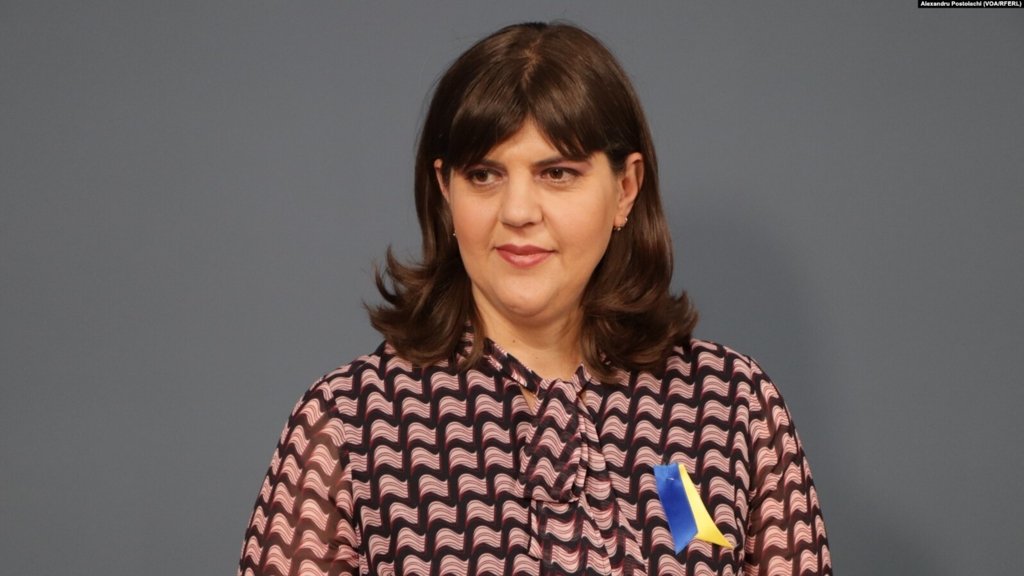

Chief Prosecutor of the European Public Prosecutor’s Office Laura Codruța Kövesi PHOTO Facebook/Laura Codruța Kövesi
An extensive file on possible fraud with European funds in agriculture has triggered political tensions in Greecein the context of an investigation led by the European Public Prosecutor’s Office (EPPO). The case concerns suspicions related to the distribution of European agricultural subsidies worth hundreds of millions of euros to people who allegedly declared land they did not own or agricultural activities that were not carried out.
At the center of the investigation is the Greek body OPEKEPE, responsible for managing European agricultural funds, and the investigation has already had political consequences, including resignations and the lifting of the immunity of some parliamentarians, according to political.
Political disputes and criticism of the European inquiry
As the investigation progresses, several representatives of the ruling New Democracy party have criticized the conduct of the investigation and made direct accusations against the chief European prosecutor Laura Codruța Kövesi.
The Minister of Health, Adonis Georgiadis, stated that the EPPO’s way of working raises suspicions of possible political involvement.
“The way the EPPO acts leaves me with the impression of organized and targeted political interference and raises serious questions about whether I have done the right thing by supporting this institution,” he wrote on the X platform. He also argued that Greece would have the “sovereign right” to decide whether to continue cooperating with the European Public Prosecutor’s Office.
For her part, the deputy minister for migration and asylum, Sofia Voultepsi, made references to Kövesi’s origins and the political system in Romania.
“They come from a country without a tradition of separation of powers in the state,” she told SKAI TV. “During Ceaușescu’s time, children were taught to denounce their parents… I don’t want Ceaușescu-type justice in Greece,” she said.
Prime Minister Kyriakos Mitsotakis took a more reserved stance, but spoke of possible selective leaks in the file, without contesting the investigation itself.
Subsidies, wiretapping and allegations of cronyism
According to the data submitted by the EPPO to the Greek Parliament, the file includes wiretapping between politicians, officials and OPEKEPE officials, in which discussions on influencing the way agricultural subsidies are allocated would appear.
The investigation covers events that occurred mainly in 2021, while other segments of the investigation, for the period 2022-2025, are still ongoing.
Following the vote in Parliament, 13 deputies of the New Democracy party were left without parliamentary immunity. They denied the charges and asked for immunity to be waived in order to prove their innocence.
Prime Minister Mitsotakis called for speeding up the procedures and stressed the need for quick clarification of the situation.
“The EPPO is a respected institution and does its duty, but selective leaks and piecemeal investigations are not justified,” he declared in Parliament. “It’s one thing for a parliamentarian to take an interest in a citizen who comes to his office, and it’s another thing when a criminal act is proven,” he said.
He also announced plans to amend the law to speed up the resolution of cases involving people in political office.
In response, Laura Codruța Kövesi rejected the criticism and defended the work of the EPPO.
“I think all this fuss is trying to move the discussion away from the real topic,” she told the Delphi Forum. “The main issue is what really happened at OPEKEPE and who is responsible. OPEKEPE is an acronym for corruption, nepotism and cronyism… These are defined crimes in Greek law and in almost all EU member states. No one will be able to convince anyone that these things are part of the job description of politicians, in Greece or in any other EU state,” she said.