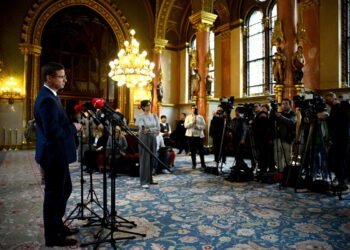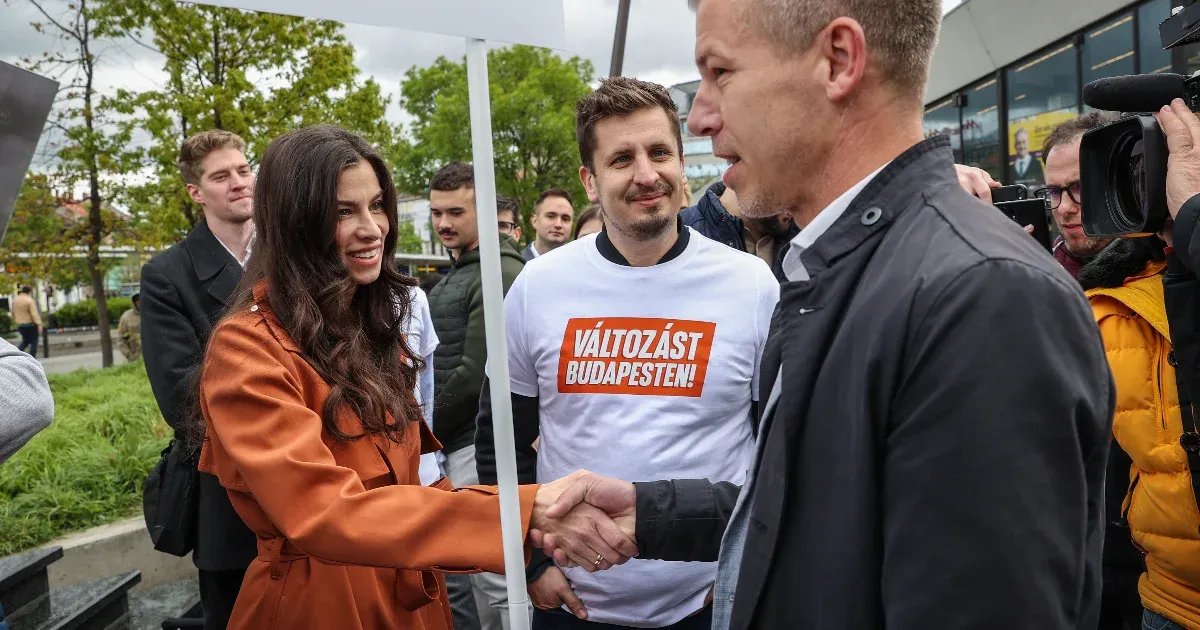
“Significant changes and renewal are taking place at the Fidesz-KDNP faction” – this is what Gergely Gulyás, the new faction leader of Fidesz, introduced the videoin which he announced the composition of the Fidesz parliamentary faction. Gulyás said that among them there are experienced politicians who have been active in parliament for years and decades, as well as quite new ones who have never sat before.
Although they have been in government for 16 years, this is not the first time in recent years that Fidesz has attempted renewal. In Budapest, in 2024, they sent their experienced local government politicians into retirement and replaced them with more militant fidelitasos. Based on the recent election results in the capital, it looks like he won’t be successful. However, Fidesz now sends several politicians of a similar character to the parliament, including a representative from the capital, who individually performs worse from election to election.
Ten representatives were given, right? That’s how many constituencies Fidesz won out of 106 in the election. The remaining 42 seats are on the list, so Fidesz had room for maneuver here in who to install. According to Gergely Gulyás, 25 of those at the beginning of the list decided not to take up the mandates – among them is Viktor Orbán, who is saying goodbye to the Parliament after 36 years. They will be replaced by newer names from further back on the list, from whom Fidesz, which has entered the opposition, can hope for renewal.
The outgoing ruling party already tried something similar in Budapest in 2024, two years ago Fidesz carried out a complete change of ranks. The list was filled with loyalists and lesser-known faces, including local government representatives. Alexandra Szentkirályi became their leader as candidate for mayor and leader of the list – from the former to the latter he withdrew two days before the election.
Alexandra Szentkirályi’s almost 20-year political journey has been particularly adventurous. In recent years, or even decades, he has become the politician of Fidesz who commutes between the Parliament and the Budapest City Hall in such a way that he slowly moves from one place to another even with his eyes closed. Having emerged from Fidelitas, Szentkirályi became a municipal representative in the Metropolitan Municipality in his twenties in 2010, then he stayed on for the next term, continuing as one of the deputy mayors of István Tarlós from 2014.
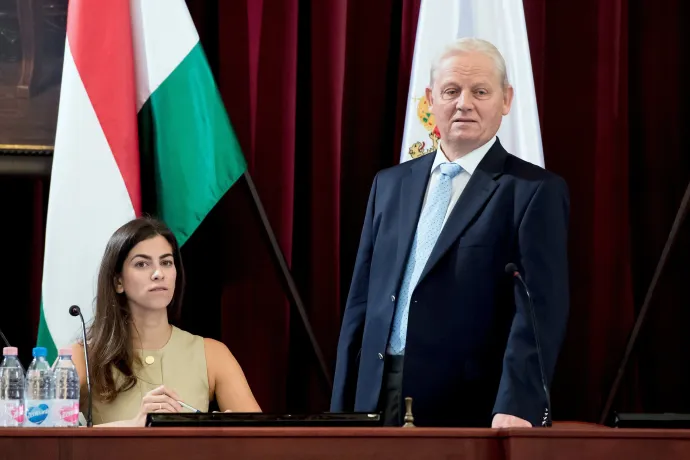
Mayor István Tarlós and Deputy Mayor Alexandra Szentkirályi at the General Assembly of the Metropolitan Municipality in the hall of the City Hall on August 30, 2017 – Photo: Szilárd Koszticsák / MTI
This period ended in October 2019 with the election of Gergely Karácsony as mayor. Szentkirályi was only out of work for a few months: from January 2020, he was already a government spokesperson and a government commissioner, which is when he first moved into national politics. He was seen most of the time as the country’s government spokesman, next to Gergely Gulyás. After four years, he headed for the City Hall again: he became the candidate for mayor of Fidesz-KDNP. Since announcing his departure, Gergely Karácsony claimed that Szentkirályi would step down in favor of Dávid Vitézy. This is exactly how it happened at the last moment, but Alexandra Szentkirályi remained the leader of the Fidesz list, thus regaining the mandate in Budapest.
For a long time it seemed that Fidesz had entrusted it to him representing the government as a solution to all Budapest problems let it shine. Szentkirályi became the head of the 10-person assembly faction that was renewed and at the same time rejuvenated.
Based on the performance of the last two years, the team he leads could hardly be accused of constructive opposition.
This is also thanks to the fact that until this year’s election, this was the only place where Fidesz and Tisza could directly confront each other, and this is where they really came face to face with Péter Magyar’s 10-person faction. The renewed Budapest team did practically anything to create an unpleasant sentence and a well-edited TikTok video.
It is also thanks to Fidesz’s opposition in the General Assembly that at the monthly meetings there was more talk about, for example, Pride, the Tisza’s tax plans that turned out to be false, and the Russian-Ukrainian war than about Budapest itself. Due to the disputes that arose in this way, the general assemblies lasted for a marathon, often longer than 10 hours, in the last two years, and there was nothing left that was unimaginable in the meeting room. The representatives usually blame each other classified as a “circus” the meetings, the Tisza pulled out twice, saying they do not participate in Fidesz’s shenanigans.
They were long discussions Because of Kriszta Bódis’s “LGBTQ activism”, while it became one of Fidesz’s favorite words brought up again and again on the topic of drug policy the chemsex. And then the madness completely broke loose when Kollár Kinga said in EP from his speech made a mess the ruling party: they called it the humble servant of Brussels, they wanted to have ethical codes accepted because of it, and they would have even dismissed it. In May, they threw Ukrainian flag T-shirts in the meeting room, Kinga Kollár’s papier-mâché was brought in while Fidelitas was handing out leaflets.
In addition, Fidesz regularly trolled the assemblies with “gifts” intended for Tiszas. The most enthusiastic gift-giver was Béla Radics, who is now also a member of parliament. It happened that Radics was one of the advocates of overhead reduction brought in a complete gas meter to the representatives of the Tisza Party. At other times, the representative managed to stand up against the war as one Battlefield 6 with video game surprised the Tisza faction that “they play war with the children at home”.
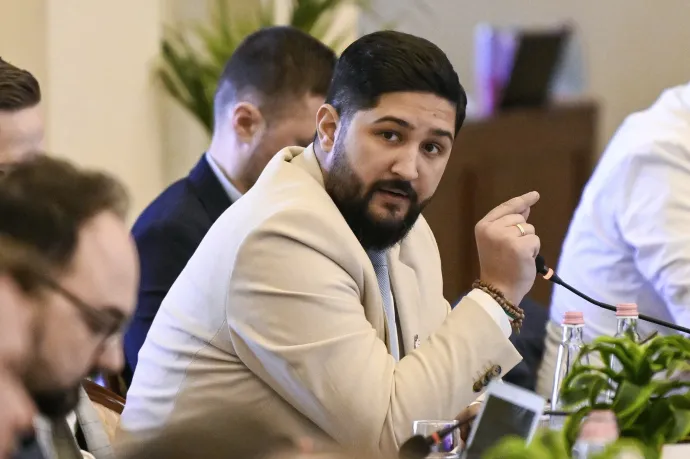
Béla Radics, representative of Fidesz-KDNP, speaks at the session of the Metropolitan Assembly in the hall of the City Hall on February 25, 2026 – Photo: Tamás Purger / MTI
Here, it is also worth remembering the career of Béla Radics, who became most famous for his scandal politicization.
He is the politician who achieves progressively worse results as an individual candidate of Fidesz from election to election, yet he can move up the ranks.
Radics after Fidelitas VII. district, he started his political career as a local government representative, he also ran as an individual here, 32 percent of the voters voted for him, so he only got in from a list. In 2024, he tried again in Erzsébetváros, but was only able to collect 29 percent of the votes. He did not have to worry, he was included in the Capital Assembly from the list of Fidesz.
With two years of work in the capital, he earned the right to be the party’s candidate for the outer Erszébetváros and Zugló districts in this year’s election. Here, he could not get as many votes as he did as a local government candidate: only less than 25 percent of the voters decided in his favor. György László Velkey from Tiszá finished with more than 50 percent even though there was a third strong challenger, Ákos Hadházy. Despite this, Béla Radics now has the opportunity to implement the opposition policy that he did in Budapest in the Parliament. His party colleague, Ádám Borbély, a Fidesz local government representative from Zugló, also spoke out against Radics’ parliamentary mandate. on Facebookwhen he wrote: he prefers not to ask for the renewal of the party so that Radics, who achieved the worst individual result among the party’s candidates in the election, will sit on the parliamentary bench.
In addition to Radics, Fidesz has installed plenty of politicians with whom they can even take the direction tried in Budapest in the parliament. They were brought forward on the list, so Balázs Németh, who previously ran the public media’s news channels, will get an opportunity, for example, who in the campaign he also went to the houses of Tisza activistsand in addition the hour of the Warriors who bring very poor numbers hosted the show. The combative Secretary of State for Health, Péter Takács, is also going to the Parliament sometimes he sends voters to his motherand sometimes he hands it out his father, who is missing heating from János Hospital.
János Pócs, who lost his individual constituency, can continue to fight in the parliament, but already as an opposition. During the campaign, the politician practically carried a life-size figure of Péter Magyar with him everywhere. He packed it into his cara he carried her in his armsand if needed, one stripped him down to his pants. It looks like the dummy went into the closet after the election, so it is unlikely that an imitation of the future prime minister will sit in the Parliament.
But Fidesz did not only select more militant faces, similar to the one in Budapest, for parliamentary work. In addition to outgoing ministers and some older motorcyclists, Zsoltné Varga Szalai Piroska, who also tried out in the Capital Assembly, but was quickly replaced, will also be given the opportunity to work in parliament in the spirit of renewal.
In 2012, the politician who was appointed ministerial commissioner responsible for improving the position of women in the labor market got out of line from the start, when he sat in the general assembly among his fellow members of the Fidelitas who fought with Tisza. Szalai tried to fight the opponent with numbers, statistical data and tables, but after just three months, they found him another job: Viktor Orbán “helped his work” in matters related to economic, competitiveness, labor market, demographic and developments that improve the situation of families.
Piroska Szalai was finally added to the 2026 parliamentary list of Fidesz, but only to the 237th place. Fidesz, on the other hand, decided to seat him in the new parliament.
Fidesz will probably think twice about how profitable it is to continue the scandalous policy presented in Budapest in the Parliament. They have been in opposition for a long time in Budapest. In the 2018 parliamentary election, the opposition constituencies had a large majority, in 2019 Gergely Karácsony became the mayor, and in 2022 the entire city was defeated for lack of one district.
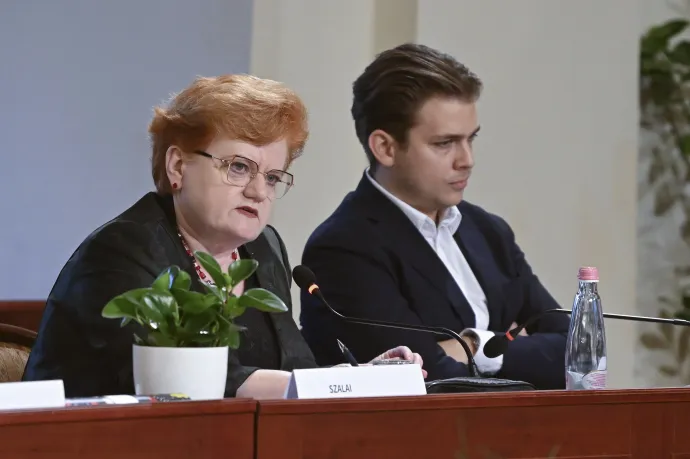
Fidesz representatives Piroska Szalai and Dániel Szécsényi at the inaugural session of the Metropolitan Assembly in the hall of the City Hall on October 4, 2024 – Photo: Szilárd Koszticsák / MTI
Due to this situation, they did not even manage to stand for the 2024 municipal elections. They changed direction in 2024, but their militant opposition policy since then, and probably the anti-Budapest policy, also contributed to the fact that they achieved a worse result in the capital than ever before. Not only did they not win a single constituency, but there is only one constituency out of 16 where the candidate of the Tisza Party won with less than 60 percent – where Ákos Hadházy came third with 16.12 percent.
It is quite certain that after 16 years of two-thirds government, Fidesz has to show something in the parliament in a very different situation. It will certainly not be easy for them: their number one leader, Viktor Orbán, continues from the backgroundwhile the Tisza Party received as much authorization from the voters as Fidesz had never before. Just as it is very likely that the Péter Magyars with their two-thirds will do everything they can to dismantle the Orbán system built up over a decade and a half. Fidesz will be able to watch this with a united faction and little room for maneuver. And in the coming months, it will become clear whether they will try to play a more constructive opposition role, calmer parliamentary work, or take a more militant line, with paper dolls, “giving gifts”, shouting from the benches.