The work of the gas pipeline to export liquefied natural gas (LNG) from Vaca Muerta continues to generate surprises. As LA NACION advanced, The consortium in charge of the megaproject awarded the construction of the pipeline to Victor Contreras-Sicim and to Neuquén Oilfield Production Services (OPS) the installation of a compressor plant.
The definition leaves out Techint-Sacdethe group that had been designated as a favorite and that in recent years built the main energy infrastructure works in the country.
The award was made by San Matías Pipeline, the company made up of the same companies that are part of Southern Energy (SESA): Pan American Energy (PAE), YPF, Pampa Energía, Harbor Energy and Golar LNG. Before, SESA had bought the pipes from the Indian company Welspun.
The decision followed the logic of the price: Víctor Contreras-Sicim presented the lowest economic offer of the five proposals that competed for the pipeline. The other four were Techint-Sacde, Pumpco-Bonatti-Contreras Hermanos, OPS and BTU. The definition was expected in the first days of April, but was delayed while the solidity of the guarantees presented was evaluated.
According to market sources, the proposal of Víctor Contreras-Sicim was US$533 million, that is, US$85 million (or 16%) cheaper than Techint-Sacde’s offer.
The winning consortium is made up of two companies with very different profiles. Víctor Contreras is an Argentine pipeline construction company with more than 50 years of history: it was born when its founder – now deceased – separated in the 1970s from Contreras Hermanos, the family business that he formed with eight brothers. Although In recent years it had lost presence in the local marketits specialty has always been large diameter laying for the oil and gas industry.
Sicim, on the other hand, is an Italian company with 64 years of activity and more than 10,600 employees. distributed in 26 locations around the world, dedicated to the design and construction of pipelines and oil, gas and water treatment plants, with active projects on several continents, but without presence in Argentina. It will be the first time it operates in the country.
Sacde, the company Marcelo Mindlinnot only lost the construction of the pipeline: It was also left out of the tender for the compressor plant, which was left in the hands of OPSa company with sustained growth in recent years. In this case, OPS had not presented the most economical offer – it had been Pecom – but it had presented the most solid guaranteesa condition that ended up outweighing the price. The firm is also one of those responsible for installing one of the pumping stations of the VMOS pipeline, which runs the same route as the gas pipeline, but transports oil.
For the American Pumpco —subsidiary of MasTec, the company founded by Jorge Mas, owner of Inter Miami— The result represents the third consecutive defeat in tenders in Argentina. It had previously bid unsuccessfully on the reversal of the northern gas pipeline and on the construction of the VMOS oil pipeline, in both cases surpassed by the Techint-Sacde company. MasTec is one of the main pipeline construction companies in the United States, with an annual turnover close to US$13,000 millionand has been seeking to enter Latin America through the Argentine market for some time.
The gas pipeline will link the Neuquén fields with the San Matías Gulf, in Río Negro, along 471 kilometers, with a total investment of US$1.3 billion. The project was divided into four lines: three sections of the 36-inch diameter pipeline and a compressor plant, a key piece to optimize gas transportation, which will be installed at kilometer 80 of the route. The entire pipeline was awarded to a single bidder, the one that presented the most competitive proposal. The gas pipeline will have a transportation capacity of 27 million cubic meters per day (m3/d).
The technical and economic offers were presented on January 12. At the end of February the first technical filter was carried out and then we moved on to the evaluation of the economic proposals.
SESA is made up of Pan American Energy (30%), YPF (25%), Pampa Energía (20%), Harbor Energy (15%) and the Norwegian Golar (10%). Mindlin, a SESA shareholder through Pampa Energía, had been excluded from the award committee for simultaneously competing in the tender through Sacde.
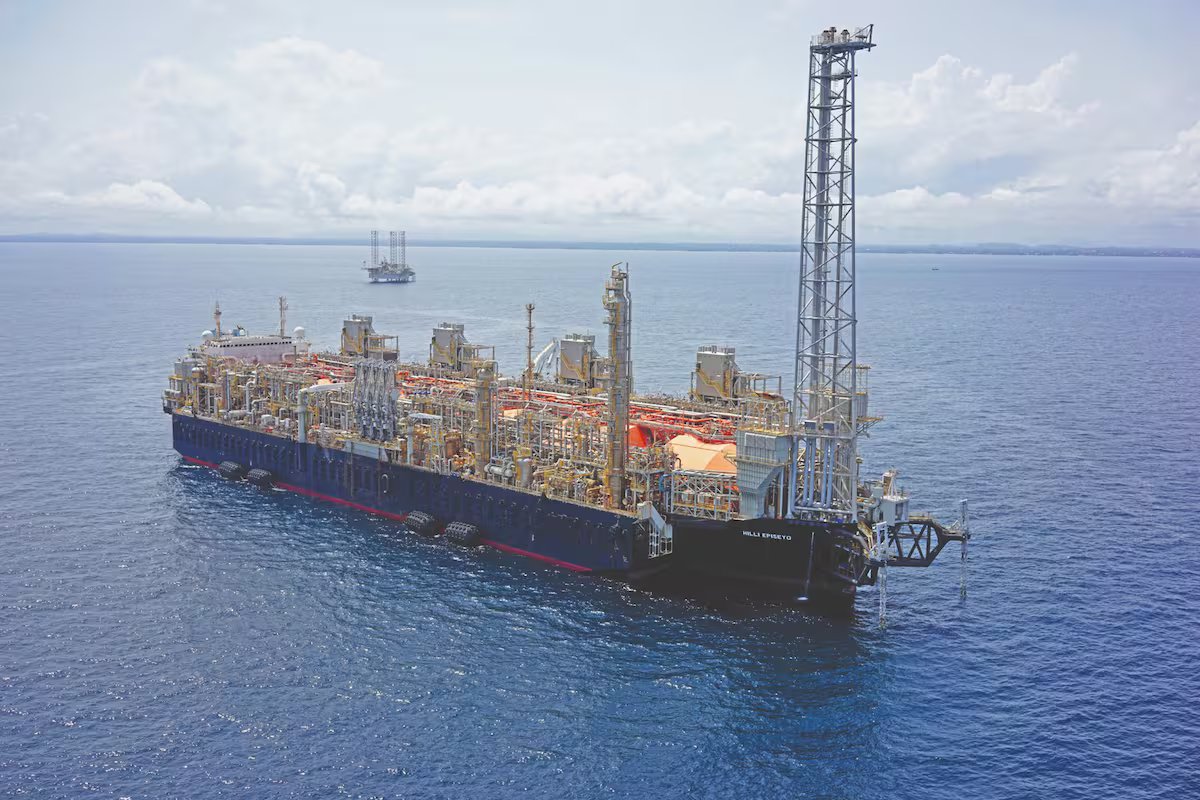
Construction will begin in the middle of the year, with a completion period of 24 months, to have the gas pipeline operational before the winter of 2028. On that same Rio Negro coast, between Sierra Grande and San Antonio Oeste, the two SESA liquefaction vessels will be located. The first, the Hilli Episeyo, currently in Cameroon, will be ready in September 2027 with a capacity of 2.45 million tons of LNG per year. The second, called MKII, will begin operations at the end of 2028 with 3.5 million tons. With both in operation, Argentina will have the capacity to export about 27 million cubic meters per day, equivalent to 19% of current national production.