Houston/At decisive moments in a nation’s history, the will to act alone is insufficient. Something more demanding is imposed: strategic clarity, historical sense and political responsibility. Cuba is going through precisely one of those critical stretches where each opposition gesture, inside and outside the island, must be evaluated not by its immediate or media impact, but by its real contribution to a serious, articulated and viable transition.
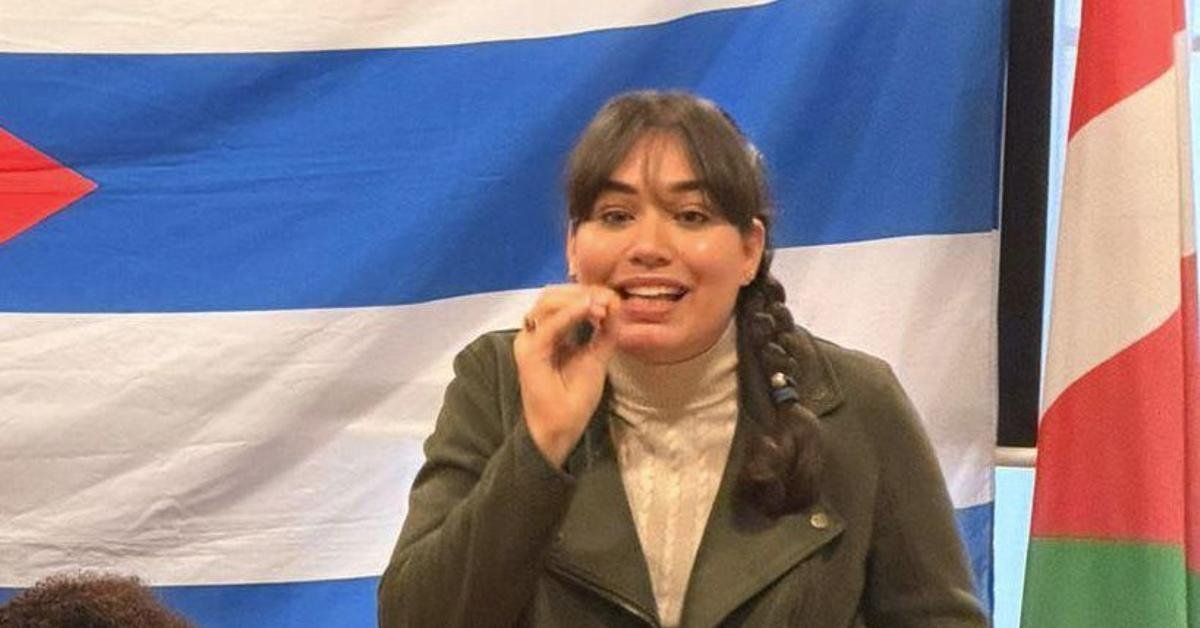
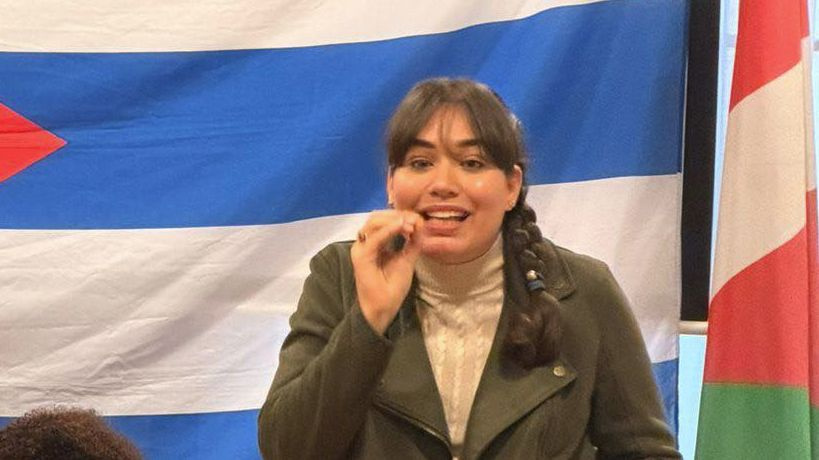
In this context, the figure of Amelia Calzadilla emerges, who has chosen to promote her own political project outside of existing platforms within the Cuban exile. This decision not only opens a legitimate debate, but also forces us to ask a fundamental question: are we facing a constructive initiative or an exercise in political leadership lacking solidity?
The first thing that is necessary is to point out, unambiguously, the obvious limitations of said project. There is no structured political program, nor a minimally defined institutional design for an eventual transition, nor a concrete strategy that articulates forces inside and outside of Cuba. Strictly speaking, there is no roadmap; There is barely a discursive formulation without operational anchoring. This is not a minor detail: it is an original failure.
It is not about denying the unquestionable right to create new proposals, but rather about questioning the opportunity, coherence and strategic sense of doing so while ignoring previous processes.
Added to this is an even more delicate element: the political absurdity of launching a parallel initiative at a time when there are already real efforts at articulation within the exile. It is not about denying the unquestionable right to create new proposals, but about questioning the opportunity, coherence and strategic sense of doing so, ignoring previous processes that have required years of maturation, personal sacrifices and accumulation of political experience.
Indeed, various exile organizations have moved forward, not without difficulties, towards common commitments that reflect historical learning, dialogue and desire for consensus. This collective effort, imperfect but real, today constitutes one of the few serious political assets that the opposition has. Not knowing it or acting outside of it does not strengthen the scenario: it fragments it.
From this perspective, the appearance of an independent project that does not clearly define its relationship with that previous consensus raises an inevitable question: is it seeking to enrich the debate or is it, in fact, weakening what has already been achieved? The ambiguity at this point is not neutral; It has political consequences.
There is, furthermore, a problem of proportion that cannot be ignored. The recent emergence of a figure with no consolidated track record in complex structures of political leadership who seeks to place himself at the forefront of the opposition leadership in exile raises legitimate doubts. It is not a personal judgment, but an observation about the very nature of leadership in critical historical contexts.
Politics, when it is serious, is not built on impulses or momentary visibility. It requires training, accumulated experience, negotiation skills, understanding of correlations of forces and, above all, respect for the processes that grant legitimacy. Pretending to lead without having gone through these processes not only reveals haste: it projects a form of political arrogance that, far from ordering, introduces noise, dispersion and, in the worst case, chaos.
Change processes fail when dispersion replaces strategy and when individual ambition prevails over collective construction.
And this point is crucial: when initiatives lacking structure and substance emerge with claims to centrality, they not only fail in themselves, but also erode the efforts of those who, for years, have sustained the struggle with real personal costs. In that sense, improvisation elevated to a political project can be perceived, rightly, as an indirect insult to those trajectories of sacrifice and commitment.
Pointing out these flaws does not constitute an attack, but rather an act of intellectual and political responsibility. Cuba does not need a proliferation of unconnected initiatives or improvised leaderships; It needs coherence, accumulation of forces and a national project capable of integrating, guiding and leading.
History is clear on this point: change processes fail when dispersion replaces strategy and when individual ambition prevails over collective construction. In the Cuban case, this risk is not theoretical: it is immediate.
The underlying question, therefore, is not whether new voices should emerge, which is natural and, to a certain extent, necessary, but whether these voices are willing to insert themselves humbly and responsibly into a greater effort, or whether they will opt for parallel paths that, even with good intentions, end up weakening the cause they claim to represent.
Because in politics, especially in contexts of national crisis, lack of solidity is not harmless: it is, many times, the prelude to failure.