After almost seven years without direct flights between the United States and Venezuela, American Airlines resumes the Caracas-Miami route on Thursday, a milestone that not only shortens distances by eliminating stopovers for travelers, but also consolidates the reestablishment of diplomatic relations between both countries, now focused on facilitating the flow of capital to the Venezuelan mining and energy sectors.
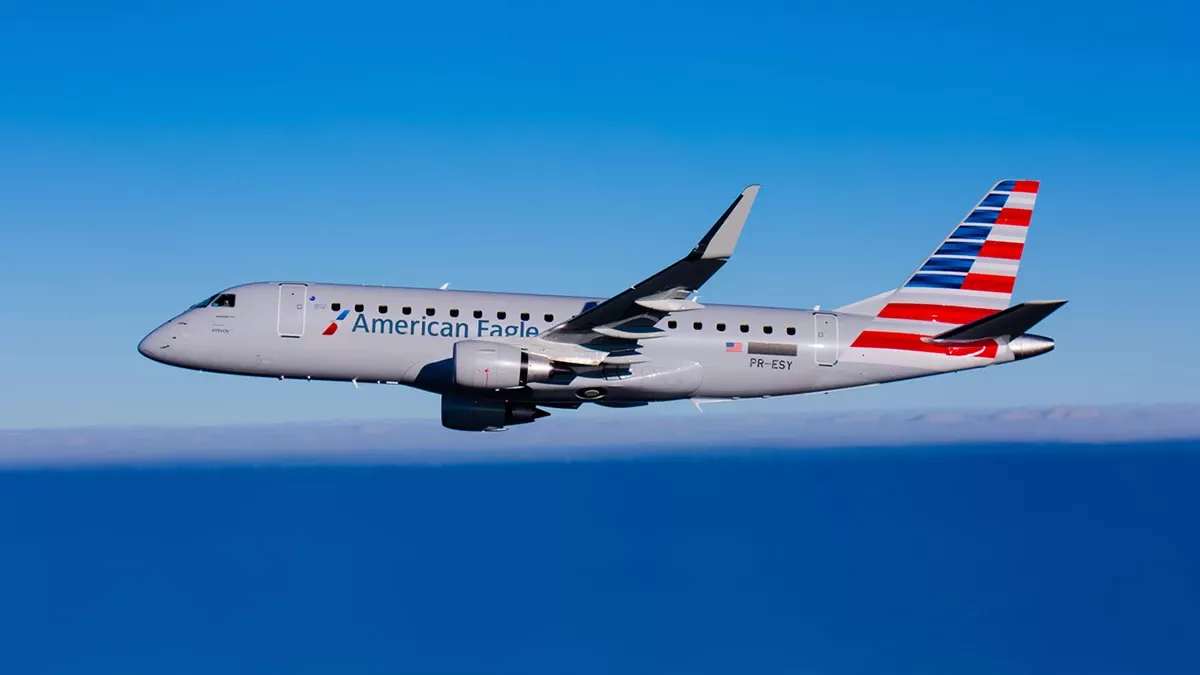
American, one of the international airlines with the greatest presence in the Venezuelan market for decades, will formalize the restart of its operations with a flight that will depart on Thursday afternoon from the Maiquetía Simón Bolívar International Airport, which serves Caracas, to return on Friday from Miami.
Starting in May, the airline will have a frequency of two daily flights and, as previously explained in a statement, the flights will be operated by Envoy, a subsidiary of American Airlines, on an Embraer 175 aircraft, which has capacity for less than 100 people.
This return occurs almost exactly seven years after she ceased her duties in the country, coinciding symmetrically with the rupture of diplomatic relations between Venezuela and the United States that today, under a new political scenario, are considered formally resumed after the capture of Nicolás Maduro last January by the US military and the promotion as acting president of the then vice president, Delcy Rodríguez.
Competition and ticket costs
The arrival of American Airlines will impact the competitiveness of the routes that until now stopped in Panama, Colombia and the Dominican Republic. Representatives of the Venezuelan tourism sector highlight that changes are already being observed in regional tariff schemes.
Currently, American tickets for the first flights are offered for over $1,000. In contrast, competitors such as Copa airline maintain prices of between $700 and $800 on their routes with stopovers.
For travelers in the region, including potential connections from the Southern Cone, the recovery of this direct section simplifies transfers to the United States. Miami today concentrates the largest community of Venezuelan immigrants in that country.
Consular requirements and procedures
Despite the reactivation of flights, passengers still face significant administrative challenges when traveling. Obtaining valid passports or safe-conduct passes remains a critical requirement for the normal flow of people.
Venezuela and the United States are now moving forward in recovering consular presence to expedite these documents. American was the last US airline to leave the country in 2019, following previous departures from United and Delta in 2017.
“Trust”
This direct connection will facilitate, for example, the transfer of officials and delegations after the reopening of embassies and will give more confidence, especially to Americans, coinciding also with the recent approval of laws in Venezuela that encourage foreign investment in strategic sectors such as hydrocarbons and mining, both of interest to the United States Government.
“It is a very important opportunity to open the market and connectivity, because it is a bet of trust towards the destination,” the president of the Venezuelan Travel and Tourism Association (Avavit), Vicky Herrera, told EFE.
Venezuela has faced difficulties in the airline sector for more than a decade, due to the State’s debts with international airlines as a result of exchange control that was made more flexible in recent years.
Herrera also highlighted that this will affect the “competitiveness” of other routes, such as, for example, those that stop in Colombia or Panama and even the Dominican Republic.
“We are already seeing it in terms of prices,” he added, referring to the fact that airlines such as Panama’s Copa, one of the few that remained in Venezuela in the midst of the crisis, is offering flights for about 700 or 800 dollars, while American for these first flights offered tickets for over 1,000 dollars.
The reunion
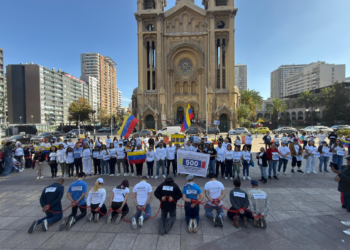
The route will also represent a relief for the Venezuelan diaspora in the United States.
For Venezuelans in Miami, the largest diaspora of these immigrants in the United States, the resumption of direct flights means for many the end of years of family separation, marked by pain and the high costs of traveling through third countries.
With around a million Venezuelans in the United States, this community celebrates that it will now be able to travel with the new generations born in this country so that they can learn about their origins.
Miguel Ángel Ruiz, who lives in Doral, a city in Miami-Dade County with a large Venezuelan population, assured EFE that he is happy to be able to take his children to the beaches of his childhood.
“That news moved me as much as when they took (Nicolás) Maduro,” he said, referring to the January operation in which the US military transferred the Chavista ruler from Caracas to a prison in New York, where he is being tried for drug trafficking.