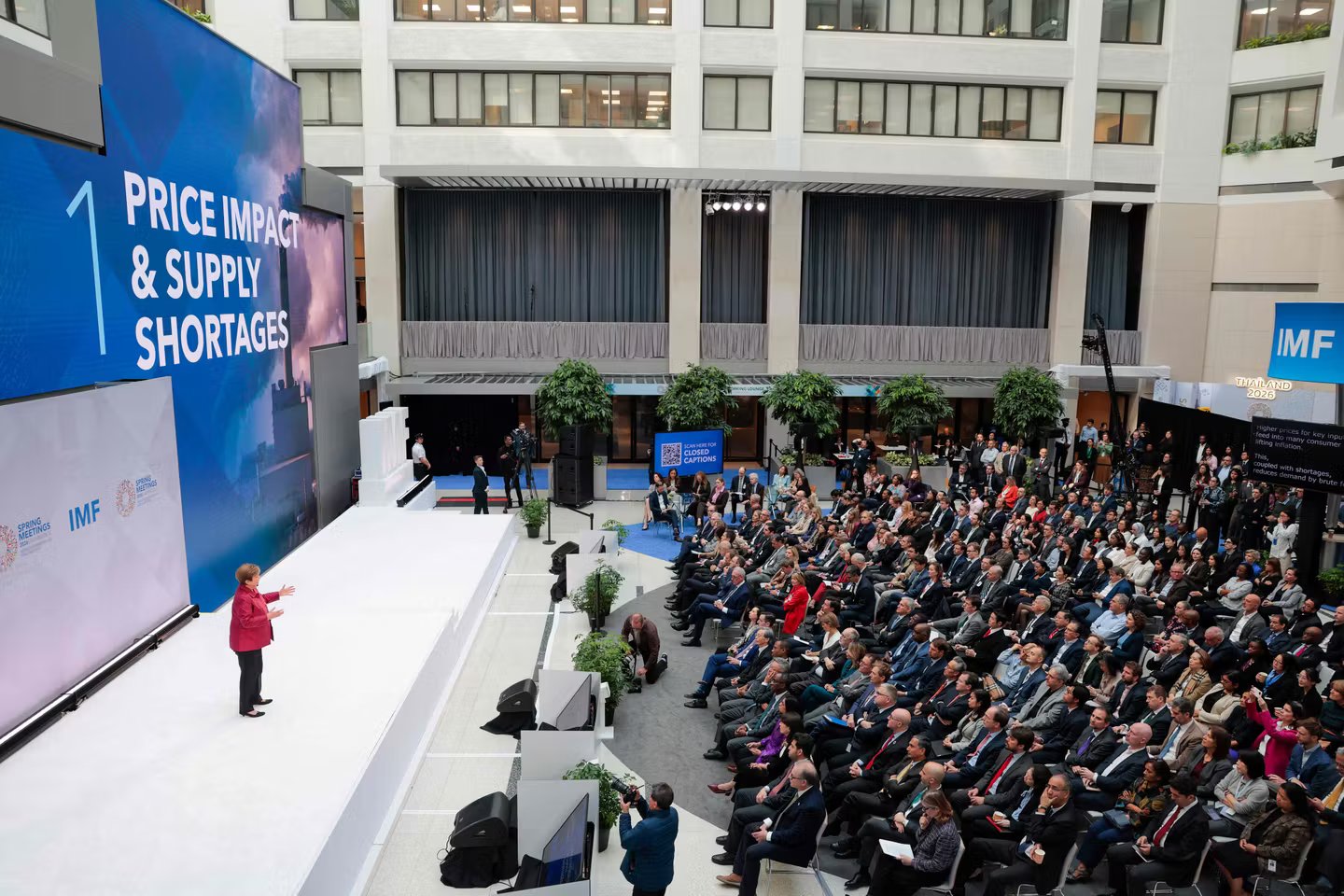
The assessment is chilling. “The number of active wars has surged to levels not seen since the end of World War II,” the International Monetary Fund (IMF) wrote in its flagship report on the global economic outlook, published for its spring meetings that began in Washington on Monday, April 13. The institution drew this conclusion: An era of repeated wars is taking hold, and the global economy must be prepared.
In Washington, finance ministers and central bank governors from around the world are focusing primarily on the consequences of the war in the Middle East through April 18. Despite a fragile ceasefire between the United States and Iran, the Strait of Hormuz remains under Iranian control, and repairs to damaged oil and gas production sites in Gulf countries will take months, if not years.
The IMF’s managing director, Kristalina Georgieva, spoke on Thursday, April 9, of a “supply shock that is large, global and asymmetric” due to a 13% and 20% drop in global oil and gas supplies, respectively. She described the shock as having disruptions spreading throughout the planet’s supply chains. The impact on each country varies depending on its proximity, whether it is an importer or exporter of oil and gas and if it has the budgetary leeway to absorb the shock.
You have 82.27% of this article left to read. The rest is for subscribers only.