The United Arab Emirates, the fourth largest producer in the OPEC oil cartel, decided in a dramatic step to leave the cartel already on Friday. This is an unusual move that shakes the global energy market, which is in any case in a turbulent period as a result of the war in the Middle East, but in the future may actually be a balancing factor.
● The American blockade effect: Iran’s oil industry will reach the brink of shutdown within three weeks
● “In the weakest state”: Iranians are no longer able to finance their lives
If so, to whom is the message actually being directed by leaving OPEC? How are Emirati exports carried out when there is an Iranian blockade? And how can Mohammed bin Zayed, the leader of the United Arab Emirates, take advantage of the American blockade on the oil exports of the Ayatollah regime? Globes is sorting it out.
To whom is the message actually addressed in leaving OPEC?
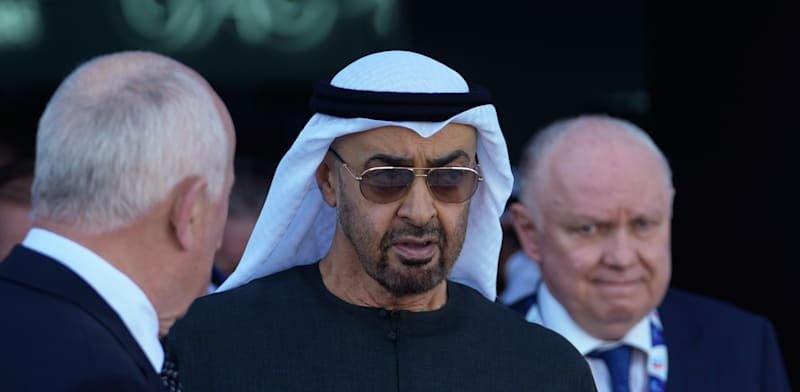
Dr. Yoel Gozhansky, head of the Gulf program at INSS and a former senior member of the National Security Agency, defines the move by the leader of the United Arab Emirates, Mohammed bin Zayed, as a challenge to the entire regional order in the Persian Gulf since the 1970s. According to him, the emirates are fed up with alliances and organizations that harm their country in order to maintain false harmony, and it is also impossible to separate the political considerations from the weighty economic considerations, which include the OPEC quotas that prevent Abu Dhabi from realizing its production potential.
“They are showing the Saudis with a bold and dramatic step that there is a limit to their ability to influence,” says Gozhanski. “The United Arab Emirates needs more money for the recovery from the consequences of the war. They compete with the Saudis on every issue, and they no longer hide it. This is the most direct and geo-strategic struggle in the Middle East.”

How is the Emirati oil export carried out when there is a blockade in Hormuz?
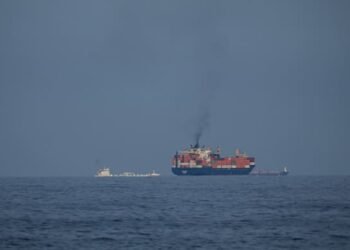
The United Arab Emirates is located mostly on the shores of the Persian Gulf, but unlike its neighbors, it also enjoys Fujairah Beach, which lies in the Gulf of Oman, that is, outside the Strait of Hormuz and the Iranian blockade. Even before the war, the Emirates used the Abyssin-Fujairah oil pipeline designed to diversify export capabilities, and due to the Iranian blockade they even increased its use.
In the work week of March 20-24, the rate of oil loading in Fujairah reached approximately 1.9 million barrels per day, a 57% jump compared to the rate throughout 2025. The Iranians recognized the Emirati activity during the war, and increased their attacks on port infrastructure, storage vessels and oil loading means in Fujairah, but were unable to disable the port.
Who are OPEC and OPEC Plus?
The OPEC cartel includes Saudi Arabia, the now-defunct United Arab Emirates, Iran, Algeria, Equatorial Guinea, Gabon, Iraq, Kuwait, Libya, Nigeria, Venezuela, and Congo. Its OPEC Plus partners are Russia, Azerbaijan, Bahrain, Brunei, Brazil, Kazakhstan, Malaysia, Mexico, Oman, Sudan, and South Sudan.
How much did the war affect OPEC companies from the Middle East?
Each of them was affected, to one degree or another, by “Operation Harry’s Roar” which was launched on February 28. The biggest producer of all, Saudi Arabia, dropped from 10.4 million barrels per day in February to about 7.8 in March (a 25% drop); Iraq and Kuwait, which are completely dependent on the Strait of Hormuz, dropped from 4.37 to about 1.6 million (a drop of 63%) and from 2.56 to about 1.3 million (49%) respectively; The United Arab Emirates, benefiting from Fujairah, fell from about 3.6 to about 2.34 million barrels per day (35%); And the last is Iran, imposing the first blockade in Hormuz, which was hardly affected at all. It dropped from about 3.37 million barrels of oil per day in February to about 3.27 in March (only 3%). The explanation is that Trump’s blockade of Iran was only imposed on April 13.
Which other countries have recently left the cartel?
Decisions to leave OPEC are not new, because of the political power of the cartel. Qatar, Ecuador and Angola are the last to do so: Qatar did it in 2019, when it produced about 650 thousand barrels a day, and this was as a result of the embargo imposed by the Gulf countries against it in 2017.
Ecuador left OPEC in 2020 following the country’s fiscal situation, and its desire to increase oil revenues – independent of production quotas. Angola decided to leave the cartel in 2024, following a demand that it cut production to 1.1 million barrels per day, while the government in Luanda demanded to produce 1.18 million barrels per day.
Who are the consumers of Emirati oil?
The export destination of Emirati oil is Central Asia and the Far East, and the main customers in 2025 (total production of 3.11 million barrels per day) were Japan – 28.4%; China – 25%; and India – 14.9%. When it comes to China, Iran’s main customer, which consumes about 90% of all oil exports of the Ayatollah regime, leaving OPEC may turn out to be a business opportunity taking advantage of the blockade imposed by US President Donald Trump on the Islamic Republic.
The international analytics company Kepler found that Iran’s oil storage has been depleted to the point where it may run out in just 12-22 days. This means that Iran will be forced to cut oil production by 1.5 million barrels by mid-May.
China is the largest oil consumer in the world, and its total imports last year reached a record of 11.6 million barrels per day, an increase of 4.4% at the annual level. Of this, Iran was the source of about 12%. Therefore, the American blockade may soon create a severe shortage for her, which she may fill with Emirati oil.
What are the implications for prices?
Since Operation “Harry’s Roar” broke out, the price of a barrel of Brent has jumped by about 42% to about $112. This increase reflects both the international concern about developments in the Middle East and the actual decrease in global oil supply.
However, the infrastructure of the United Arab Emirates allows it, in the absence of dependence on quotas from OPEC, to produce much more oil. Until the war, the Emirates produced about 3.6 million barrels per day because of the cartel quotas, and not because of an infrastructure limitation. According to estimates, their current production capacity is about 4.85 million barrels per day. Moreover, Abu Dhabi’s national oil company, ADNOC, has already It set an official goal of increasing production capacity to 5 million barrels per day in 2027, when there were senior Emirati officials who even talked about 6 million barrels per day.
In conclusion, pumping an almost double amount of Emirati oil into the international market is not only in the interest of Abu Dhabi, but no less than that of Washington in general and Trump in particular. Such an oil supply is expected to be a balancing factor for the trend in world oil prices, and to reduce them.
code of ethics
appearing
in the trust report
according to which we act. Expressions of violence, racism, incitement or any other inappropriate discourse are filtered out automatically and will not be published on the site.