Monday, May 4, 2026
    The GeoStrategic Consensus
    No Result
    View All Result
    • Login
    • HOME
    • AMERICAS
      • Argentina
      • Brazil
      • Canada
      • Chile
      • Colombia
      • Costa Rica
      • Cuba
      • Dominican Republic
      • Ecuador
      • El Salvador
      • Greenland
      • Guatemala
      • Honduras
      • Mexico
      • Nicaragua
      • Panama
      • Paraguay
      • Peru
      • United States
      • Uruguay
      • Venezuela
    • ASIA-PACIFIC
      • Australia
      • Brunei Darussalam
      • Cambodia
      • China
      • Federated States of Micronesia
      • Fiji
      • Indonesia
      • Japan
      • Kiribati
      • Laos
      • Malaysia
      • Marshall Islands
      • Mongolia
      • Myanmar
      • Nauru
      • New Zealand
      • North Korea
      • Palau
      • Papua New Guinea
      • Philippines
      • Samoa
      • Singapore
      • Solomon Islands
      • South Korea
      • Taiwan
      • Thailand
      • Timor-Leste
      • Tonga
      • Tuvalu
      • Vanuatu
      • Vietnam
    • CARICOM
      • CARICOM – Non-English
        • Haiti
        • Suriname
      • CARICOM Associates
        • Anguilla
        • Bermuda
        • British-Virgin-Islands
        • Cayman-Islands
        • Curacao
        • Turks-and-Caicos
      • CARICOM English
        • Antigua and Barbuda
        • Barbados
        • Belize
        • Dominica
        • Grenada
        • Guyana
        • Jamaica
        • Montserrat
        • Saint Kitts and Nevis
        • Saint Lucia
        • Saint Vincent and the Grenadines
        • The Bahamas
        • Trinidad and Tobago
    • EURASIA
      • Armenia
      • Azerbaijan
      • Balarus
      • Georgia
      • Kazakhstan
      • Kyrgyzstan
      • Moldova
      • Russia
      • Tajikistan
      • Turkmenistan
      • Ukraine
      • Uzbekistan
    • EUROPE
      • Albania
      • Andorra
      • Austria
      • Bosnia and Herzegovina
      • Bulgaria
      • Croatia
      • Cyprus
      • Czech Republic
      • Denmark
      • Estonia
      • Finland
      • France
      • Germany
      • Greece
      • Holy See
      • Hungary
      • Iceland
      • Ireland
      • Italy
      • Kosovo
      • Latvia
      • Liechtenstein
      • Lithuania
      • Luxembourg
      • Malta
      • Monaco
      • Montenegro
      • Netherlands
      • North Macedonia
      • Norway
      • Poland
      • Portugal
      • Romania
      • San Marino
      • Serbia
      • Slovakia
      • Slovenia
      • Spain
      • Sweden
      • Switzerland
      • United Kingdom
    • MIDDLE EAST AND NORTH AFRICA
      • Algeria
      • Bahrain
      • Egypt
      • Iran
      • Iraq
      • Israel
      • Jordan
      • Kuwait
      • Lebanon
      • Lybia
      • Morocco
      • Oman
      • Palestinian Territories
      • Qatar
      • Saudi Arabia
      • Syria
      • Tunisia
      • Turkey
      • United Arab Emirates
      • Western Sahara
      • Yemen
    • SOUTH ASIA
      • Afghanistan
      • Bangladesh
      • Bhutan
      • India
      • Maldives
      • Nepal
      • Pakistan
      • Sri Lanka
    • SUB-SAHARAN AFRICA
      • Angola
      • Benin
      • Botswana
      • Burkina Faso
      • Burundi
      • Cabo Verde
      • Cameroon
      • Central African Republic
      • Chad
      • Comoros
      • Cote d’Ivoire
      • Democratic Republic of the Congo
      • Djibouti
      • Equatorial Guinea
      • Eritrea
      • Eswatini
      • Ethiopia
      • Gabon
      • Gambia
      • Ghana
      • Guinea
      • Guinea Bissau
      • Kenya
      • Lesotho
      • Liberia
      • Madagascar
      • Malawi
      • Mali
      • Mauritania
      • Mauritius
      • Mozambique
      • Namibia
      • Niger
      • Nigeria
      • Republic of the Congo
      • Rwanda
      • Sao Tome and Principe
      • Senegal
      • Seychelles
      • Sierra Leone
      • Somalia
      • South Africa
      • South Sudan
      • Sudan
      • Tanzania
      • Togo
      • Uganda
      • Zambia
      • Zimbabwe
    • HOME
    • AMERICAS
      • Argentina
      • Brazil
      • Canada
      • Chile
      • Colombia
      • Costa Rica
      • Cuba
      • Dominican Republic
      • Ecuador
      • El Salvador
      • Greenland
      • Guatemala
      • Honduras
      • Mexico
      • Nicaragua
      • Panama
      • Paraguay
      • Peru
      • United States
      • Uruguay
      • Venezuela
    • ASIA-PACIFIC
      • Australia
      • Brunei Darussalam
      • Cambodia
      • China
      • Federated States of Micronesia
      • Fiji
      • Indonesia
      • Japan
      • Kiribati
      • Laos
      • Malaysia
      • Marshall Islands
      • Mongolia
      • Myanmar
      • Nauru
      • New Zealand
      • North Korea
      • Palau
      • Papua New Guinea
      • Philippines
      • Samoa
      • Singapore
      • Solomon Islands
      • South Korea
      • Taiwan
      • Thailand
      • Timor-Leste
      • Tonga
      • Tuvalu
      • Vanuatu
      • Vietnam
    • CARICOM
      • CARICOM – Non-English
        • Haiti
        • Suriname
      • CARICOM Associates
        • Anguilla
        • Bermuda
        • British-Virgin-Islands
        • Cayman-Islands
        • Curacao
        • Turks-and-Caicos
      • CARICOM English
        • Antigua and Barbuda
        • Barbados
        • Belize
        • Dominica
        • Grenada
        • Guyana
        • Jamaica
        • Montserrat
        • Saint Kitts and Nevis
        • Saint Lucia
        • Saint Vincent and the Grenadines
        • The Bahamas
        • Trinidad and Tobago
    • EURASIA
      • Armenia
      • Azerbaijan
      • Balarus
      • Georgia
      • Kazakhstan
      • Kyrgyzstan
      • Moldova
      • Russia
      • Tajikistan
      • Turkmenistan
      • Ukraine
      • Uzbekistan
    • EUROPE
      • Albania
      • Andorra
      • Austria
      • Bosnia and Herzegovina
      • Bulgaria
      • Croatia
      • Cyprus
      • Czech Republic
      • Denmark
      • Estonia
      • Finland
      • France
      • Germany
      • Greece
      • Holy See
      • Hungary
      • Iceland
      • Ireland
      • Italy
      • Kosovo
      • Latvia
      • Liechtenstein
      • Lithuania
      • Luxembourg
      • Malta
      • Monaco
      • Montenegro
      • Netherlands
      • North Macedonia
      • Norway
      • Poland
      • Portugal
      • Romania
      • San Marino
      • Serbia
      • Slovakia
      • Slovenia
      • Spain
      • Sweden
      • Switzerland
      • United Kingdom
    • MIDDLE EAST AND NORTH AFRICA
      • Algeria
      • Bahrain
      • Egypt
      • Iran
      • Iraq
      • Israel
      • Jordan
      • Kuwait
      • Lebanon
      • Lybia
      • Morocco
      • Oman
      • Palestinian Territories
      • Qatar
      • Saudi Arabia
      • Syria
      • Tunisia
      • Turkey
      • United Arab Emirates
      • Western Sahara
      • Yemen
    • SOUTH ASIA
      • Afghanistan
      • Bangladesh
      • Bhutan
      • India
      • Maldives
      • Nepal
      • Pakistan
      • Sri Lanka
    • SUB-SAHARAN AFRICA
      • Angola
      • Benin
      • Botswana
      • Burkina Faso
      • Burundi
      • Cabo Verde
      • Cameroon
      • Central African Republic
      • Chad
      • Comoros
      • Cote d’Ivoire
      • Democratic Republic of the Congo
      • Djibouti
      • Equatorial Guinea
      • Eritrea
      • Eswatini
      • Ethiopia
      • Gabon
      • Gambia
      • Ghana
      • Guinea
      • Guinea Bissau
      • Kenya
      • Lesotho
      • Liberia
      • Madagascar
      • Malawi
      • Mali
      • Mauritania
      • Mauritius
      • Mozambique
      • Namibia
      • Niger
      • Nigeria
      • Republic of the Congo
      • Rwanda
      • Sao Tome and Principe
      • Senegal
      • Seychelles
      • Sierra Leone
      • Somalia
      • South Africa
      • South Sudan
      • Sudan
      • Tanzania
      • Togo
      • Uganda
      • Zambia
      • Zimbabwe
    No Result
    View All Result
    Agentially
    No Result
    View All Result
    Home AMERICAS Nicaragua

    Cuba: Fidel, Raúl, Díaz Canel, and resistance to change

    The Analyst by The Analyst
    April 9, 2026
    in Nicaragua
    Cuba: Fidel, Raúl, Díaz Canel, and resistance to change


    Gerald Ford and George Bush Sr. are the only United States presidents who have not reached a relevant agreement with Cuba since the 1959 revolution. Barack Obama, who reestablished diplomatic relations in 2014, was the first to openly recognize that the decades-long economic and political aggression did not favor Washington’s interests on the island.

    READ ALSO

    Trump Administration and Airlines Agree to Aid Plan for Spirit

    Weekly Comic | On World Press Freedom Day

    But the brief thaw was not enough for full normalization. Today, American hostility is superlative, due to the battery of additional measures that Donald Trump imposed since his first term and that, above all, cause incalculable damage to the Cuban population.

    In the daily image it seems that the conflict is only due to the fact that the greatest power in the world attacks a small nation from all sides, but that is not the only source of the multiple crisis that shakes Cuba. There is an internal history of omissions, delays, resistance to change and errors accumulated in decades…

    The passage of time…

    In January 1989, Fidel Castro received Vitali I. Vorotnikov, a member of the Political Bureau of the Communist Party of the Soviet Union. In his memoirs, the then emissary from Moscow related that perestroika dominated the conversations and that the Cuban leader bombarded him with questions.

    When Mikhail Gorbachev visited Cuba in April of that same year, the discrepancies were evident. With first-hand information, Fidel proclaimed the following July in Camagüey:

    “If tomorrow or any day we woke up with the news that a great civil strife has been created in the USSR, or even if we woke up with the news that the USSR disintegrated, which we hope never happens, even in those circumstances Cuba and the Cuban Revolution would continue fighting and continue resisting!”

    Four months later the Berlin Wall fell. On August 29, 1990, Cuba declared the “Special Period in Times of Peace”, a plan of cuts and sacrifices. In October 1991, the IV Congress of the Communist Party of Cuba (PCC) in practice issued a blank check to Castro, by “granting the Central Committee exceptional powers” ​​to “adopt the corresponding political and economic decisions (…) in order to enforce the supreme objective of saving the Homeland, the Revolution and socialism.”

    Two months later, on December 25, 1991, the Soviet Union disappeared. Since his visionary warning, Castro waited four years to react. In the summer of 1993, he began to introduce reforms that opened the Cuban economy to market mechanisms, expanded the private sector, and created channels for foreign investment and trade with the West.

    The economy recovered in the following years, but towards the end of the 1990s the reforms stalled or went backwards. Castro viewed them as a necessary and temporary evil, not as structural solutions.

    Hugo Chávez appeared on the horizon and Castro joined the new alliance with the Battle of Ideas, a campaign that sought to overcome the blow of the “Special Period” to social policy. Merging the ideological discourse, the fruits of the relationship with Venezuela and works in schools and hospitals, the economic opening languished.

    In the early hours of February 13, 2005, before an audience of economists, Castro proclaimed the new line: “The State returns converted into a Phoenix, with wings of long flights.”

    But that same year the blackouts of the previous decade also returned with force. Castro recognized that the thermoelectric plant was obsolete and embarked on what he called the Energy Revolution: a reduction in fossil fuel, the use of efficient domestic appliances and the promotion of clean energy, gas and portable plants.

    Fidel then had to stop along the way to reveal that a deeper conflict had come to be considered. After the post-Soviet crisis, the Cuban leader maintained that the island’s political system would survive to at least preserve “the conquests of the revolution.”

    In a speech at the University of Havana, on November 17, 2005, he corrected that thesis. He recognized the “many errors” of the leadership that he had led for decades, for the first time he publicly exposed the idea that the system could collapse due to its own defects and called for a broad discussion of how “this revolution can be destroyed.”

    But there was no longer a debate: an intestinal illness forced him to give up his public positions and the focus of attention changed radically. Raúl Castro, who replaced his brother, adopted decisions that improved people’s daily lives and brought them closer to the rest of the world (freedom to travel, to sell one’s home or car or to buy electronic devices); opened a discussion on the demands of the population and launched a plan to open the economy that became resolutions of the PCC and the National Assembly of People’s Power (ANPP, parliament) and was reflected in the new Constitution of 2019.

    Always based on the single-party regime, Raúl launched a harsh criticism of the ruling apparatus. He criticized the triumphalism of official propaganda, the compulsive resource of blaming the United States for everything and in any case, and demanded to address its own problems such as corruption, bureaucratism and unproductivity.

    Unlike Fidel, Raúl valued that the reform of the Cuban economy was life or death, neither a lesser nor a temporary evil. “Either we rectify or the time is running out to continue skirting the precipice: we sink and we will sink (…) the effort of entire generations,” he told the ANPP on December 18, 2010.

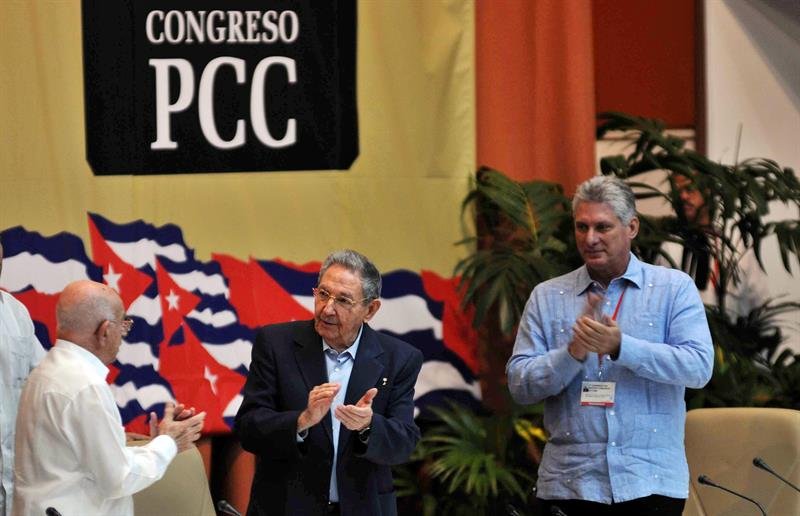
    “The only thing that can make the revolution and socialism fail in Cuba, putting the future of the nation at risk, is our inability to overcome the errors that we have committed for more than 50 years and the new ones that we could incur,” he read in his report to the VI Congress of the PCC, on April 16, 2011. At the closing, three days later, he criticized the mentality “tied for long years to the same obsolete dogmas and criteria.”

    But already at the VIII PCC Congress, in April 2021, the momentum had to be stopped. He said that resistance to change prevented the reform from moving forward. He recognized that decisions at the highest level were stuck in the middle structures of the government. An invisible barrier sabotaged the opening from within.

    One step forward, two steps back

    Since the collapse of real socialism, in almost four decades Cuba has had two attempts at economic opening and two counter-reforms. He let the opportunity that Obama opened up pass him by, drags down a conglomerate of inefficient state companies and closes paths to his own national entrepreneurs, who have shown capacity, innovation and competitiveness.

    Only in the last ten years has the leadership recognized its own errors, without clear signs of rectification. Raúl Castro criticized (December 27, 2016) the “obsolete mentality full of prejudices” against foreign investment. Miguel Díaz-Canel regretted “the passivity, the delay and even the indifference of institutions and organizations to respond” to offers from foreign capital (May 24, 2023).

    The reform was so improvised that it had negative results, acknowledged the then tsar of openness, Marino Murillo (December 21, 2017). In the worst moment of the economy until then, the government undertook monetary reform in 2021, which failed. Instead of reducing circulation to a single currency, currencies multiplied in the market and retail use of the dollar returned. Hyperinflation and a macrodevaluation of the Cuban peso triggered. Murillo ended up dismissed.

    In 2023, the Central Bank of Cuba began a mass migration campaign to electronic banking. On January 24, 2024, it recognized that the demand was much higher than the financial, material and human capacity, with a high deterioration of the ATM network.

    But perhaps the most inexplicable policy in this period has been the decision to put the greatest proportion of public investment in tourism infrastructure, when the countryside and electricity generation were demanding resources. Lodging towers grew on the island even in the middle of the pandemic and even afterward, already in a clear economic decline, without tourism indicators being able to recover.

    Economist Ricardo Torres, a researcher at American University, in a recent report for Cuba Study Group, an independent analysis center, calculated, based on official data, that tourism went from absorbing 15–17 percent of investments in the 1990s and early 2000s, to more than 30 percent in 2015–2018 and almost 40 percent between 2019 and 2024.

    In 2020, almost half of the total investment (47.6 percent) was allocated to tourism, while electricity, gas and water barely received 9.4 percent, the researcher added.

    “Even in the years of deepening economic crisis (2019–2024), the government chose to maintain a high investment effort, but concentrated a disproportionate fraction of those resources in the tourism chain (hotels and their associated real estate), instead of reinforcing the energy infrastructure.”

    Twenty years after Fidel Castro’s Energy Revolution, the same devastated thermoelectric plants, corroded by ultra-heavy local oil, most of them with more than thirty years of exploitation, entered into chain collapses.

    As if something were missing, the Minister of Economy and Planning and Deputy Prime Minister Alejandro Gil Fernández, a very close collaborator of Díaz-Canel, was dismissed, prosecuted and sentenced in December 2025 to life imprisonment for espionage, bribery, influence peddling and theft of documents, without the facts of which he was accused being known to date.

    Is there a way out?

    In the Cuban academy, the most diverse elaborations on alternatives for the reconversion of the economic model abound, even updated with each new adversity. But the government has remained inflexible, without even evaluating them.

    To make matters worse, Trump decided to put Cuba back on his agenda and the crisis on the island overlaps in time with any other consideration. The great paradox is that a reform of the Cuban economy, approved by the island’s institutions, reformulated over time, but stopped in practice, now ends up as a supposed demand of the United States government.

    Will the current president join his predecessors who reached an understanding with Havana? Or will he be put on the short list of those who didn’t?

    University of Miami historian and researcher Michael J. Bustamante, who follows the conflict closely, is skeptical. “I feel like the two sides have sort of gone back to their trenches a little bit in these last few weeks,” he says for this article. To the United States, some liberalization for private investment on the island seems insufficient. The Cuban government rejects any negotiations on its political model or leadership. “I hope they are truly negotiating for the benefit of the Cuban people, who are suffering the consequences, but I see it as difficult.”

    Bustamante also does not clearly distinguish what the White House’s objective is in Cuba. “His goal may be changing every day, depending on what is happening on other fronts of American foreign policy.”

    The researcher warns that greater pressure from the United States, which could destabilize Cuba, would end up with counterproductive results. The most obvious, a new migratory surge. But Trump’s true objective, Bustamante insists, “is very difficult to decipher.” And if Cuba tries to buy time, “it is a very risky strategy. At any moment, massive protests can occur, which almost invite the United States to do something more.”

    *This article was originally published in Reformwith the title “Cuba: the other data.”


    Source link

    Related Posts

    Trump Administration and Airlines Agree to Aid Plan for Spirit
    Nicaragua

    Trump Administration and Airlines Agree to Aid Plan for Spirit

    May 4, 2026
    Weekly Comic | On World Press Freedom Day
    Nicaragua

    Weekly Comic | On World Press Freedom Day

    May 4, 2026
    Leo XIV will receive Marco Rubio at the Vatican this week
    Nicaragua

    Leo XIV will receive Marco Rubio at the Vatican this week

    May 4, 2026
    “Journalism in exile is vital to inform Nicaragua, Cuba, and Venezuela”
    Nicaragua

    “Journalism in exile is vital to inform Nicaragua, Cuba, and Venezuela”

    May 4, 2026
    “La Comala”, a migrant cooperative in Madrid co-founded by a single
    Nicaragua

    “La Comala”, a migrant cooperative in Madrid co-founded by a single

    May 4, 2026
    “Even the air hurts me”, the collection of poems by the formerly imprisoned politician Carlos Bojorge
    Nicaragua

    “Even the air hurts me”, the collection of poems by the formerly imprisoned politician Carlos Bojorge

    May 3, 2026
    Next Post
    •
          Video
        
        2:21


        WANA/Reuters

    • Video 2:21 WANA/Reuters

    POPULAR NEWS

    Justin Bieber fans flood Coachella festival for headlining show – Entertainment

    Justin Bieber fans flood Coachella festival for headlining show – Entertainment

    April 20, 2026

    Over 600 flee homes as Army, NPA clash in Negros Occidental

    April 21, 2026

    Ex-DPWH exec recalls P800-M ‘delivery’ to Zaldy Co 

    April 20, 2026

    Former PM Paluckas suspends party membership, to waive immunity over criminal probe

    April 24, 2026
    Pres. Ali challenges CARICOM to transform into health research powerhouse

    Pres. Ali challenges CARICOM to transform into health research powerhouse

    April 23, 2026

    EDITOR'S PICK

    Vehicle break-ins: Police arrest suspects in Munsbach and Bettembourg

    Vehicle break-ins: Police arrest suspects in Munsbach and Bettembourg

    April 24, 2026

    KCNA | Article | Chinese FM and His Party Visit Cemetery of CPV Fallen Soldiers

    April 15, 2026
    Charles 3rd: current world would disturb Elizabeth 2nd – 04/21/2026 – World

    Charles 3rd: current world would disturb Elizabeth 2nd – 04/21/2026 – World

    April 22, 2026
    Pocognoli calls for unity as AS Monaco’s European hopes hang by a thread – NEWS.MC

    Pocognoli calls for unity as AS Monaco’s European hopes hang by a thread – NEWS.MC

    May 4, 2026

    Recent Posts

    • Suspect arrested over attack on French nun in Jerusalem
    • Inter’s championship scoreboard: it all always starts with Lautaro (9), Calhanoglu a Swarovski (8), Dimarco, postal minister (9)
    • Din l-Art Ħelwa calls for immediate resignation of Superintendent of Cultural Heritage
    • Sale: Le Millefiori – 2 Parking spaces – EUR 970k – NEWS.MC

      © 2026 Agentially - Navigating shifting sovereignties and global risk .

      Welcome Back!

      Login to your account below

      Forgotten Password?

      Retrieve your password

      Please enter your username or email address to reset your password.

      Log In
      No Result
      View All Result

        © 2026 Agentially - Navigating shifting sovereignties and global risk .

        This website uses cookies. By continuing to use this website you are giving consent to cookies being used. Visit our Privacy and Cookie Policy.