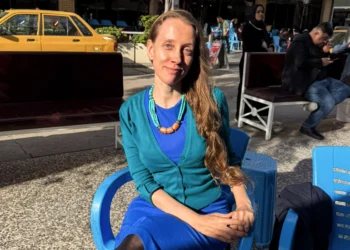
According to Jóhánna Klár Stefánsdóttir, head of the civil engineering division of Samtaka Industriin, Housing Package II does not answer the urgent problem of the construction market. The government should have used the package to facilitate development immediately.
The Government and the City of Reykjavík today presented plans for the development of six government plots and state properties in Reykjavík. 220 apartments are expected in Borgartún, 90 at Grensásveg, 100 at the upper part of Laugavegar, 300 at Laugarnesveg, 90 at Seljaveg and 400 to 600 on land east of Korpúlfsstaðir, on the border of Reykjavík and Mosfellsbær.
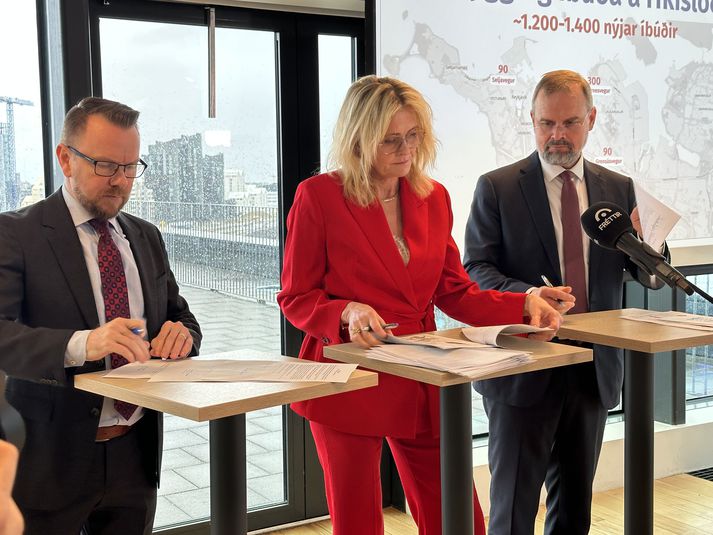
In total, these are 1,200 to 1,400 apartments. Some of them will be in new buildings, but also state-owned housing will be converted into apartments. The projects are at different stages, the number of apartments can change during the planning process, and the plots will undergo further preparation after the developers have been selected.
“The first reaction was a certain disappointment”
Jóhanna says that the package does not provide enough answers to the situation that the construction sector is currently facing.
“The first reaction was a certain disappointment,” says Jóhanna.
Many of the fields that were presented today are inside a densely populated area and have yet to go through a planning process. Experience shows that such preparation can take two to three years.
“These are complex sites and it takes a long time to plan,” she says.
Wants the government to deal with the urgent problem
In the package, the emphasis is on increased land supply for the coming years and affordable housing for tenants, students, older people and lower income groups. Twenty to thirty percent of the apartments should be affordable apartments, including public apartments, student apartments, social housing apartments, right-of-way apartments, apartments for the elderly and apartments that are subject to shared loans.
Jóhanna says that the government should have focused on what is delaying development and sales today.
“We would have liked to see that this urgent problem that the construction market is in right now was addressed rather,” she says.
Industry associations have long warned about the impact of higher fees and increased costs on new construction. Jóhanna says the situation is narrowing for both buyers and builders.
“The municipal tariffs have risen enormously in recent years. The government has announced further tax increases for the construction industry, which we would like to see them cancel at this point,” says Jóhanna.
Unsold apartments delay the next project
In the association’s opinion, difficult borrower conditions hold back the sale of new buildings and thereby delay further development. If the buyers do not get through the payment assessment, apartments remain unsold for longer.
“The Central Bank’s borrower conditions are very difficult at the moment, and interest rates make it difficult for buyers,” says Jóhanna.
She says the consequences are already visible in the market.
“As a result, the market is left with a lot of unsold apartments,” she says.
Warn of an increase of millions per apartment
Jóhanna particularly misses the fact that the proposed tax increases on the construction sector have not been addressed. There she refers to plans to stop refunding value added tax on human labor at a construction site.
“We are estimating that this will increase construction costs by two and a half to three million per hundred square meter apartment if it happens,” she says.
According to the Association of the Industry, such plans go against the goals of increased supply. Higher construction costs result in either higher prices for buyers or less incentive to undertake new projects.
Says the package only covers part of the problem
Jóhanna says that increased land supply is important, but that it does not solve the situation of everyone who needs to enter the housing market. You also have to look at people who try to buy on the general market without special resources. There remains a large group in the market where costs are rising.
“As things stand now, a large proportion of buyers are entering a market with ever-increasing tolls and tax increases that affect construction costs,” she says.