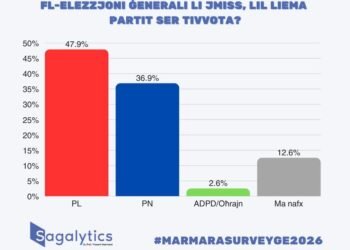
Political polls provide a snapshot of the electorate’s mood at the time they are taken. They are in no way indicative of an election’s outcome. However, while trends consistently show the Labour Party’s strong electoral support, polls have now consistently pointed to declining trust in PN leader Alex Borg and his party. There seems to be widespread consensus that the PN lacks political gravitas on major issues, primarily the economy. That is always a major concern with the electorate.
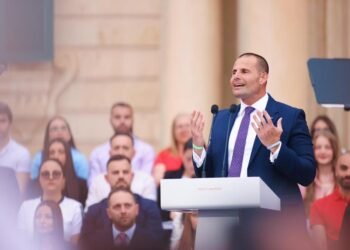
Borg’s incredible statement last Sunday, at a PN activity in Qrendi, that the geopolitical chaos caused by the war in Iran does not affect Malta, justifies the people’s lack of trust in the PN as a better alternative to the Labour government, which has proved to be the only guarantee of Malta’s economic success.
Modern economies are increasingly interconnected. Malta, as a small, open economy, is vulnerable to external shocks, especially those stemming from geopolitical instability. The war in Iran is having a direct impact on global energy prices, inflationary pressures, and supply chains. To dismiss these realities shows a worrying lack of preparedness to lead on economic matters. The electorate knows that, understands this alarming lack of political gravitas, and understands what is at stake. Rather than offering informed, forward-looking solutions, the PN is demonstrating, once again, a deep lack of sensible, responsible, and mature leadership.
AX Group
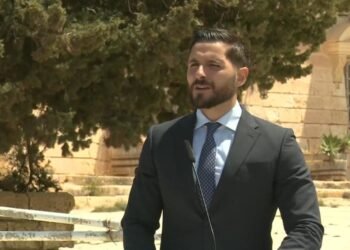
AX Group, a leading Maltese group of companies and a family-run business, has recently taken a noble initiative to contribute to Malta’s cultural heritage. Last week, I attended an event to announce that AX Group will support the conservation and restoration of three extraordinary paintings by Mattia Preti.
Housed in the Chapel of St Peter ad Vincula within the Jesuits’ Church in Valletta, these paintings form part of a remarkable visual narrative of St Peter’s life. In my speech, I explained that “The Liberation of St Peter,” “The Martyrdom of St Peter,” and “The Meeting of St Peter and St Paul” are not just religious depictions but emotionally charged works that combine spiritual depth with artistic brilliance.
These unique works of art shall now be transferred to St John’s Co-Cathedral for a detailed study and restoration using advanced technology.
I am particularly pleased that AX Group took this initiative because it highlights the importance of shared responsibility between the private and public sectors in caring for Malta’s cultural heritage. The Angelo Xuereb family’s support for this initiative is more than just financial; it is, above all, symbolic, for they have shown that Maltese businesses can play a leading role in preserving national heritage, setting an example for others to follow.
Projects such as the restoration of the Jesuits’ Church and the revitalisation of historic buildings like Casa Rosselli-Massa demonstrate how heritage can be preserved while being meaningfully integrated into modern life.
Floriana
Last week, Minister Byron Camilleri and I, together with Parish Archpriest Charles Cini, had the pleasure of announcing a new investment in the restoration of the façade and lighting system of the Parish Church of St Publius, in Floriana. This church is strategically placed facing the Floriana granaries, a major landmark in Malta.
The project will involve both structural and conservation work on the church’s façade, along with the installation of a modern lighting system designed to highlight its architectural features.
The Labour government’s support for this project extends beyond public heritage to include religious sites, which form an essential part of Malta’s cultural fabric.
The Floriana Parish Church project is one of several grants allocated to parishes and chapels across the islands and is expected to attract interest beyond Floriana due to the site’s significance.
Qrendi
The Chapel of Our Lady of Grace in Qrendi is deeply popular with Maltese and tourists alike. Last week, I announced its restoration. Built in 1685, this rural chapel forms an essential part of Malta’s historical and spiritual landscape. In World War II it sustained severe damage, but it survived. However, survival is not enough. Without active intervention, structures like this gradually lose their character. We are now restoring it to safeguard its identity.
In a rapidly modernizing world, where development often takes precedence, projects like this serve as a reminder that progress should not come at the expense of memory. The chapel stands along the road leading to the megalithic temples, placing it within a continuum of Maltese history that stretches back thousands of years. Its presence enriches the cultural narrative of the area, linking religious tradition with archaeological significance.
Surrogacy
While surrogacy, in Malta, remains illegal, the Labour government is deeply aware that the realities of modern family life often extend beyond the limits of existing legislation. This week, in Parliament, my colleague, Parliamentary Secretary Andy Ellul, announced that parents who have children through surrogacy abroad will now be entitled to 18 weeks of leave upon returning to Malta.
At its core, this measure is about fairness. Currently, we have a situation whereby some parents returning to Malta with a newborn child, often biologically their own, however, they are not entitled to parental leave. We believe that such a situation, whilst unfair on families, risks undermining the well-being of the child, who depends on early parental care.
By granting these parents the same 18-week leave afforded to those who give birth or adopt, the government is effectively prioritizing the needs of the child while ensuring that no family is penalized. This is what a Labour government stands for: social justice and fairness, with families at the very core of our policies.