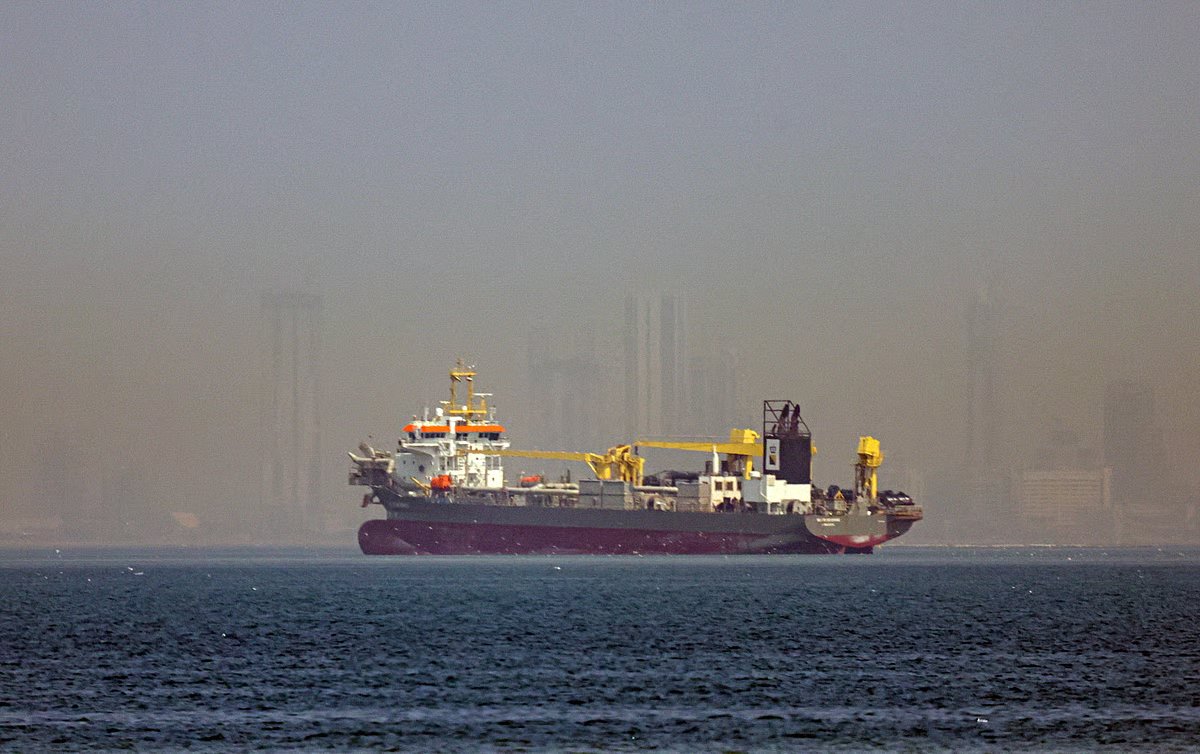
The US blockade of Iran’s ports is unlikely to have any effect on reducing Iran’s exports in the medium term. In the first few days since it was decreed by Donald Trump, most of the Iranian oil tankers that sought to cross that area managed to do so.
This was put into practice on April 12th, a Sunday. According to the survey carried out by the Vortexa data platform, which appears in a report released on Tuesday, the USA discovered 3 unidentified oil tankers carrying Iranian crude, between the 13th and 21st of April, according to what was known until Wednesday, the 22nd.
Now, Ships with connections to Iran risk not passing the US blockade, but have been successful in most attempts. Between April 13 and 21, a total of 34 tankers with connections to Iran crossed the US blockade (some entered, others left) in the same period. To do so, turned off the Automatic Identification System (AIS, its acronym in English).
This technology makes it possible to disseminate, via radio and in real time, the location and speed of vessels, which is why it is of high importance in terms of safety. For this reason, it is mandatory under the regulations of the International Maritime Organization (IMO). Rules that Iran is circumventing, in order to maintain the flow of exports, as the Iranian economy depends heavily on the oil industry.
At the same time, Iran’s blockade of the Strait of Hormuz continuesthat is, in a more inland area of the Persian Gulf. This has been in force since February 28 (the day the US and Israel carried out the first attacks). Vessels linked to Iran and its allies can pass through there. However, the rest, if they do not have prior agreement, run a serious risk of being prevented from crossing the strait… but the success rate is high.
It’s just that the coverage area of the North American blockade is around 480 kilometersas it stretches between the east coast of Oman and the border between Iran and Pakistan. That said, it works dynamically (US navy boats are not always in the same locations) and Iranian tankers seek to exploit gaps.
Now, the entire set of tensions around the Gulf has generated a climate of uncertainty that is evident among companies transporting energy products. Here we are not just talking about oil, but also natural gas (20% of the global market for both passes, under normal conditions, through the Strait of Hormuz), as both cross the two areas in which, at this time, blockades are in place.
In any case, there is a significant reduction in Iranian activity in the region. In the 30 days before the first attacks, 2 to 3 daily movements of oil tankers linked to Iran were recorded. In the period from 13 to 21 April, there was a drop to 1 to 2 per day. The data made it clear some reduction in the distribution chain of Iran’s oil industrybut not enough to justify Donald Trump when he says that the US has “total control over the Strait of Hormuz”, as can be seen in a post he made this Thursday on the social network Truth Social.
Since the US president announced the blockade, 130 million barrels have been in transit and have already passed the US blockade area. To give you an idea, this amount of oil is enough to correspond to two and a half months of imports from China, which is the largest oil importer in the world. Consequently, From Vortexa’s perspective, “the US blockade is unlikely to have any significant effect on the supply of Iranian crude oil to the market in the medium term (2 to 3 months)”can be read in the report.
On the other hand, total movements increased in the same period. Between the 13th and 21st of April, an average of 4.5 crossings was recorded, after 4 being recorded per day in the previous 30 days.
This Thursday, Brent and WTI barrel prices rose again. The impasse in negotiations between the US and Iran kept investors guessing. At the same time, tensions were increasing, with Israel’s Defense Minister indicating that he was awaiting US guidance to resume the attack on Iran and “complete the elimination of the Khamenei dynasty”, which has led Iran since 1979.
Until 11:42 pm, in the case of Brent (European reference for trading oil futures contracts), there was a daily increase of 4.02%, up to 106.01 dollars per barrel. At the same time, the American counterpart advanced 3.99% and was around 96.67 dollars per barrel.