The second phase of the Gaza ceasefire agreement represents a complex equation in which the calculations of regional and global powers intersect, and what is portrayed as “American-Zionist reluctance” hides a conflict between two logics, the logic of the alleged democratic peace theory that Washington selectively adopts, and the logic of offensive realism that the Netanyahu government is pursuing to achieve maximum strategic gains. This stalemate is not random, but rather the result of precise calculations used with the logic of game theory in conflict management, as the entity seeks to achieve a new “balance of power” that guarantees its security dominance even at the expense of blowing up the agreement.
As the entity seeks to enhance its power and security, regardless of moral or legal considerations, with Western American support in particular, the refusal to completely withdraw from Gaza, control the Rafah crossing, and delay the deployment of the International Stabilization Force, come as measures that fall within the strategy of “creating facts on the ground” to impose unbalanced solutions. On the other hand, the American position reflects a contradiction between supporting multilateral solutions and short-term self-interested alliances, especially in light of the regional transformations and the upcoming American elections.
Therefore, Gaza has become an arena for a regional influence struggle that goes beyond the Palestinian-Zionist borders, as the current American-Iranian escalation creates strategic confusion, at a time when the entity will use the Iranian crisis as an excuse to rearrange its priorities in Gaza according to the approach of creative chaos that aims to keep the region in a state of instability that allows for re-engineering the political map in light of fears of “displacing” the Palestinians according to the demographic engineering that the entity has historically adopted to achieve demographic superiority.
The entity’s legislative elections, expected in October 2026, are approaching and constitute a major driver of the stalemate. Netanyahu’s narrow coalition government is waging a survival battle in which it uses the files of “disarmament of the resistance” and the “Iranian threat” as electoral cards. After the 36th government lost its majority, early elections were called for 2022. They resulted in Netanyahu’s bloc obtaining a majority and a government was successfully negotiated between Likud, Otzma Yehudit, Noam, and the Religious Zionist Party. United Torah Judaism and Shas. The coalition was sworn in on December 29, 2022. With this new government, Benjamin Netanyahu returned to the premiership, after being out of office since the anti-Netanyahu bloc won a majority in the 2021 elections and formed a government without the Likud Party led by Netanyahu.
Five members of the National Unity Party (Benny Gantz, Gadi Eisenkot, Gideon Sa’ar, Hailey Tropper, and Yifat Shasha Biton) joined an emergency government in time for the aggressive war on Gaza in October 2023. Gantz and Eisenkot also joined the Zionist war cabinet. Sa’ar announced on March 25, 2024 that the New Hope Party resigned from the government, and Gantz and the rest of the National Unity Party left the government on June 9. The Otzma Yehudit Party announced on January 19 that it would leave the government because the government agreed to the ceasefire agreement in Gaza. Hence, the fragility of the balances makes Netanyahu maneuver to ensure that he gains political cards. According to the logic of the race to the bottom, where Zionist parties compete to adopt more extreme positions towards the Palestinians. The withdrawal of parties such as “Otzma Yehudit” from the government due to its agreement to a ceasefire shows the clash with narrow factional interests.
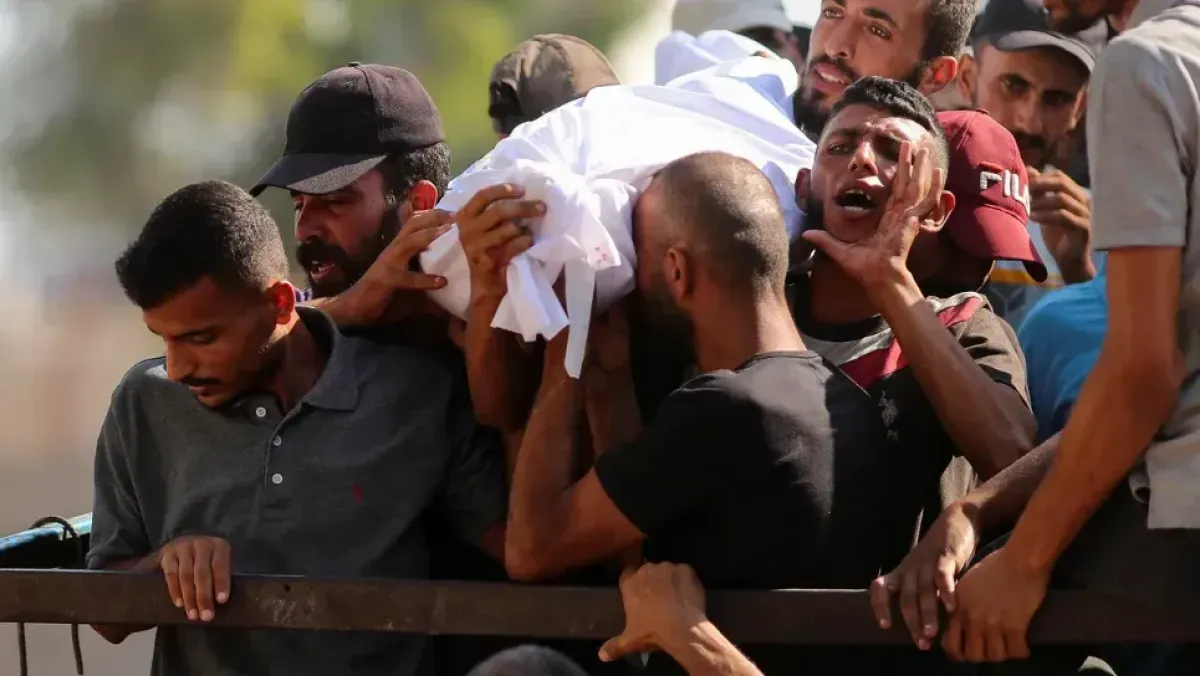
The entity is following a “double trap” strategy in Gaza, on the one hand, signing the agreement and then obstructing its implementation, which creates a pretext to accuse the Palestinian side of not being serious. On the other hand, the daily violations (576 dead and 1,543 wounded since the agreement) are used as a tool for institutional terrorism that aims to break the will of the Palestinians. As for controlling the crossings and controlling aid, it represents an application of the principle of “collective punishment” as a tool of political pressure.