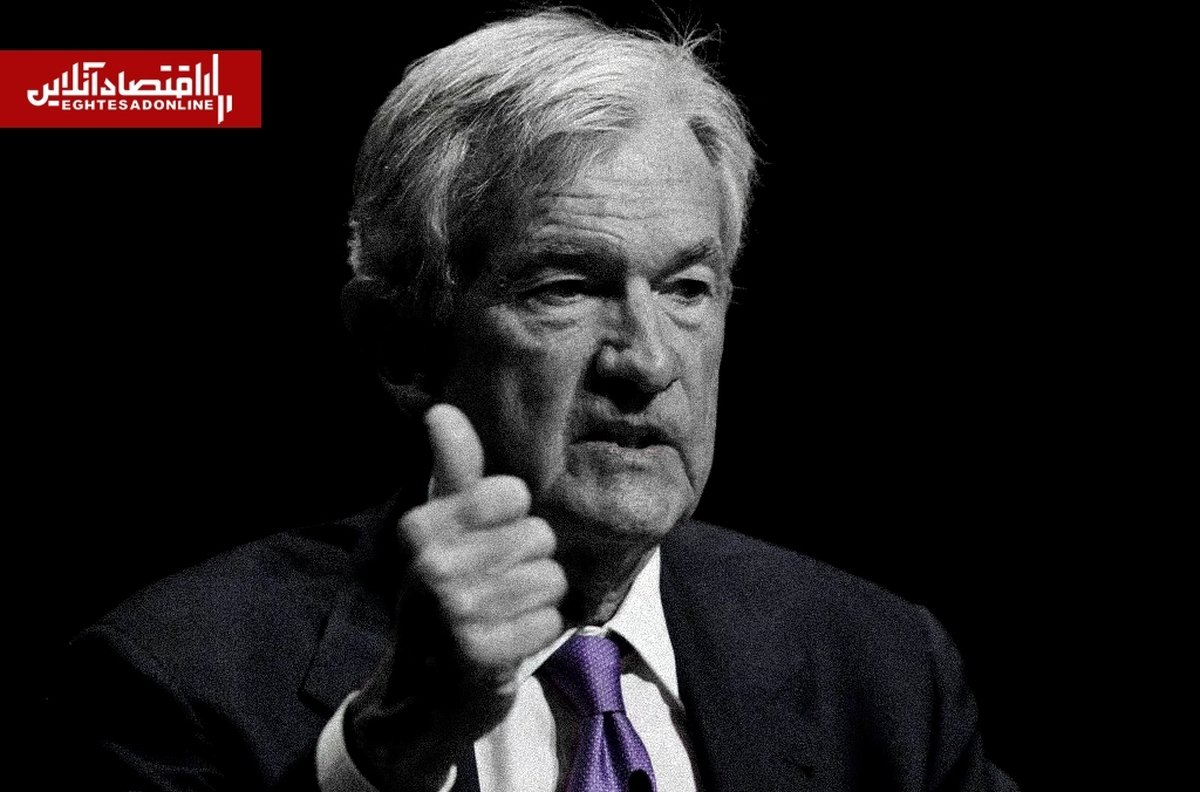
Two years ago, when the economy was moving and inflation was falling, Jerome Powell, the chairman of the Federal Reserve, responded with a humorous tone to a question about stagflation. He said: “Actually, I don’t see “recession” nor “inflation”.
The term, which refers to an economy plagued by both weak growth and high inflation, resurfaced last year when tariffs threatened to raise prices and reduce employment. But it remained more of a hypothesis; A policy choice that could be reversed.
The return of the risk of inflationary stagnation in the American economy
Now, the energy shock of a real war has rekindled the danger; A shock that has hit an economy where inflation has never fully returned to the Federal Reserve’s 2 percent target. Comparison with the inflationary stagnation of the 1970s is no longer as far-fetched as it was two years ago.
Federal Reserve officials are almost certain to keep benchmark interest rates on hold at a range of 3.5% to 3.75% at the two-day meeting that ends on Wednesday. But the meeting, Powell’s last before his term ends next month, is a turning point in an important debate: How long can the committee defend its recent stance that the next move is more likely to be cuts than increases?
The pressure of economic shocks and the hesitation of policy makers
Officials are weighing how the U.S. economy will digest the fourth supply shock in five years from post-pandemic reopening, Russia’s invasion of Ukraine, tariffs and now the Middle East. Each of these cases could be considered a temporary event that did not require a policy response. But their cumulative effect is cause for concern. Tariffs have already challenged the willingness of businesses and consumers to pay higher prices.
Policymakers are weighing whether weak employment growth suggests the labor market is too fragile. If the economy attracts less labor due to reduced immigration, it will need to create fewer jobs.
Changing the way the authorities look at inflation and the labor market
Federal Reserve Board member Christopher Waller, whose concerns about the labor market underpinned three rate cuts last year, has shifted focus this month to inflation. He pointed to the 1970s; when a series of shocks that officials saw as temporary caused inflationary expectations to spiral out of control.
Waller said: We have to be cautious against this series of seemingly episodic shocks. Expectations are important and at some point we may have to react.
Despite the ceasefire in the Iran war, the Strait of Hormuz remains practically closed. The price of jet fuel has risen sharply, and now the Federal Reserve officials expect no progress in returning inflation to the 2% level for another year.
Persistence of inflation and the credit challenge of the Federal Reserve
“We keep talking about the number two, but it’s been five years and we’ve never gone back to it,” Waller said. At what point do people start to doubt your promises?
Some officials until recently talked about resuming interest rate cuts this year to offset the automatic tightening of financial conditions that occurs when inflation eases but rates remain flat. But that’s not the case anymore. John Williams, head of the New York Federal Reserve, told reporters on April 16: “We are not in that situation right now.” If anything, (inflation) is rising.
Disagreement about the future path of interest rates
The American economy has changed since the 1970s in such a way that a complete repetition of that period seems unlikely. Also, the Federal Reserve now pays much more attention to inflation expectations.
Williams described the Fed’s current stance as a conscious choice, not a default. He said: We are definitely in the right place for monetary policy. This is where we want to be.
The bigger question for committee members is whether they should change their official statement to indicate that rate cuts are off the agenda. In the past, changes in this official language have been at least as important as interest rate decisions.
The role of policy signals in financial markets
A nine-word phrase suggesting the next policy move is more likely to be a cut than an increase remains in the statement from late last year. A minority of officials in the last two meetings wanted to remove this phrase. Removing it will mean that the interest rate is equally likely to decrease or increase.
Their argument is this: Inflation is headed in the wrong direction, and a return to the 2 percent level becomes more difficult to predict as shocks increase. The labor market remains resilient and stock prices have returned to new records. None of these things are consistent with the approach that continues to talk about lowering interest rates.
However, the prevailing view in the committee is that such a change would be too drastic. A formal change in this language could itself lead to a tightening of financial conditions, a contractionary measure that authorities may not yet be ready to undertake. “It doesn’t make sense to want to give strong forward-looking guidance when we’re not doing that,” said Williams, a key Powell ally.
Officials are scheduled to review the matter again this week.
The future of monetary policy as the leadership of the Federal Reserve changes
Committee thinking sometimes changes faster than its official language. Before a change in policy statement is announced, officials have more subtle ways to send signals about the future path, including at Powell’s news conference on Wednesday, speeches by officials in May or forecasts that will be released at the next meeting in mid-June.
Until then, the leadership of the committee will likely be handed over to former Federal Reserve member Kevin Warsh, who was nominated by Donald Trump to replace Powell. The process of deciding whether and how to formalize a change in Fed guidance may be left to Warsh; A person who will probably have a different perspective on this issue.