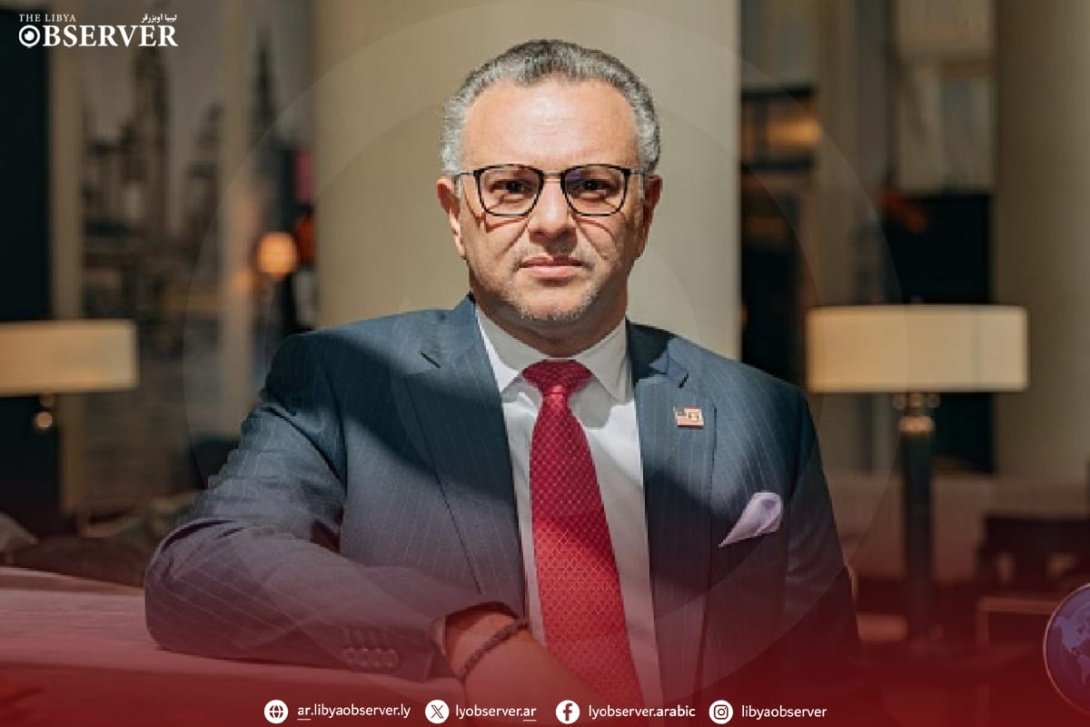
The Senior Advisor to the US President on Arab and African Affairs, Massad Boulos, reaffirmed Washington’s full support for efforts to strengthen Libyan institutions, stressing the need to implement a unified budget and move forward with a comprehensive national process leading to elections and expanded economic opportunities.
Boulos made these remarks during his speech at the 8th annual conference of the National Council on US-Libya Relations, attended by Presidential Council Vice President Mossa Al-Koni. He noted that the current year marks an important milestone in the development of US-Libyan relations, with tangible results of bilateral cooperation beginning to emerge.
He explained that the progress made by leaders in eastern and western Libya reflects a growing recognition of the importance of cooperation to achieve stability, reinforce sovereignty, and support the economy. He added that the country’s future rests on three main tracks: unifying military and security institutions, enhancing political cooperation, and promoting transparency through a unified economic framework.
On the security front, Boulos pointed to noticeable progress, particularly steps taken toward unifying the military institution, supported by the Flintlock exercise, which has contributed to strengthening coordination and building trust among the parties.
Politically, he emphasized that unifying institutions is a prerequisite for successful elections, underscoring the need for broad consensus and inclusive initiatives that enjoy wide support across regions and institutions, ensuring the preservation of national sovereignty.
He also reaffirmed US support for the UN-led process and the political roadmap, highlighting ongoing American diplomatic efforts to bridge differences among Libyan actors in coordination with the United Nations Support Mission in Libya.
On the economic front, Boulos described the unified budget agreement as key to building a coherent economic policy based on joint management of oil revenues, ensuring fair distribution of resources. He called on Libyan leaders to prioritize national interest over narrow agendas.
He concluded by stressing that any future political initiative must be inclusive and broadly supported to enhance stability and meet the aspirations of the Libyan people.