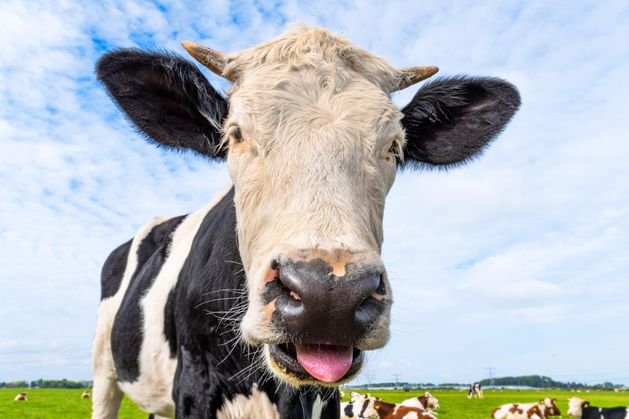
Stories about buying diggers, breeding bulls, dairy cows preferring mattresses to hard shed floors and how Irish farming looked in the 1926 census caused me to chuckle. It certainly gave me a positive, motivational start to my day.
Looking around the packed train, I was probably the only commuter focused on rural stories instead of all the other negative global news being consumed by the other passengers.
Seamus Joyce, Richmond, London
Is Pope Leo preaching the gospel of protest singer and folk musician Dylan?
I note that the Pope, in one of his speeches in Cameroon, made reference to the “masters of war” who “pretend not to know that it takes only a moment to destroy, yet often a lifetime is not enough to rebuild”.
It would make you wonder if Leo is a Bob Dylan fan.
Brian Ahern, Clonsilla, Dublin 15
Developed world turns its back on poorer nations at its own political peril
Reading of the ripple effects of the Iran war, one could be forgiven for thinking this is a distant problem, unfortunate but contained.
It is not. When a friend in California sends a photo of petrol nudging $6 (€5.10) a gallon, you begin to see how quickly these shocks travel and how little respect they have for borders.
Here, as elsewhere in the developed world, there is a temptation to treat such signals as temporary turbulence – the kind of distant disruption that generates brief unease before fading from the news. That may not be possible this time.
The real difficulty is not simply rising prices, but that the playbook for poorer countries no longer works.
For years, the advice was simple: trade your way up, industrialise, join the global economy. That path is now blocked by tariffs, weakened institutions and a general retreat from co-operation.
Add in the arrival of AI, which may reduce the value of cheap labour, and it becomes clear that the ladder many countries hoped to climb is being quietly pulled away.
We in Ireland, like others in the developed world, may be tempted to view this as someone else’s hardship. That is short-sighted. Economic distress does not stay politely at home. It travels, in the form of migration pressures, political instability and supply disruptions that eventually land on our own shores.
This does not feel like a passing storm, but a change in climate. The danger is not one sharp crisis, but a steady pattern of shocks that the world is less and less able to absorb.
If that feeling proves correct, the consequences will shape politics far more than any single conflict.
Enda Cullen, Tullysaran, Armagh
It is wrong to blame liberal ideas for deterioration of Irish societal cohesion
I believe David W Higgins is incorrect to think that ‘There was more to the fuel protests than diesel prices – liberalism had gone too far’ (Irish Independent, April 21). The problem is not liberalism, but the rise of the extreme right.
Thomas Garvey, Claremorris, Co Mayo
MAGA die-hards must do something to put an end to Trumpian over-reach
President Donald Trump’s erratic behaviour over the last few weeks has, in my view, rendered him unfit for office.
That appears obvious to House Democrats, who are petitioning to remove him under the 25th amendment. They won’t succeed – no one has ever achieved such a removal – but all this raises an even bigger question for me: how long are those around Trump prepared to stand by and do nothing?
John O’Brien, Clonmel, Co Tipperary
Cruel online trolling says more about perpetrators than about those it targets
I was saddened to read about the email described in Tanya Sweeney’s column (‘Here’s what I want to say to Dan, the man who emailed to call me “Bosco’s fat love child” and talk about my “chubby cankles”’, April 20), and how it managed to throw her day off course.
It’s remarkable how a few careless words from a stranger can shake one’s focus from what really matters.
Something struck me about the way “Dan” sent his message. As Sweeney notes, “to write publicly is to invite response”, yet by withholding his full name and sending the email privately, he didn’t seem to want an honest exchange. It felt like he wanted to wound quietly and without consequence.
Like Sweeney and so many others, I know how it feels to have attention steered away from what you want to say just because of how you look. Sometimes it helps to remember these comments reflect the sender far more than the recipient.
As Theodore Roosevelt said: “It is not the critic who counts … the credit belongs to the one who is actually in the arena.”
I hope columns like Sweeney’s continue to focus on the stories, ideas and humanity that matter most, far more than the critics in the shadows.
Barbara Clancy, Stillorgan, Co Dublin
Ignoring Fianna Fáil and Fine Gael history is clear case of selective blindness
Fionnán Sheahan has another predictable hop off Sinn Féin over the fuel protests (‘McDonald’s courting of Official Ireland comes to an end in fuel protests support’, April 20).
Just to be clear, I wouldn’t vote for them. I did, but their policies seem to change with whatever way the wind is blowing.
But I take issue with his cheap shot that, “30 years earlier, the republican movement was bombing the City of London”. I walked down Talbot Street in May, 1974, just before Dublin city centre was bombed. That’s 22 years before what Sheahan referred to.
It is a murky picture. Which is worse, suspected British collusion in the biggest atrocity on this island since partition, or republican bombing of a London financial centre?
Of course, both were abhorrent, but if Sheahan is going to be fair, then he might also hold Fine Gael responsible for Ballyseedy and the execution of Erskine Childers, and Fianna Fáil responsible for starting a civil war.
When can Sinn Féin hope to be admitted to the sanctuary of purity in which the civil war parties now dwell?
John Cuffe, Co Meath