Washington/Jerusalem/The president of the United States, Donald Trump, said this Wednesday that Israel’s attacks against Hezbollah in Lebanon are a “skirmish” separate from the war waged together with the Jewish State against Iran, so they are not part of the temporary ceasefire reached last night with Tehran. Asked in a telephone interview with PBS radio whether he was aware of the massive Israeli bombings launched today without warning against Beirut, Trump responded: “Yes, they were not included in the agreement.”
According to Trump, the Shiite terrorist group itself was the reason they were not included in the two-week pause in the conflict with the Islamic Republic. “Because of Hezbollah. They were not included in the agreement. That will also be resolved. There is no problem,” he clarified.
This Wednesday, in the midst of the ceasefire in Iran, the Israeli Army bombed more than 100 “targets” in just ten minutes in Lebanon, the largest wave of attacks since the start of the war, causing panic among the civilian population.
“It’s part of the agreement, everyone knows it. It’s a separate skirmish”
Asked what he thought of Israel continuing to attack Lebanon, Trump replied: “It’s part of the agreement, everyone knows that. It’s a separate skirmish,” without offering more details about the conversations with his Israeli allies.
Iran and the United States agreed last night to a 14-day truce conditional on the reopening of the strategic Strait of Hormuz. This period will serve to negotiate the end of a war that began on February 28 and has left thousands dead in Iran, including women and children, with at least 13 US soldiers dead.
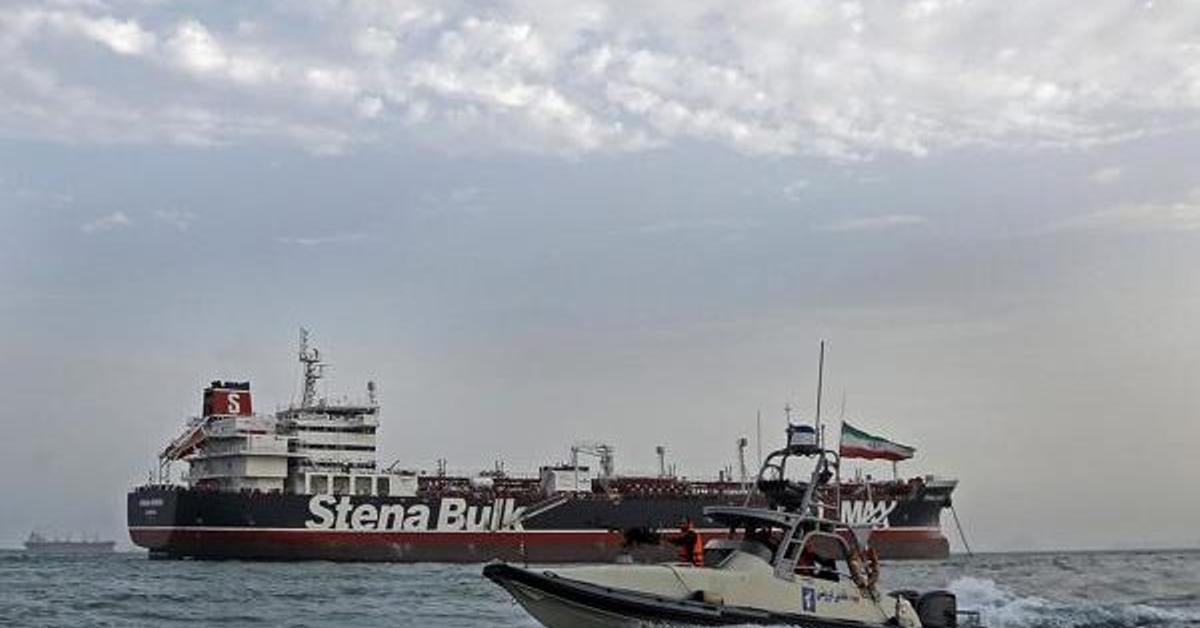
Faced with the continuous bombings on Lebanon, Tehran announced this Wednesday that it has interrupted the navigation of oil tankers through Hormuz, resumed after last night’s pact.
The Islamic Republic would also be conditioning its participation in next Friday’s negotiations with the United States in Islamabad on the ceasefire also being implemented in Lebanon, according to information from the American newspaper Wall Street Journal.
“We have seen Hezbollah trying to expand and reach areas that were not previously recognized as Hezbollah’s own.
For its part, the Israeli Army justified its bombings against central areas of Beirut on Wednesday by alleging that Hezbollah has moved “to the north of Beirut and the mixed neighborhoods” of the capital, outside its traditional stronghold on the southern outskirts.
In a video conference with journalists, military spokesman Nadav Shoshani suggested that the Israeli attacks this afternoon against the center of Beirut – which followed others simultaneously against the south and the Bekaa Valley – responded to this alleged new strategy.
“Throughout this operation since March 1, and even before, we have seen Hezbollah trying to expand and reach areas that were not previously recognized as Hezbollah’s own. It is part of their strategy,” he said.
Asked if the Israeli Army had warned in advance that they were going to bomb, especially central and highly populated areas of Beirut, Shoshani said that “the factor of surprise is relevant” when the target is “terrorists.”
In recent weeks and during the conflict that opened following the Hamas attacks of October 7, 2023, Israel had already bombed Sunni and non-Shiite areas of Beirut.
On Wednesday afternoon, coinciding with the ceasefire in Iran, the Israeli Army bombed more than 100 “targets” in just ten minutes in Lebanon, the largest wave of attacks since the start of the war, causing panic among the civilian population.
EFE observed a collapsed south of Beirut and how dozens of ambulances and fire trucks emerged from the attacked areas, both in the capital’s suburbs, known as Dahye, and in Beirut itself. The Lebanese Government announced that these attacks have caused “dozens” of deaths and hundreds of injuries, while the president, Joseph Aoun, has described them as a “massacre.”