For migrants who cross the border without documents, without contacts and without certainties, the Shelter ClinicMigration and International Protection of the University of Costa Rica (UCR) offers legal and psychosocial advice free of charge.
A lawyer, a psychologist and law students collaborate so that the “lack of resources” is not another obstacle in the way of those seeking regularization in Costa Rica.
“More than ten years ago, TCU 480 was created, founded by director Melissa Salas,” recalls the lawyer in charge of the clinic, who did not want to give her name, claiming that she works with refugees.
“She (Melissa Salas) started with that project focused on students learning about the phenomenon of migration and refuge, and above all on the legal protection that migrants needed,” she details.
Over the years, the academic project has grown and accompanied multiple waves of migration—Colombian people, displaced by climate causes—until in 2019, after the massive arrival of Nicaraguans, it was formalized as what it is today: a permanently open legal attention space.
Even during the Covid-19 pandemic, the service was not interrupted: attention moved to email. In 2022, the lawyer assumed coordination and, since then, the clinic has operated continuously.
That same year, a part-time Psychology professional joined the team, whose role goes beyond addressing mental health problems: she accompanies each person in a broader integration process. “Sometimes that support is what the person needs most for integration,” explains the coordinator.
“We have perhaps become a safe space for many people, especially women, who know that they are going to find support, a place where they can ask questions with confidence, vent and continue on the path of migration, which is sometimes a bit complicated,” mentions the person in charge of the clinic.
How appointments work at the Clinic
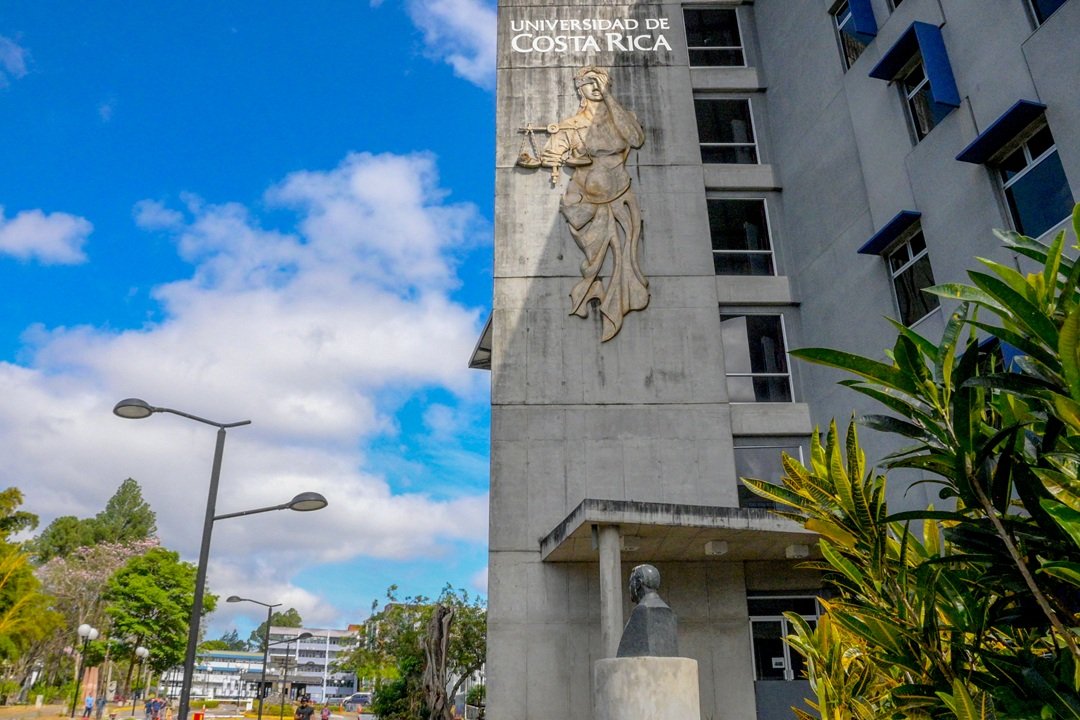
To schedule your free appointment you can make a phone call to the number 2511-1553, by email: (email protected) or go directly to the facilities of the Faculty of Law of the University of Costa Rica (UCR), which is located within the Rodrigo Facio University City in San Pedro de Montes de Oca.
“If they can be attended to at once, they are attended to; and if not, an appointment is set for them later,” says the lawyer.
The first appointment is a structured, but open interview. “Previously we fill out a form, they are asked a series of questions and we let them know that it is confidential, to know the entire situation related to the immigration process: the time they have here, if they have had any documents,” he describes.
The goal is to go beyond the immediate problem. “Sometimes they come for a problem, but it turns out that, out of so many questions, we tell them: this is not the option, you can do this,” he highlights.
Annually, the clinic advises and accompanies about 600 migrants and serves almost all migratory categories: refuge, residence, naturalization, people at risk of statelessness and people already recognized as statelesswithout requiring prior documentation for a first consultation.
“Sometimes they come without any document. We can evaluate what they can present to see which immigration category best suits them,” he says.
However, there are clear limits: “We do not have the capacity to provide legal representation or serve as representative attorneys in the immigration process. What we do offer is advice,” he emphasizes.
Most of the applicants are Nicaraguans
The most frequent profile reflects the migratory reality of Costa Rica. “The majority are Nicaraguan people in vulnerable situations and with medium-low levels of education in general,” says the lawyer.
One of the most common obstacles is the difficulty in obtaining documents from the country of origin. “People cannot, or it is becoming very difficult for them, to bring their documents from Nicaragua,” he mentions.
The situation is worsened by the disappearance of support networks that previously facilitated these efforts. “Before there were organizations that could help them bring the documents from there. There is no longer any possibility of that resource,” which leaves many people trapped in an immigration limbo without being able to regularize their situation.
A procedure that finally went well
Among the hundreds of cases monitored, there is one that summarizes the impact of the clinic’s work. A woman who had lived in Costa Rica for more than twenty years had tried twice to obtain her naturalization, without success.
With the support of the team, the procedure was reconsidered: the evidence was presented correctly, but an email from the immigration authority arrived without being seen in time and the request was denied again. It was the constant monitoring of the lawyer that saved the process.
“I knew that she had that evidence and that she had presented it. So the appeal was made, the procedure was saved and she is happily with her Costa Rican person document. That was recently,” recalls the lawyer in charge of the clinic.
The result has a meaning that goes far beyond a piece of paper. “Having a document means having access to rights: fewer difficulties in requesting medical care, acquiring insurance or finding employment,” he concludes.