Restrictions imposed by forces increased Occupation Israel in the occupied territories, especially in West Bank And occupied Jerusalem, which deprives Palestinians of access to services and livelihoods, in addition to the continuation of settler attacks against displaced Palestinians and Palestinian families in the West Bank. According to reports from the United Nations and humanitarian organizations
According to the office United Nations For the coordination of humanitarian affairs, which showed that the restrictions imposed on movements Palestinians They arrive in various parts of the country West Bank It is increasingly noted that on at least three occasions over the past month, Israeli forces have established obstacles, including checkpoints, gates, trenches and dirt mounds, in several governorates in the West Bank. This hindered residents’ access to services, housing, and their sources of livelihood, and is in addition to other restrictions imposed for decades.
OCHA and its partners documented 925 obstacles that limit access to livelihoods and services for about 3.4 million Palestinians. This is a 43 percent increase over the average over the past years, and the highest number ever recorded.
540 targeting of Palestinian settlers in the West Bank
Targeting and attacks have not stopped in the West Bank, as the Office for the Coordination of Humanitarian Affairs documented a few days ago that during the first quarter of this year, 33 Palestinians were martyred and 790 others were injured at the hands of Israeli forces or settlers, while more than 540 attacks launched by Israeli settlers caused human casualties or damage to property.
The OCHA office reiterated the need to investigate attacks targeting civilians, and the need to provide protection for them, stressing that Israel, as the occupying power, has an obligation to protect the Palestinian population, and the perpetrators must be held accountable in accordance with the provisions of international humanitarian law.
The United Nations warns of a shortage of motor fuel, which threatens to halt major services
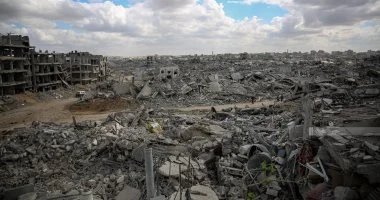
In Gaza, international organizations warned of a shortage of motor fuel for more than 40 United Nations agencies and humanitarian non-governmental organizations, which is necessary for the continued operation of vehicles and electric generators in the Gaza Strip, explaining that if this shortage continues, basic services such as health, water and sanitation will be at risk of deterioration or even collapse, stressing that approvals and a continuous flow of supplies are absolutely necessary, and according to the United Nations, only 43% of all health centers that were operating before October were 2023 are still working, and most are only partially working.