A leading physician says a “prescription” of nature may replace medication in cases of mild depression and sleep problems.

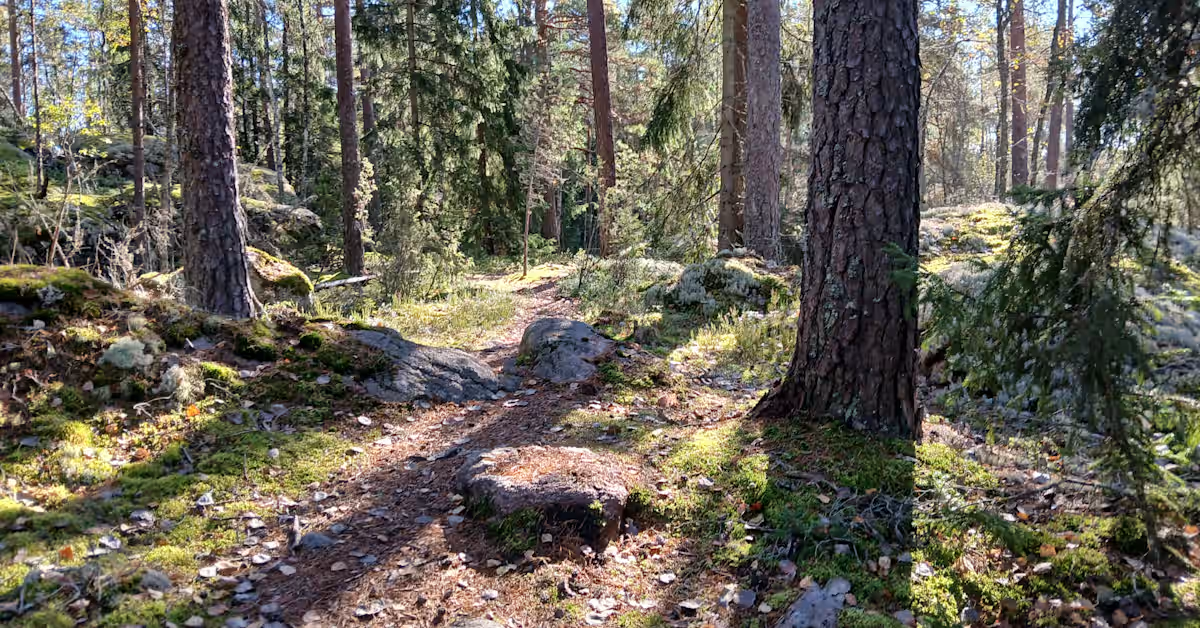
A growing body of research has begun to explore how something as simple as time in nature might support health.
Primary care physician Annika Kolster is one vocal proponent of spending more time outdoors. She is a senior medical teacher at the wellbeing services county of Western Uusimaa and a clinical lecturer at the University of Helsinki.
Her research has examined how nature-based interventions can support health and wellbeing. Her message? Nature is not just something nice to look at — it’s evidence-based healthcare.
“I’ve worked as a primary care doctor for nearly 20 years. I’d like us to have better ways to support patients’ wellbeing alongside diagnosing and treating illness.

What is a nature prescription?
A “nature prescription” is not necessarily a prescription in the literal sense, but a recommendation included in a care plan, Kolster explained.
The idea is for doctors and healthcare professionals to start highlighting nature as an important part of rehabilitation, helping to improve health and functional ability.
“In common conditions like diabetes, obesity, hypertension and depression, there are many risk factors that can worsen the illness. That’s where I see being out in nature as part of overall care,” she added.
She also pointed to research from the UK showing that group-based contact with nature can be as effective as cognitive behavioural therapy, a form of talk therapy.
In Sweden, SSRIs — the most commonly used class of antidepressants — are not recommended for mild depressive symptoms, according to Kolster.
Improved sleep
In a clinical study, Kolster and other researchers had 79 adult primary care patients in Sipoo take part in either a nature group or a conventional exercise group over eight weeks.
Many of the participants had diabetes or symptoms of depression.
The results showed that both groups experienced improvements in physical health, but the nature group stood out on one key measure, which was sleep. As many as 61 percent reported sleeping better.
For older people in assisted living, loneliness is a serious risk factor, which Kolster compared to smoking. Sharing nature experiences in groups can help break that isolation.
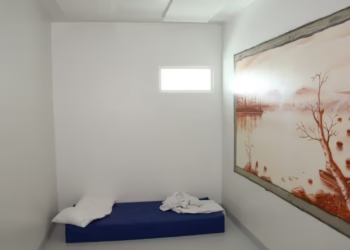
For the most vulnerable, who cannot get outdoors on their own, small interventions can still make a difference. This might mean bringing nature indoors through scented leaves, birdsong, or images of natural environments.
“A strong connection to nature can also improve wellbeing even if you are not able to be in nature yourself,” she said.