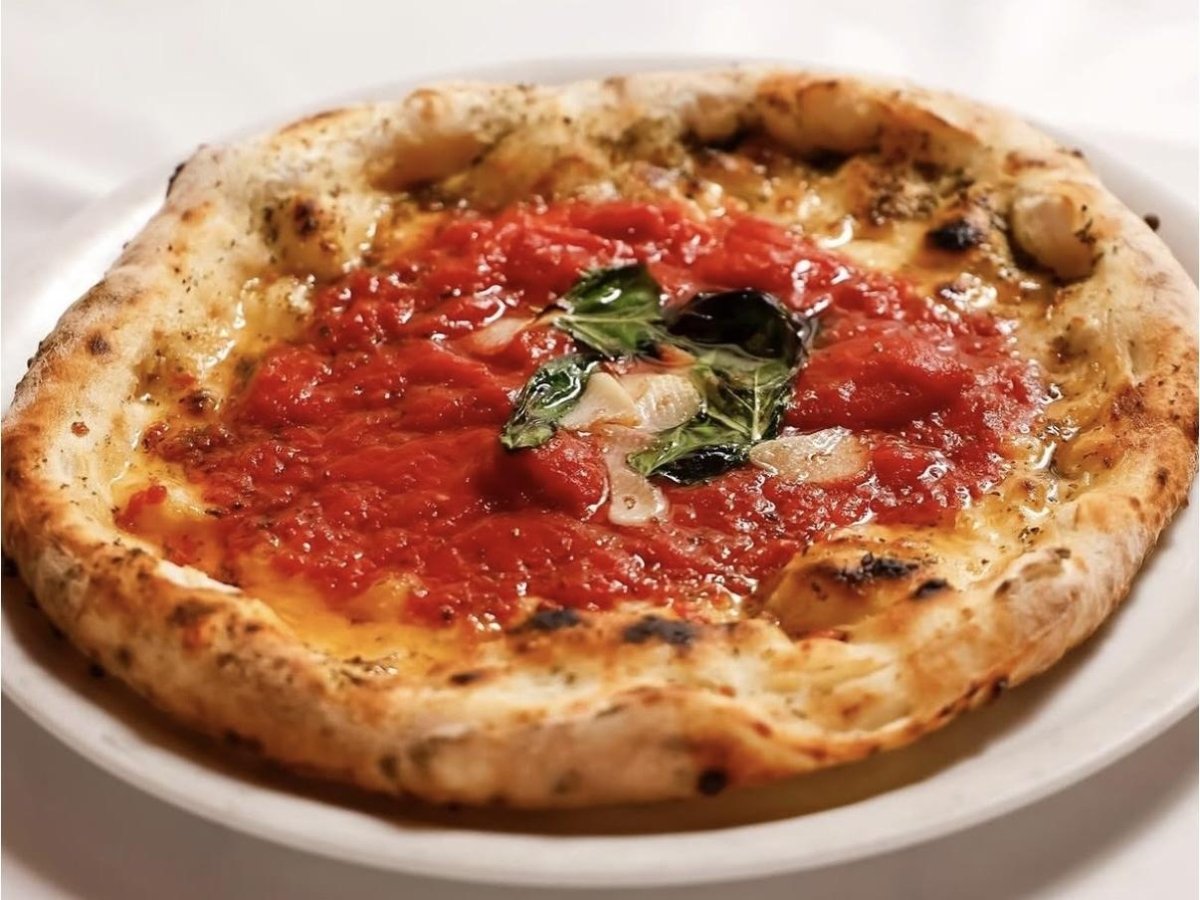
Cornice with marked burns, internal structure less moist than the classic Neapolitan margherita, cedar chips in the oven to give a smoky note and use of Okinawa salt which intensifies the flavour. Here is the reinterpretation of “made in Japan” pizza that is spreading in New York
Cornice with marked burns. Internal structure less moist than the classic Neapolitan daisy. And then cedar chips in the oven to give a smoky note and use of Okinawa salt which intensifies the flavour. Here is the “Tokyo style” pizza, a contemporary reinterpretation of pizza born in Japan and now widespread in New York thus contributing to growing international attention.
The origin is due to the Japanese pizza chef Susumu Kakinuma
The style is related to Japanese Susumu Kakinumawho trained in Naples about thirty years ago by observing traditional pizza techniques. Back in Tokyo, he developed an experimental approach to flours, fermentation and cooking, according to an artisanal logic. He opened the «Savoy» pizzerias in 1995 and «Seirinkan» in 2007 – in the Kamimeguro neighborhood, today considered one of the best pizzerias in the world where only margherita and marinara are eaten -, training a new generation of quality pizza chefs including Tsubasa Tamaki, now active with «Pizza Studio Tamaki».
Main features
But what exactly is this pizza like? The “made in Japan” daisy features a high cornice of variable dimensions (not 1-2 centimeters wide as the classic Neapolitan requires) with evident bubbles and burns check (which the traditional daisy doesn’t want), while the center is drier. The cooking takes place in ovens at very high temperatures in which cedar chips are added, which contribute to a smoky note. A distinctive element is also the use of Okinawan salt, which intensifies the flavor.
Differences compared to Neapolitan pizza
Neapolitan pizza follows codified standards defined by the True Neapolitan Pizza Association, with precise criteria on shape, cooking and method. Tokyo style pizza does not adhere to these rules and it does not have a shared standardized method. Furthermore, it has a cornice with more marked burns, a less humid internal structure and a more extreme cooking, elements that define its autonomous identity.
International diffusion
The style also spread to the United States, where technical adaptations related to climate and water were necessary in New York. Both Kakinuma and Tamaki had to modify doughs and production processes, also facing logistical and operational challenges: Tamaki, for example, had to adapt to the cold and minerality of New York water. The model is expanding with new openings in different areas of the world, including Los Angeles (where Pizzeria Sei opened for example) and New York, as well as other countries in Asia and Europe.
The possible arrival in Italy
The possibility remains open that Tokyo-style pizza will also arrive in Italy, particularly in Naplesa symbolic place of the pizza tradition. A possible entry would represent a direct comparison between an innovative style and a historically consolidated gastronomic culture, rather than a simple geographical expansion.