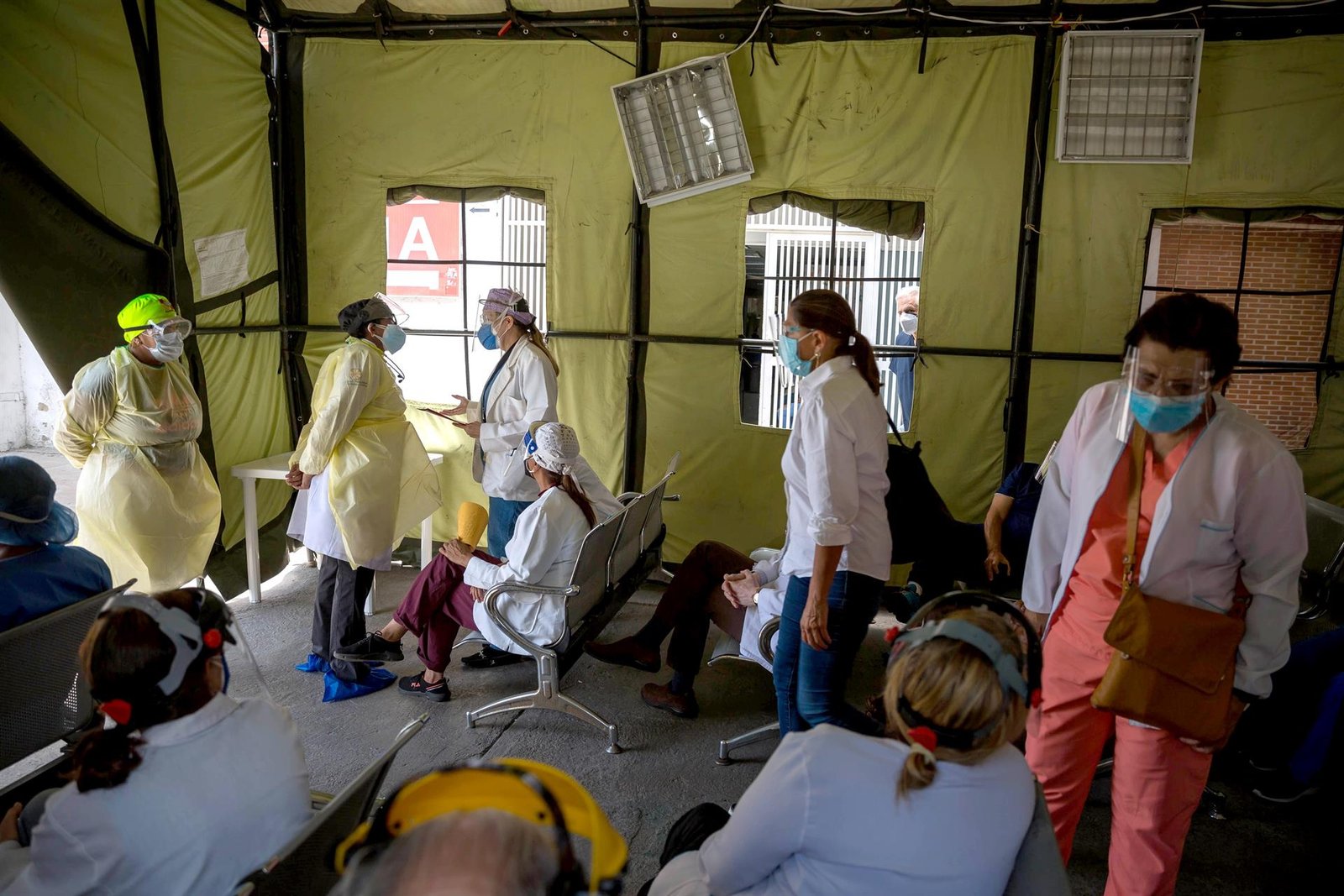
After years of marches, banners and labor demands that she considers ignored by the government, which she accuses of “mocking the dignity of workers,” nurse Rosa Osorio made one of the most difficult decisions of her life: leave her uniform in Venezuela and cross the border after the disputed 2024 presidential elections.
Originally from the state of Trujillo, Rosa is one of the health professionals who have emigrated in the midst of the economic crisis and the deterioration of working conditions in the country. For her, the results of the presidential elections ended up reducing expectations of immediate political change and reinforced her decision to seek better living conditions for her children.
“I left Venezuela very sad and I fought until the end for my labor rights and for democracy. Today my children receive high-quality education and are happy because the power does not go out,” account in interview for The National.
Tranquility in exile
Rosa’s story reflects the differences she finds between her current life in Colombia and the situation that, as she relates, her relatives are going through in Trujillo. While he has achieved stability in the neighboring country, those close to him continue to face prolonged power interruptions.
“Before we spent more than 24 continuous hours without light, but it was occasional. Now the situation is worse, because my relatives tell me that they spend entire days in the dark and my nephews have to do their schoolwork using candles or flashlights,” he says.
Added to the difficulties of public services is the loss of purchasing power of health sector workers. In September 2026, the Family Food Basket, calculated by the Cendas-FVM, reached $761.35, a figure that contrasts with the income of public workers.
In this context, doctors and nurses face difficulties in meeting their basic needs and some resort to more than one work activity to supplement their income, with consequences for their physical and emotional well-being.
“They treat us like slaves”: the clamor heard in the distance
Despite the emigration of professionals, workers who remain in Venezuela continue to demonstrate to demand salary and labor improvements. According to records of the Venezuelan Trade Union Network, the public sector accumulates more than 1,100 demonstrations so far in 2026, driven by the rejection of frozen salaries and the bonus scheme that, according to union organizations, affects the calculation of social benefits.
One of the points of conflict is the calculation of Christmas profits. The workers demand that the end-of-year payment not be calculated solely on the minimum wage of 130 bolivarsbut take into account the comprehensive income of 240 dollars announced in April by the Delcy Rodríguez administration. The discussion takes place amid the loss of purchasing power and demands for remuneration that allows basic expenses to be covered.
Tension increased after demonstrations related to the p12 hour national ring called for last November 16. From Colombia, Rosa maintains contact with former colleagues on duty and closely follows the difficulties faced by those who continue to work in care centers.
“We are preparing for a November and December of protests demanding bonuses with purchasing power; otherwise, January will begin with a lot of pressure in the streets,” he says about the expectations transmitted to him by his colleagues.
This warning coincides with the proposals of sectors of the union leadership. During a YouTube channel broadcast In the spotlight with La Katuar, the members of the Venezuelan union coalition José Patínes and Carlos Salazar analyzed the labor emergency and raised the possibility of calling a national strike for next January 4, 2027 (min. 48:41).
“My colleagues came out to protest and are willing to do anything to assert their constitutional rights. This regime mocks the workers, treats them like slaves and takes advantage of their vocation and their need,” Rosa denounces.
“They tell me how hard it is to go on duty after spending entire nights without sleeping well due to blackouts, only to have the power go out again in the middle of a hospital emergency. Feeling their frustration from a distance makes me sad and indignant. Here in exile I work with dignity and I only wonder why in my country we can’t have that same quality of life.”
The dream of returning, subject to democracy
Although she has found stability abroad, Rosa assures that she maintains her connection with Venezuela and the desire to return. However, he considers that this return depends on political change occurring and the existence of democratic conditions that allow the country to be reconstructed.
“I wanted to return to my country, but as long as this regime continues to destroy the lives of the people, being there is hell. The only hope is to get out of this system; I am still waiting for a transparent electoral calendar to be able to return and help raise my Venezuela. Although I am doing very well here, the love for my land does not leave my heart and I maintain faith that with a democratic government things will be different.”
Data from the Venezuelan Diaspora Observatory (OVD) also point to the difficulties that return entails for part of the migrant population. According to a survey of more than a thousand people, 11% consider returning in the short term and 9% in the long term, while nearly 20% affirm that they have decided not to return after stabilizing abroad.
Rosa’s testimony puts a face to the difficulties faced by Venezuelan professionals who have emigrated and the concern of those who maintain their jobs in the country. Meanwhile, union organizations and health sector workers continue to demand better salaries, functional public services and decent working conditions.