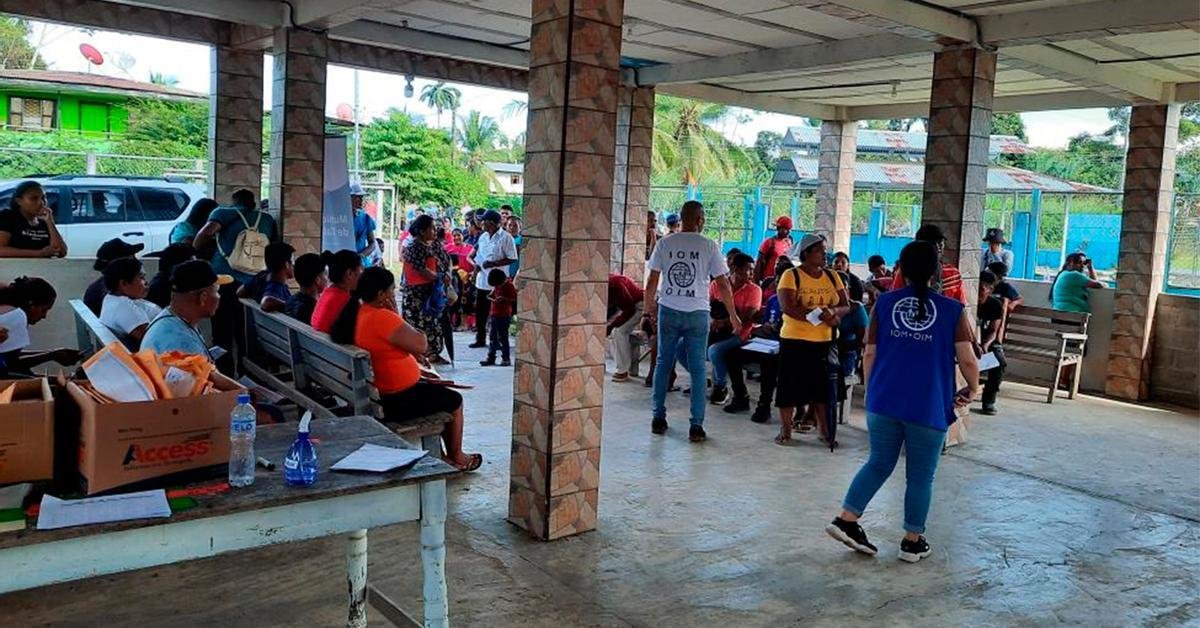
Havana/Costa Rica has become another alternative for the Cuban diaspora. Between January and October, the refugee request of around 3,055 migrants from the Island was accepted, of them 1,560 are women and 1,495 are men. According to data from the General Directorate of Migration and Immigration (Dgme), in that same period, 58 people’s requests were rejected due to inconsistency or abandonment of the process.
Of the 21,318 total procedures reported by the Dgme, the group of Nicaraguans heads the list with 16,345, followed by Cubans, Venezuelans (651), Colombians (621) and Chinese (346).
The historical archive of the immigration authorities reveals that between 2014 and April 2025, 7,292 Cubans submitted a request for refuge. The country provides this benefit for “persecution due to race, religion, nationality, political opinion or belonging to a specific group” in accordance with the 1951 Convention on the Status of Refugees.
A report from the Displacement Tracking Matrix of the International Organization for Migration (IOM) revealed that 94% of those surveyed between January and February of this year They wanted to stay and live in Costa Rica for offering “better economic conditions, political stability, and access to international protection.”
Last September, Costa Rica confirmed the breaking of relations with Cuba until the people “recover their freedom,” said Foreign Minister Manuel Tovar Rivera.
Last September Costa Rica confirmed the breaking relations with Cuba until the people “recover their freedom,” as stated by the Minister of Foreign Affairs, Manuel Tovar Rivera. Despite this distancing, President Laura Fernández Delgado stressed that Cuban migrants were welcome in the country.
“The Cuban people living in Costa Rica, who have requested refuge number around 10,000, can rest assured,” said the president.
The Dgme has a delay in resolving procedures. In September 2025, there were 193,300 migrants waiting for a response, so as of June, a temporary immigration option was opened for those who began a process between June 2014 and May 7, 2026. The document is granted for two years and allows beneficiaries to work without impediment in any economic sector or on their own.
In addition, it is a way to regularize those who do not have legal alternatives and obtain the Migratory Identity Document for Foreigners (Dimex) in the future, which among other benefits, allows you to carry out banking procedures, join and receive care in the health system, sign employment contracts, enroll in educational centers, carry out legal procedures and identify yourself to authorities.