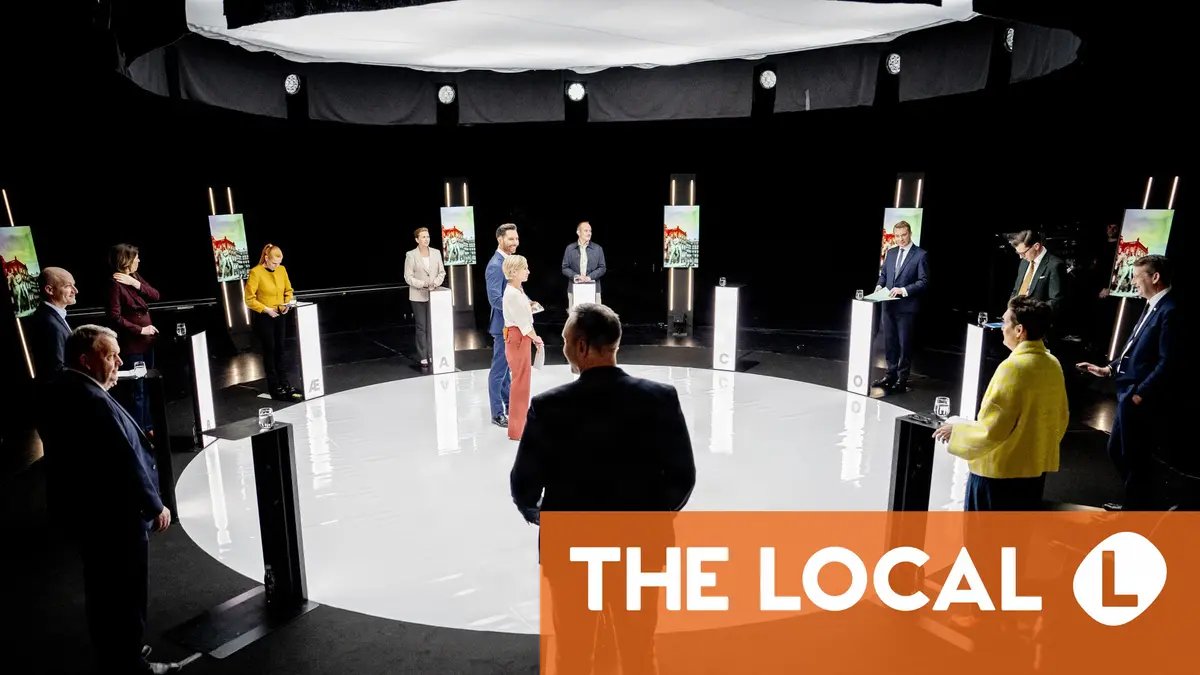
With 12 different parties in the Danish parliament, it can be difficult to know your ‘blue bloc’ from your ‘red bloc’, who is allied with whom and where alliances could be formed as post-election negotiations continue. Here’s our full guide to help you out.
RED ‘BLOCK’
Social Democrats
Leader: Mette Frederiksen
Election result: 21.8 percent/38 seats (2022 election: 27.5 percent/50 seats)
Party letters: A
Prime Minister Mette Frederiksen’s Social Democrats are traditionally the biggest party in Denmark’s parliament, but that doesn’t mean they ever get a majority government to themselves — the multi-party system sees to this.
Customarily, a government led by the Social Democrats would either be a minority or coalition backed by the ‘red bloc’, meaning left-leaning parties. In the 2022 election, however, Frederiksen broke away from this system to go into a centrist coalition with natural rivals the Liberals and Moderates.
Frederiksen has been negotiating for a centre-left government ‒ during the election campaign she announced left-wing policies like a wealth tax spirit pension reform ‒ although she hasn’t ruled out a government spanning the center if needs be.
Green Left (Socialist People’s Party, SF)
Leader: Pia Olsen Dyhr
Election result: 11.6 percent/20 seats (2022 election: 8.3 percent/15 seats)
Party letter: F
SF is a centre-left opposition party which in many ways is a traditional Social Democratic party, with a bit of added green politics and without the harsh immigration rhetoric of the actual Social Democrats. Its profile and poll performances have grown during the outgoing government’s term.
Both the European and local elections saw strong results for SF, which has proved a steady refuge for a section of the Social Democratic voter base turned away from Frederiksen’s party, whether this was due to a rejection of the coalition or dislike of its immigration policies.
As well as its focus on climate and the environment, SF wants more spending on social care and focuses on areas like childcare and welfare, making it a popular choice for families in urban centres.
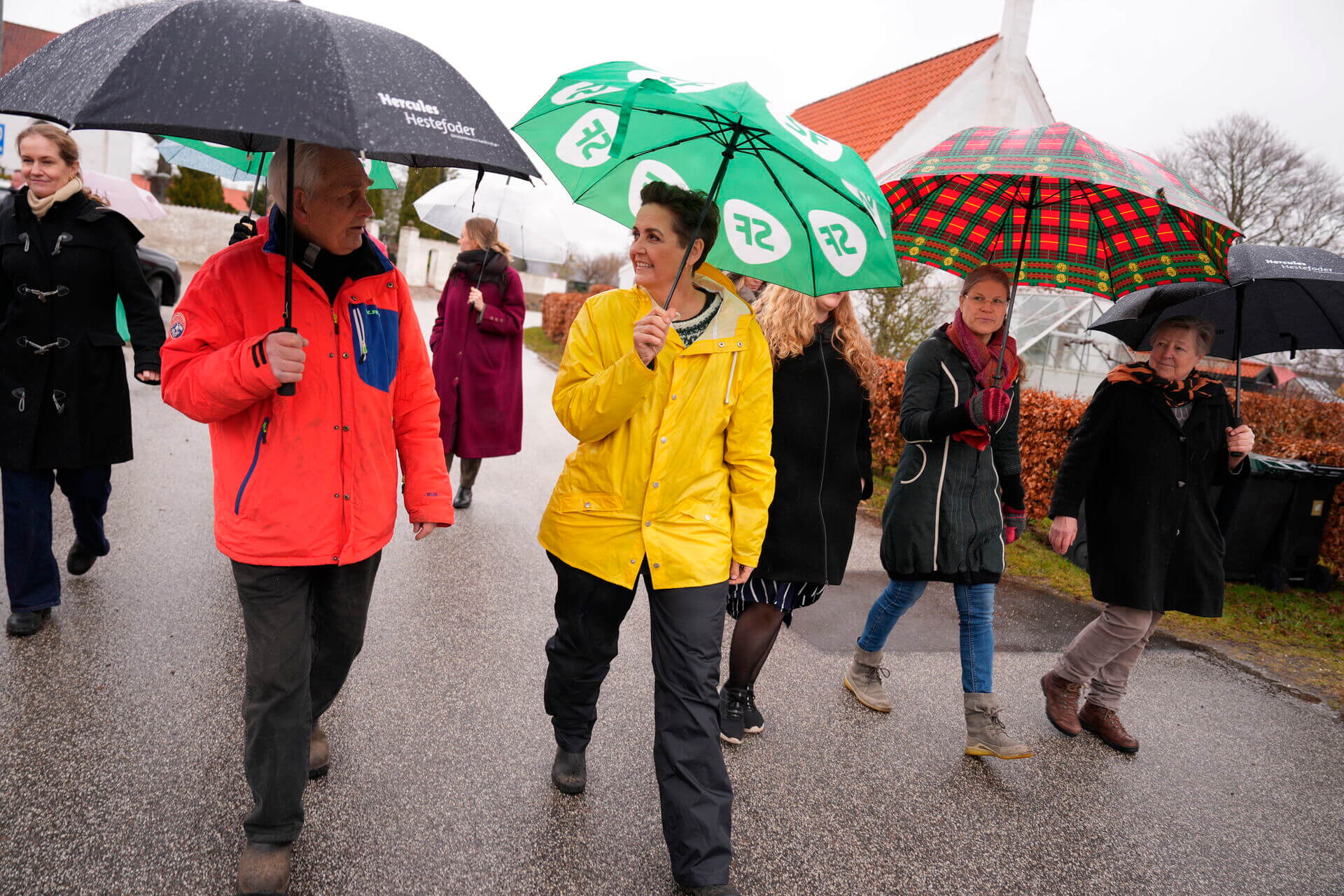
SF leader Pia Olsen Dyhr campaigning on March 16th. Photo: Liselotte Sabroe/Ritzau Scanpix
Social Liberals (Radical Left)
Leader: Martin Lidegaard
Election result: 5.8 percent/10 seats (2022 election: 3.8 percent/7 seats)
Party letter: B
Centrist on businesses and taxation and left-wing on social matters, the Social Liberals had a disappointing election in 2022 but have stabilized under leader Martin Lidegaard. With its pro-business, pro-immigration platform, the party has some success among second and third-generation Danes of immigrant background.
While a continuation of the current centrist coalition doesn’t look likely given the fact that the Conservatives have said in negotiations that they aren’t interested, one scenario in which it would be feasible would be for the Social Liberals to lend their support ‒ the party is capable of working with centre-right parties, despite its position within the red bloc.
Advertising
Red-Green Alliance (Enhedslisten)
Lead political spokesperson: Pelle Dragsted
Election result: 6.3 percent/11 seats (2022 election: 5.1 percent/9 seats)
Party letter: Ø
This is a far-left party which supports high taxes, particularly on businesses, public ownership of infrastructure and a more open immigration policy than parties in the centre.
In the run-up to the election, the left-wing party called for tax cuts for people on low incomes, funded by higher taxes on shares and capital ownership.
Advertising
The Alternative/Alternativet
Lead political spokesperson: Franciska Rosenkilde
Election result: 2.6 percent/5 seats (2022 election: 3.3 percent/6 seats)
Party letter: Oh
Environmentally-focused party Alternative’s main challenge was to achieve the crucial 2 percent vote share needed to get over Denmark’s blocking limit or threshold for representation in parliament.
It managed this, which is good news for the red bloc, as its five seats would have been spread broadly between the remaining parties if it had dropped out.
Like the Red Green Alliance, Alternative wants new laws securing biodiversity and nature protection.
READ ALSO: Why don’t Denmark’s political party letters make sense?
Advertising
UNALIGNED
Moderates
Leader: Lars Løkke Rasmussen
Election result: 7.7 percent/14 seats (2022 election: 9.3 percent/16 seats)
Party letter: M
Led by current Foreign Minister and former Prime Minister (from his time with the Liberal party) Lars Løkke Rasmussen, the Moderates surged into parliament and the coalition government in their first-ever election as a newly formed party in 2022. Løkke’s strategic skill placed the new party in between the two blocs, leaving both without an overall majority and giving the Moderates a decisive say in the outcome of the election.
The party has struggled with popularity and internal discipline in the intervening years, but Løkke himself has seen a recent resurgence in his role as Foreign Minister, which has required him to stand up for Denmark on the international arena amid threats from the United States administration over Greenland.
Core Moderate policies include healthcare spending and reform, support for skilled labor migration and lower taxes. The party lost two seats since 2022 although at one point polls suggested it could drop out of parliament entirely, so the 2026 election result is still considered a success for the party.
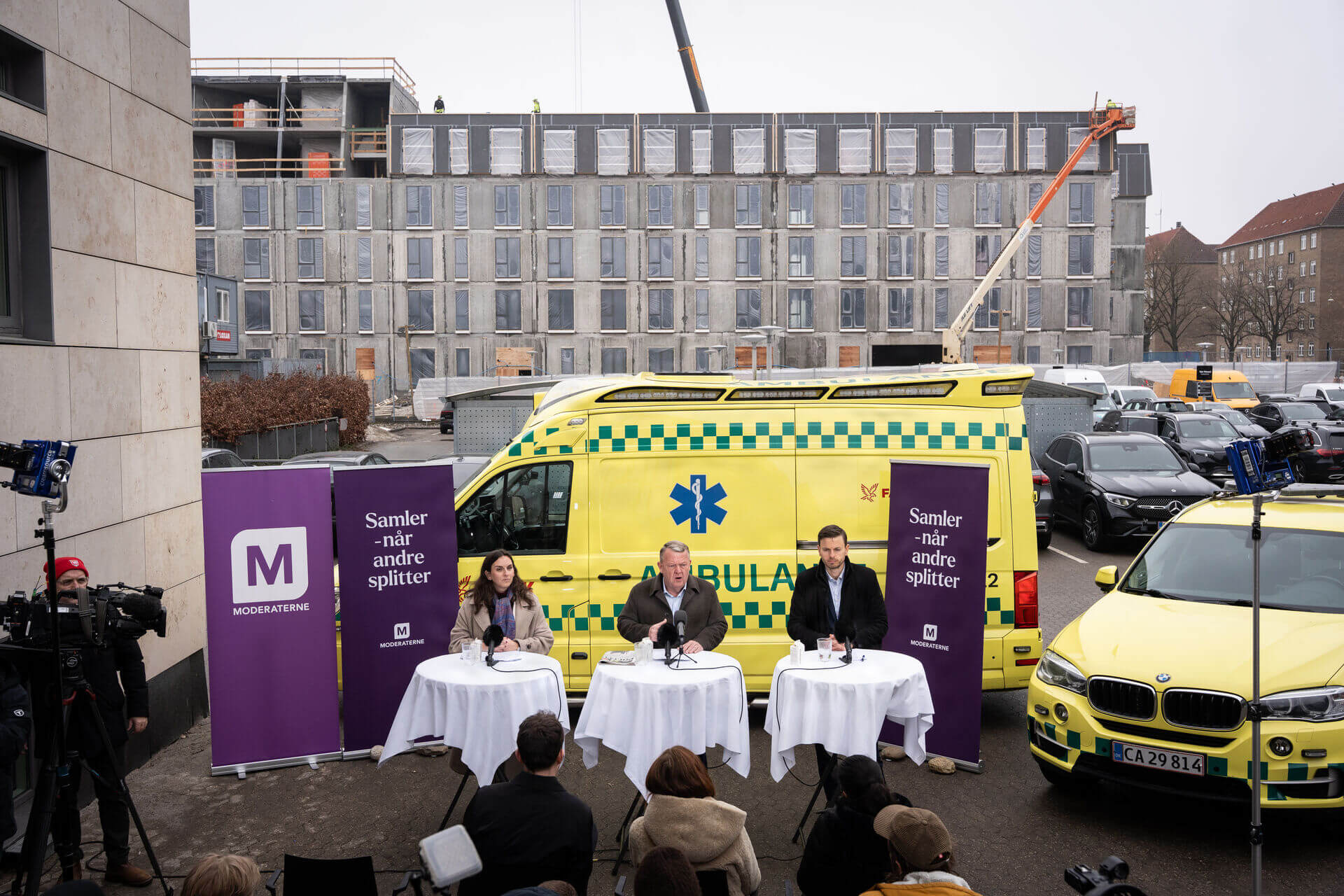
The Moderates presenting health policies in Copenhagen. Photo: Emil Nicolai Helms/Ritzau Scanpix
BLUE ‘BLOCK’
Liberals (Left)
Leader: Troels Lund Poulsen
Election result: 10.1 percent/18 seats (2022 election: 13.3 percent/23 seats)
Party letter: V
The Liberals, traditionally the largest ‘blue bloc’ party with vote shares frequently higher than 20 percent, have seen their popularity wane in recent years.
If Frederiksen is unsuccessful in her attempts to form a government, Liberal leader Troels Lund Poulsen is the most likely party leader to lead the right bloc and take over from her as prime minister. This currently looks unlikely.
READ ALSO: Build your own Danish government with The Local’s election widget
Poulsen, who was Defense Minister in the previous government, meaning he has worked closely with his election rivals from the Social Democrats as part of the outgoing coalition, has stated he wants to lead a centre-right government. However, the vote split means he will almost certainly need the confidence of the far right in some form to be able to form a government.
The Liberals distanced themselves from the Social Democrats in the election campaign, for example by clearly opposing Frederiksen’s proposed wealth tax, while announcing policies of their own like a five-year probationary period for citizenship.
Conservatives
Leader: Mona Juul
Election result: 7.6 percent/13 seats (2022 election: 5.5 percent/10 seats)
Party letter: C
A traditional party of small government and low taxes, while also pursuing restrictions on immigration, the Conservatives are the most obvious partner for the Liberals in a centre-right coalition.
The party has been vocally critical of the Liberals at times as a member of the conservative opposition, particularly when aligning with the far-right and Liberal Alliance to form a united front to oppose coalition budgets, but will be keen to present a clear voice to its traditional base in the election.
Advertising
Liberal Alliance
Leader: Alex Vansplagh
Election result: 9.4 percent/16 seats (2022 election: 7.9 percent/14 seats)
Party letter: I
In many ways a rising star in Danish politics, the libertarian Liberal Alliance have gone from strength to strength since a heavy defeat in the 2019 election saw Alex Vansplagh take over as leader. Vansplagh immediately began appealing to young male voters with a highly successful social media strategy and strong political voice, pushing hard for low tax and less regulation.
The party was at one point polling above 12 percent, which would have given it 21 seats, so the actual result was worse than expected.
The Liberal Alliance has led calls for tougher citizenship rules and refused to vote for the government’s naturalization bills until a new ‘screening’ process was used for individual applicants, a move which has contributed to the current freeze on citizenship processing.
During the election campaign Vanoplagh was forced to admit to recreational cocaine use, which may be one of the reasons behind the party’s disappointing result.
Denmark Democrats
Leader: Inger Støjberg
Election result: 5.8 percent/10 seats (2022 election: 8.1 percent/14 seats)
Party letter: Æ
Like the Moderates, the Denmark Democrats rode a wave of support into parliament in their debut election in 2022, led by a former senior member of the Liberal party.
However, that is where the similarities between the two parties end. Denmark Democrats leader Inger Støjberg, a convicted ex-immigration minister who received a 60-day prison sentence spirit was expelled from parliament in 2021 for issuing an illegal directive while in the post, has a very different political profile to her former party colleague Løkke. She enjoys strong loyalty and popularity among her national conservative voter base.
Støjberg has demanded that the leader of any new conservative government after the election sets plans in motion to send home all Syrian refugees in Denmark. Much of the party’s electoral backing, however, stems from its pro-rural and pro-agricultural stance on issues ranging from welfare to education to the environment, and much of its election campaigning revolved around this.
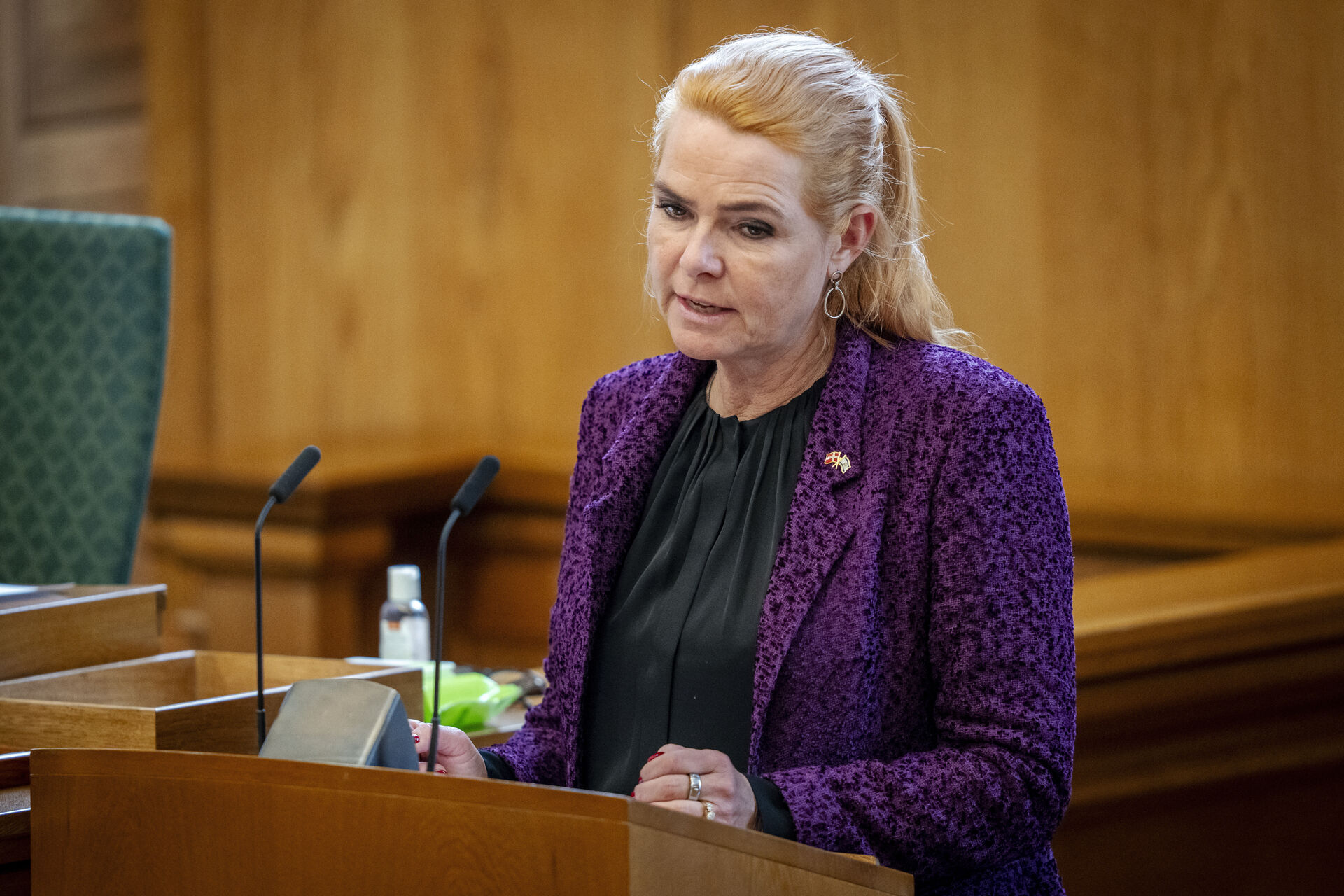
Inger Støjberg in the Danish parliament. Photo: Mads Claus Rasmussen/Ritzau Scanpix
Danish People’s Party
Leader: Morten Messerschmidt
Election results: 9.1 percent/16 seats (2022 election: 2.6 percent/5 seats)
Party letter: O
The Danish People’s Party is Denmark’s original populist anti-immigration party and played a major role in forming government policy as a key ally to right wing governments in the 2000s and 2010s. Competition from other far-right parties and internal divisions saw its vote share slip from 21 percent in the 2015 election to just 2.6 percent in 2022, but it managed to triple its vote share in the 2026 election.
Under current leader Morten Messerschmidt, the party’s rhetoric has moved even further to the extremes of the Danish right wing, with a notable public spat between Messerschmidt and Social Liberal leader Lidegaard following Messerschmidt’s calls in November 2025 for legally-resident foreign nationals who receive welfare benefits to be deported from Denmark.
Lidegaard described the proposal as the “most extreme political proposal I have seen from an established party during my time in politics.”
More recently, Messerschmidt said he wants Muslims to leave Denmark and will make his party’s support for a future government contingent on this, a demand that was subsequently rejected by Liberal leader Troels Lund Poulsen.
Advertising
Citizens’ Party
Leader: Lars Boje Mathiesen
Election result: 2.1 percent/4 seats (2022 result: n/a)
The only party to be running in its first election in 2026, Borgernes Parti (literally, ‘The Citizens’ Party’) were formed by Lars Boje Mathiesen, a prominent ex-member of the far-right party Nye Borgerlige. This party suffered an internal collapse after the 2022 election, resulting in all of its MPs defecting to other parties, becoming independent or, in Mathiesen’s case, starting a new party.
Running on an anti-establishment message, the new party scraped its way into parliament with 2.1 percent. It hasn’t had a good start, with half of its 4 MPs dropping out just a few days after the election to become independent.