USA was still recovering from the collapse that on Friday forced the suspension of takeoffs throughout the country – and that continued to leave flights canceled – when a new technological heart attack yesterday hit one of the most secretive systems in the world. Government.
READ ALSO
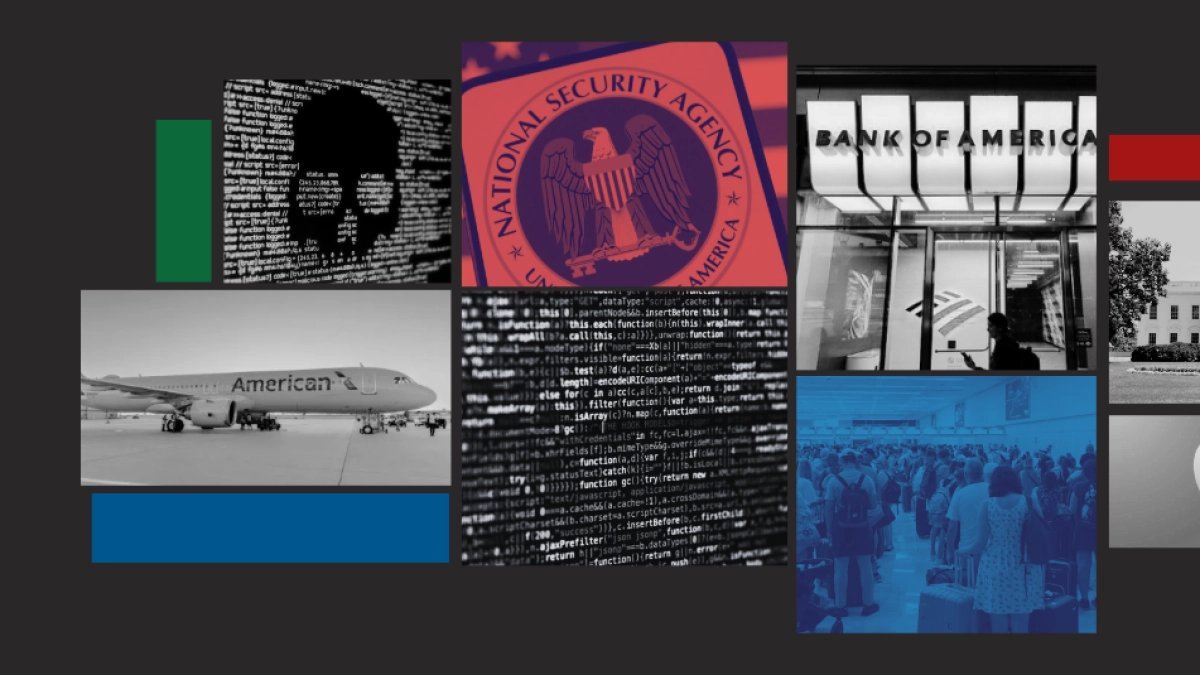
This time, the failure affected the network used by the National Security Agency (NSA) to exchange classified information, which has raised serious questions about the reliability of some of the country’s most critical systems.
The outage affected NSANet, the network on which agency employees share classified information, according to six people familiar with the incident who spoke with cnn.
The NSA confirmed in a statement that some of its internal systems suffered a “temporary degradation” during scheduled maintenance, but assured that functions essential to its mission remained operational and that its infrastructure has several backup systems.
🚨 NOW: HIGHLY CLASSIFIED US National Security Agency communications network is reportedly DOWN CNN says it’s an “ongoing investigation” to determine what caused it, with “no indication” of a cyberattack The network is called NSA Net, and employees use it to share CLASSIFIED information internally. CNN cites five sources, and NSA staff were reportedly told to come in late That makes FIVE? major outages in less than a week, after Microsoft, Workday, the FAA and the big banks
— Eric Daugherty (@EricLDaugh) November 17, 2026
A source cited by cnn He said the recovery was still underway and was still incomplete.
The White House, for its part, ruled out that the case was linked to a cyber attack.
Donald Trump, who was in Manila as part of a tour of Asia, also downplayed the episode. “Those things happen,” he said when asked about the string of interruptions.
But at Fort Meade, Maryland, headquarters of the NSA, the failure did alter the workday. A voice message to employees announced a ‘code yellow’, the second level of a three-level system, and ordered non-essential personnel to report in a staggered manner.
One of the questions was whether the failure could delay the sending of urgent information to the president on the eve of his conversations with the Chinese president, Xi Jinping, and the Russian president, Vladimir Putin.
READ ALSO
A current and former US official told CNN that the Government has other secure channels to deliver classified information aboard Air Force One.
Intelligence sharing with the United Kingdom, Canada, Australia and New Zealand, the US partners in the Five Eyes alliance, which use the system to communicate, was also unaffected, according to other sources.
According to a former senior NSA official, the NSANet functions as a set of networks in which an interruption, even partialcan hinder the daily work of analysis and the circulation of reports.
The agency already suffered a wide-ranging disruption in 2000, when a computer failure knocked out equipment for nearly three days and disrupted intelligence processing at the Maryland headquarters.
A failure that paralyzed takeoffs in the United States
The episode at the NSA, in any case, gained greater relevance due to what happened just four days before. On Friday the 13th, a failure in the air control system forced takeoffs to be suspended throughout the United States for almost five hours. The problems began around 3:30 in the afternoon, when communications and radar signals became unstable in 17 of the 22 centers that manage air traffic en route.
The suspension of flight takeoffs in the United States has caused the cancellation of thousands of trips. Photo:EFE
Some 3,500 planes were already in the air when the Federal Aviation Administration (FAA) ordered the suspension. According to the agency, controllers were able to continue guiding them with radio frequencies and radar signals that remained operational. They all landed without incident.
The preliminary investigation points to two facilities: a radar station in Amarillo, Texas, and a radio communications center in El Dorado, Arkansas. In the latter, contractor L3Harris had installed a new router. The FAA’s legacy equipment became unstable upon receiving an unusually high volume of connection requests, and the network stabilized after the contractor isolated both facilities. The FAA and L3Harris continue to investigate what caused the failure. The agency says that, so far, there is no indication of a cyberattack.
Takeoffs resumed around 8:15 p.m., but it took several days for the airlines to rebuild their itineraries. The FAA counted about 12,462 canceled flights on Friday, 9,082 of them from major airlines. The balance includes cancellations for other reasons. Cancellations were still being recorded on Monday, and by Tuesday morning, operations had largely returned to normal, according to FlightAware.
READ ALSO
The FAA announced that it will review the schedules in which it performs this type of maintenance and, while the investigation progresses, suspended the installation of more routers of the same model.
Microsoft, banks and Apple also reported failures
But the string of problems had begun a day earlier, on Thursday, when a global failure left business and government users without access to Outlook email or Microsoft’s Teams meetings.
Copilot, the company’s artificial intelligence assistant, was also affected.
Microsoft said the issue arose during an update following a change to its network and that it had detected no malicious activity. Service was fully restored on Saturday.
And this Monday, thousands of JPMorgan Chase customers reported problems accessing their accounts or using digital banking. There were also reports from users of Bank of America, US Bank and the payments platform Zelle, according to the tracking site Downdetector.
Chase acknowledged through its app that some services were temporarily offline. But the coincidence of the reports left open the question about the origin of these failures.
Users report failures in the online services of several banks in the United States. Photo:EFE
The coincidence of these episodes has fueled questions about the possibility of cyber sabotage behind the interruptions of digital services. However, so far there is no evidence linking the various failures or attributing them to a coordinated attack.
This episode was followed by a cyberattack that affected 200 websites around the world, including those of the British broadcaster BBC, HSBC bank in the United Arab Emirates, IKEA and Air France.
Hackers infiltrated JavaScript code into tools hosted on Optimizely, a digital platform used by large companies to personalize users’ online experiences, Cyber News said, with some 178 web pages targeted.
The hackers sought to steal users’ credit card numbers and cryptocurrencies, as well as upload a code to Apple devices.
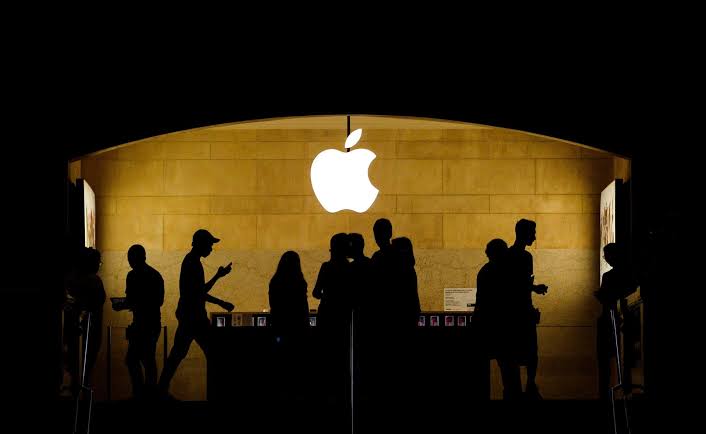
That same company yesterday reported interruptions and problems accessing several of its platforms for several hours, including its iCloud cloud, its Apple Pay payment platform and its application store, App Store.
READ ALSO

The specialized portal Downdetector, which monitors this type of failure around the world, counted more than 2,300 incident reports from Apple Pay users and a similar figure in Apple Support, the technical assistance portal.
The company ruled out a cyberattack and attributed the interruptions to its services to an internal update.
The fragility of the Government’s technological systems
Until this Tuesday, public information did not point to a cyberattack in the cases of the NSA, the FAA, Microsoft, Apple and the other affected companies, nor did it establish a common cause.
But the episodes, at least those of the NSA and the FAA, did reveal the fragility of systems on which essential government tasks depend and whose impact can be enormous.
Referring to the string of outages, Homeland Security Secretary Markwayne Mullin He pointed out that in some cases new technology is being incorporated into very old computer systems, which end up overloaded.
“I think we’ll see more episodes like this as new technology comes in,” he said in an interview with CNBC.
In fact, the global context shows that cyber threats continue to increase. According to a Check Point Research report published last week, organizations around the world received an average of 2,550 cyber attacks per week in October, 32 percent more than in the same month in 2025. In addition, 1,063 ransomware attacks were reported during that period, the highest number recorded so far and 35 percent higher than in October of last year.
Microsoft services unavailable alert Photo:(GPT Visual Time, 2026). / THE TIME
By sectors, education was the most affected in October, with an average of 5,934 weekly cyber attacks per organization, 33 percent more than in the same month of 2025. Agriculture followed, with 3,218 attacks and an increase of 93 percent; telecommunications, with 3,068 (+19 percent); and hospitality, travel and entertainment, with 3,053 (+46 percent). In financial services, there were 2,463 weekly attacks per organization, an increase of 49 percent year-on-year.
SERGIO GÓMEZ MASERI – EL TIEMPO Correspondent – Washington – @sergom68