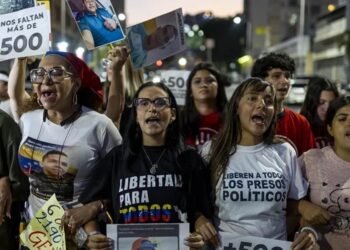
Havana/The Observatory of Academic Freedom (OLA) denounced a “coercive pattern” in the academic spaces of the Island to participate in the “process” called “My signature for the Homeland”, initiated a week ago by Miguel Díaz-Canel himself, with which the regime intends to counteract pressure from the United States for a change in Cuba.
In a statement, the OLA reported that, “in Cuba, it is an institutionalized practice for political organizations to condition the permanence, evaluation and job stability of students and teaching staff in exchange for their participation in propaganda activities, in a flagrant distortion of the academic space.”
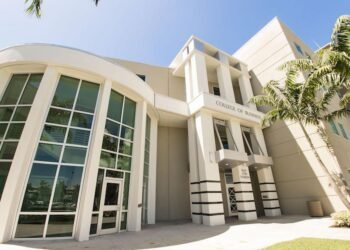
The NGO made a count of academic institutions in which this was replicated modus operandi. He pointed out that at the University of Pinar del Río Hermanos Saíz Montes de Oca convened on April 19 to “participate in an act of repudiation of the economic, commercial and financial blockade imposed by the United States, and in favor of peace.” According to the Observatory, students and teachers were ordered that, at the end of the activity, each participant must “put their signature on a form.”
According to the Observatory, students and teachers were ordered that, at the end of the activity, each participant must “sign their signature on a form.”
This fact was repeated in other centers of higher education. In Havana, the Enrique José Varona University of Pedagogical Sciences published on its official Facebook page a post in which he asserts that “Varona signs. On the 65th anniversary of Girón’s victory, we sign! In the year of Fidel’s centenary, we sign!”
Another similar case was recorded at the Bauta Municipal University Center, which stated that its workers “left evidence of their loyalty to the country.” On social networks he added that the rubrics not only accompany a process, but “demonstrate that universities are trenches of ideas, defense and national dignity”, because “defending the Homeland is also teaching, serving and signing when it is necessary.”
Other institutions, such as Carlos Rafael Rodríguez, from Cienfuegos, and Oscar Lucero Moya, from Holguín, also joined the campaign, ensuring that their students and faculty participated in “support for the Revolutionary Government.”
During the closing of the V Patria Colloquium – an official world meeting of communicators in Havana, dedicated to the centenary of the birth of Fidel Castro –, the head of the Ideological Department of the Central Committee of the Communist Party, Yuniasky Crespo, called for the collection of signatures in support of the Cuban Government.
The OLA highlighted that the Ministry of Higher Education and universities throughout the country have “echoed the campaign”
The OLA highlighted that the Ministry of Higher Education and universities throughout the country have “echoed the campaign.” He also said that, although the ministry affirms that this is an “initiative of Cuban civil society,” it was conceived within the PCC and inaugurated in a political event.
“To understand why universities compulsorily participate in collecting signatures, it is important to remember that their autonomy was abolished in 1962, with the Higher Education Reform Law, despite being an internationally recognized principle that allows higher education institutions to serve as spaces for critical thinking, free of external or internal ideological interference,” recalls the OLA.
The obligation to sign can be explained because, in many cities, there is little or no participation in the modules installed by the authorities. 14ymedio has collected testimonies in various neighborhoods of Havana that demonstrate the almost non-existent influx in the places where people could sign more spontaneously.
Those who have also reported coercion to sign are the state workerswho received the order from the beginning of the campaign. “They did not set up signing points in the workplace, but rather they set up points in the library, the House of Culture and other places, and companies are being told that they have to go and sign there,” he told last Monday. 14ymedio an employee of the province of Sancti Spíritus, who prefers to remain anonymous.
“They enabled points in the library, the house of culture and in other places, and the companies are telling them that they have to go and sign there”
Likewise, the Committees for the Defense of the Revolution (CDR) have mobilized to go house to house. “They came to touch my mother and she, who is very old, signed, know what they told her, I already told my husband not to even think about opening the door,” said a neighbor from Ciego de Ávila.
The woman compared it to what happened in 2002, following the Varela Project launched by Oswaldo Payá, when the then president Fidel Castro ordered the CDR to force citizens to sign a “counterproject” that ended up crystallizing in the Constitution “the irrevocable and inviolable character of socialism,” which popular humor baptized as “constitutional mummification.”
The campaign arises at a time of crisis and criticism of the Díaz-Canel Government, which seeks to validate its continuity. The lack of fuel has affected key sectors such as transportation, electricity generation and water supply.