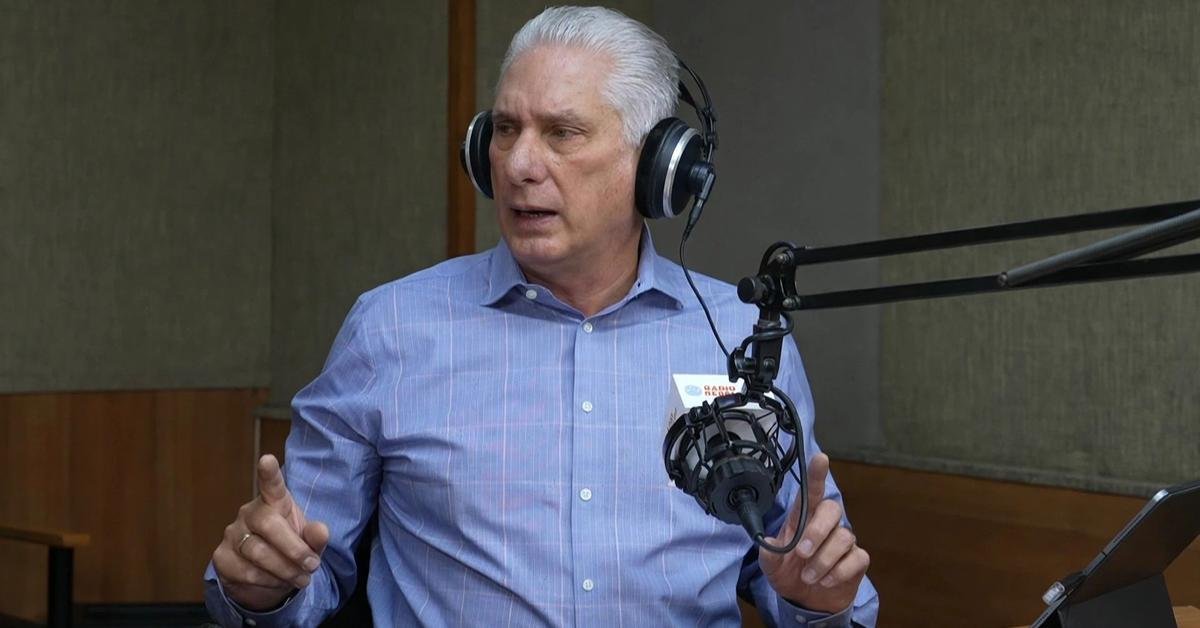
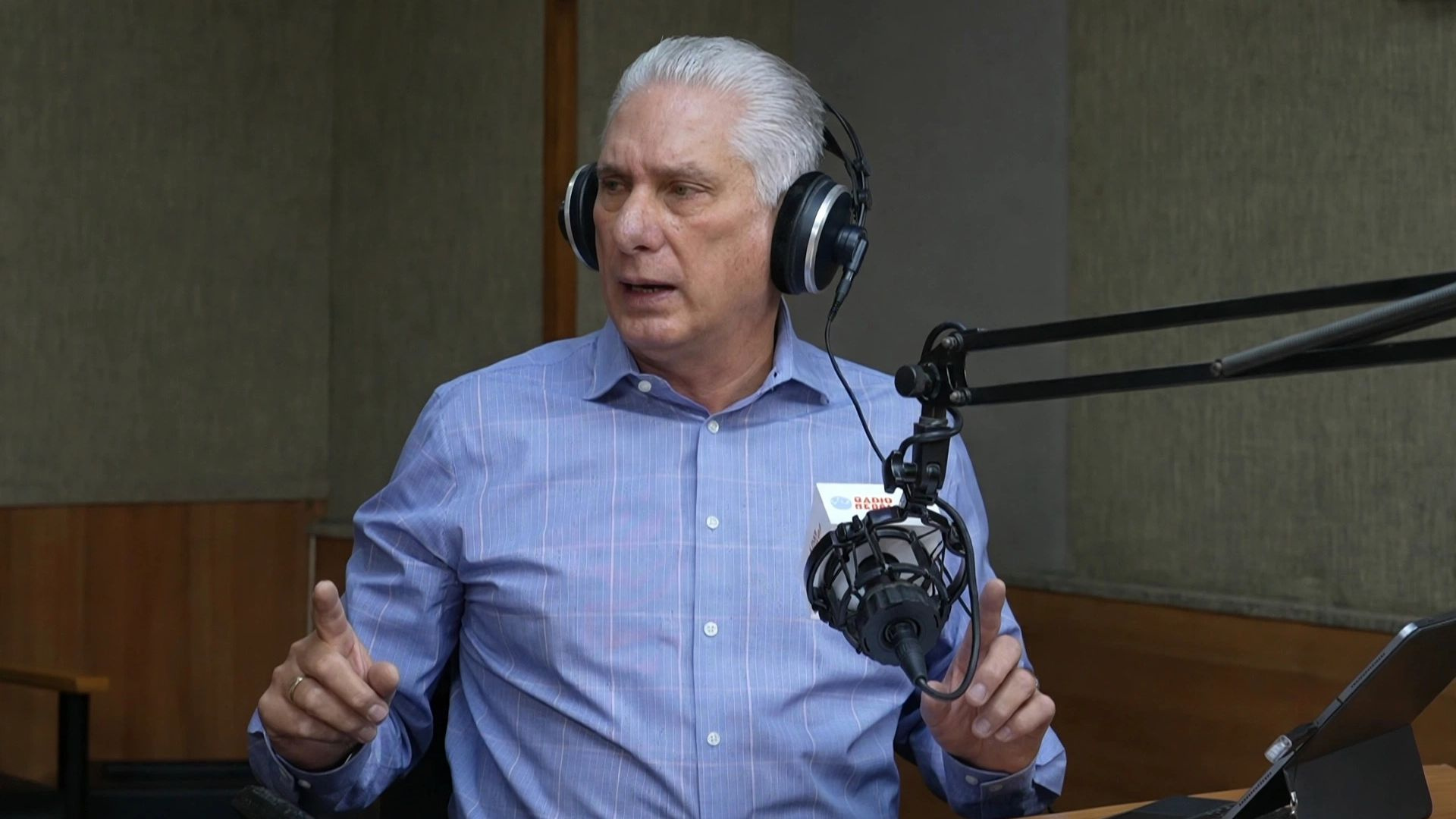
Madrid/The population’s discontent with the regime is so widespread that credibility problems are the norm even among a favorable audience. It is one of the main conclusions of the analysis that has been carried out the ruling Media Observatory of Cubadebate about the program Criterio Compartido, in which Miguel Díaz-Canel addresses current political issues and listens to listeners’ complaints. In theory, the point of the issue is to review the complaints raised in the previous edition and find out if they have been resolved.
According to the analysis, three out of four listeners were not satisfied with the explanations offered by the president at the premiere of the program. The study, which evaluates the degree of credibility of the space, concluded that that day 42% of the reactions were skepticism and irony, particularly about the degree of freedom in the interventions, whether there would be responses or even if there would be electricity to follow it. Only 25% of the audience found the project positive and up to 11% expressed their political rejection.
The study tries to soften the impact by pointing out that the subsequent emissions (three more, which it puts in the same block) were better received, but the results are not very successful either. 28% continued to react with skepticism, even though this program was already devoid of the curiosity with which the unofficial media and critics followed – and therefore commented on – the first one. The explanation for the study is that accountability has been well valued by the audience. “The credibility of explanations grows when they are accompanied by verifiable results,” the note states.
The analysis also believes that listeners welcome the fact that Díaz-Canel does not attribute all of the country’s problems to the embargo and assumes that his Government has responsibilities. “This combination of denunciation of the blockade and internal demand was the most talked about, even in audiences mobilized by the media and agents of the counterrevolution installed in Florida,” the note highlights.
Three out of four listeners were not satisfied with the explanations offered by the president at the premiere of the program
Precisely for the audiences that he calls “of the counterrevolution” there is a specific space. The Observatory has analyzed the reactions in the media and social networks between September 16 (when the first program was announced) to November 15 (after the fourth was broadcast, which is, for now, the most successful). Shared Criteria has generated, according to the study, 2,709 publications, with its maximum peak on November 4 during the chapter that addressed water supply problems.
“The counterrevolutionary media, based in Florida and other points abroad, produced only 10% of the publications, but concentrated 58% of the potential reach. Their coverage was intense from the day of the announcement, with hostile frames or headlines about ‘another propaganda program,'” the study highlights. However, the vast majority of interactions occur between the audience and official accounts. The Observatory considers that dissemination in independent media of the case of Juana Pérez – a retiree who regretted that pensions are not enough to live on – delegitimizes her own speech, since it proves that critical voices have space in the official media.
The study’s conclusions are, in fact, very self-congratulatory despite the initial admission that the audience has been skeptical. The observatory considers that listeners have welcomed the fact that the complaints that are aired are resolved. According to their calculations, of the 65 people who communicated, 17 have seen their case resolved and another 17 have a solution in the making, while 29 “received explanations.” “Of the 32 complaints registered, 23 were considered with reason, 7 with reason in part and only 2 without reason. Only one person expressed dissatisfaction with the response, and the president reiterated that he could continue communicating with the program,” they add.
The self-perception is so positive that the program already has its local replicas. The first secretary of the Party in Santiago de Cuba, Beatriz Johnson Urrutia, has launched In Trustthe one from Sancti Spíritus premiered Open Microphone and in Holguín, Mayabeque and Pinar del Río, similar proposals are announced. The study mentions a listener’s proposal about how much the burden on the central government would be alleviated if each province had its own program.
The study’s conclusions are, in fact, very complacent despite the initial admission that the audience has been skeptical
Shared Criteria is Díaz-Canel’s second attempt to have a type of interactive space whose most direct reference is the Hello President by Hugo Chávez, in which the president activated a kind of one-stop shop in which he gave solutions – via live call – to his subordinates so that they could immediately resolve any complaints raised by the public. If you look further, the historical antecedents of radio or television programs in which a president addressed the population to explain political decisions and respond to letters with complaints is already in Roosevelt’s United States –Fireside Chats– or, locally, of Fidel Castro himself.
The Observatory of Cubadebate It stands out as one of the greatest achievements of the program that it does not address “comfortable topics.” The population’s favorites are, according to the analysis, energy and blackouts and relations with the United States, followed by food, water, economic transformations, social protection, medicines, complaints to institutions and salaries, pensions and prices.
This study is, in general terms, very favorable to the program, which considers that it transmits closeness, concern for the population, self-criticism and dialogue. However, it is not lost on him that the comments “reveal a contradiction that deserves attention: no citizen should need to reach the presidential microphone to get an institution to fulfill its obligations.”