The US intervention in Venezuela and its consequences, including the capture of President Nicolás Maduro and his wife Cilia Flores, have stopped making headlines, which does not mean that the intervention is resolved.
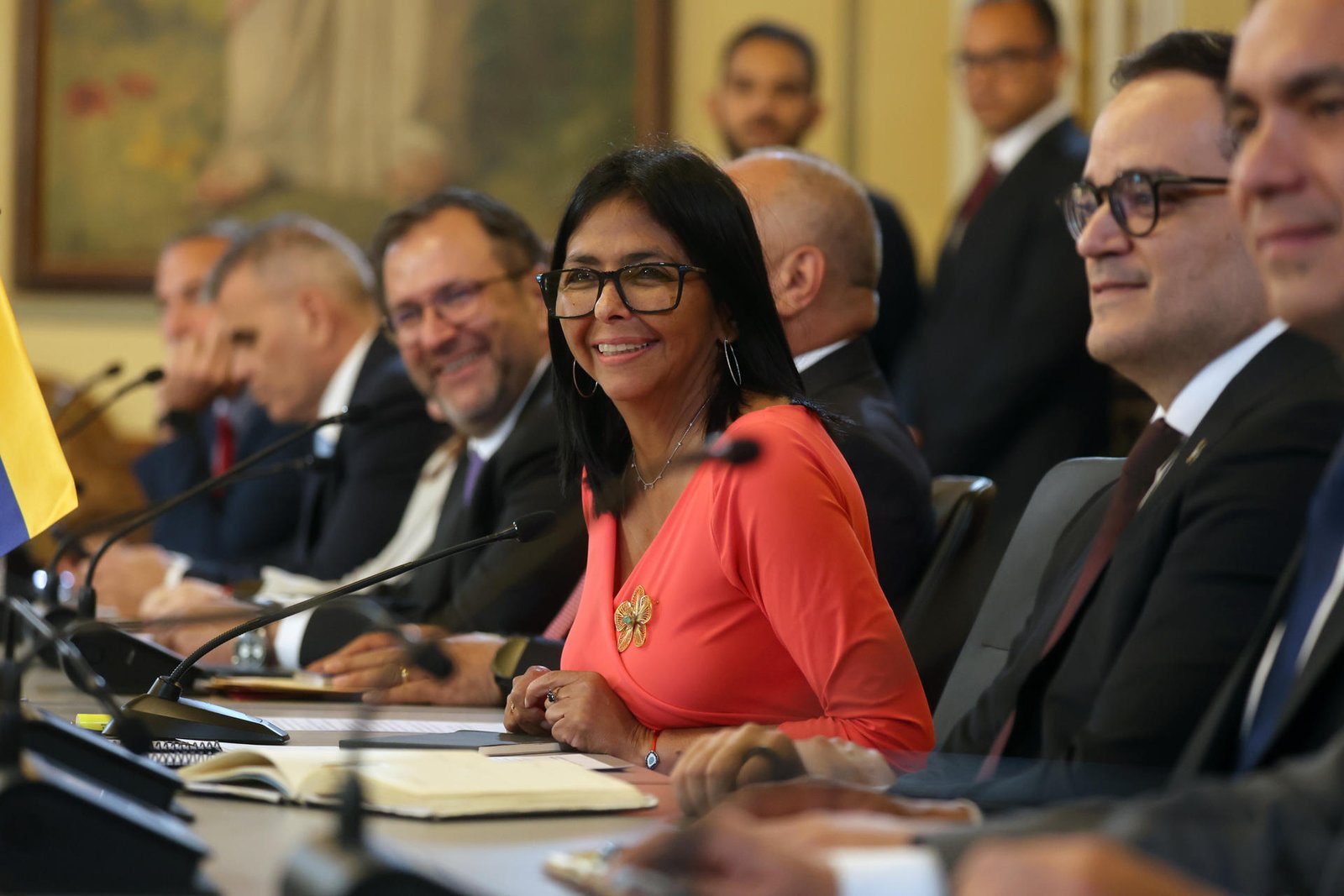
With the approval of Washington, Maduro was replaced by Delcy Rodríguez, his vice president, regardless of the fact that she, like Maduro, was fraudulently elected. It is clear that the Republican administration does not care about democratic legitimacy – or the lack thereof. Washington is, above all, interested in the profits it can obtain thanks to the relaunching of the Venezuelan economy, for which it needs political stability, social peace and a favorable climate for business, starting with oil.
As we know, Venezuela is one of the richest countries in South America: it has the largest proven oil reserves in the world, as well as important deposits of natural gas, gold, iron and bauxite. It is rich in those rare earths essential for the manufacture of electronic chips and so desired by the modern weapons industry. The wide plains that extend from the Caribbean Sea to the Andean mountain range, the famous Venezuelan plains, are conducive to large-scale intensive agriculture.
Well managed, Venezuela is a “gold mine” that Trump and his partners intend to manage in order to get the most out of it.
The “Rodriguista” faction of Chavismo – led by Jorge Rodríguez, president of the National Assembly, the highest legislative body, and his sister Delcy, at the head of the Executive – seems willing to administer the country for the benefit of multinational capital in exchange for royalties for Venezuela, in a great neocolonial experiment of the 21st century. Washington has been gradually dismantling the sanctions that until now were strangling the local economy.
The experiment seems to be heading towards an accelerated modernization of the economic system, thanks to legislation that is very favorable to foreign investment in order to attract large oil, mining and agricultural multinationals in the short term.
On the political level, the Rodríguez brothers promise stability on three levels: at the level of the power structure, that is, at the top, it is about displacing the rival Chavista factions, replacing them in key positions with allies they trust. For example, General Padrino, Minister of Defense, one of the pillars of the original Chavismo, was retired and replaced in the Ministry by the director of military intelligence and head of the honor guard of the president in charge.
Padrino, however, has not been purged per se; has been displaced and was recently appointed as Minister of Agriculture. Diosdado Cabello, another of the great pillars of historical Chavismo, until now remains Minister of Interior Relations, Justice and Peace.
On a more general political level, the Rodríguez brothers have decreed a selective amnesty. Repression continues, but in a focused manner, and elections are not expected in the short term, nor is the return of the most relevant opposition politicians.
Finally, at the grassroots level, this new-look Chavismo has allowed the organization of demonstrations demanding wages and has promised a revaluation of the purchasing power of employees in the short term.
In the eyes of President Trump, the experiment has so far been so successful in Venezuela that he has wanted to reproduce it in Iran, but the ayatollah regime has turned out to be surprisingly monolithic and ideologically more compact than the Chavista regime, despite the elimination of a large part of the senior staff, both among the high command of the Republican Guard and among the religious establishment.
In Venezuela, Trump achieved “regime change” in a few hours, and is quickly pursuing the establishment of a new type of protectorate. The vast majority of analysts doubt that anything similar will be achieved in Iran.
*This article was originally published in The Nation.