Warnings against turning declared neutrality into a card to serve Moroccan accounts
father-in-law
Bourita made a secret visit to Ghazouani after the fall of the American project in the Security Council
Blani: Rabat’s envoy is on a mission to convince the president
His luck: Another fall into Morocco’s trap
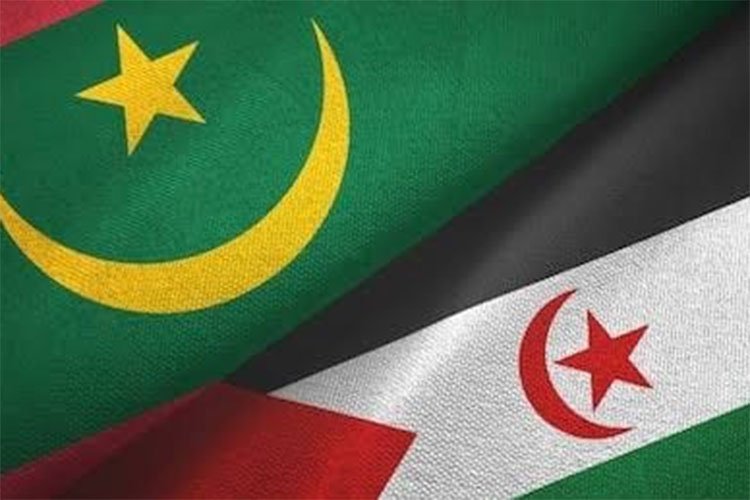
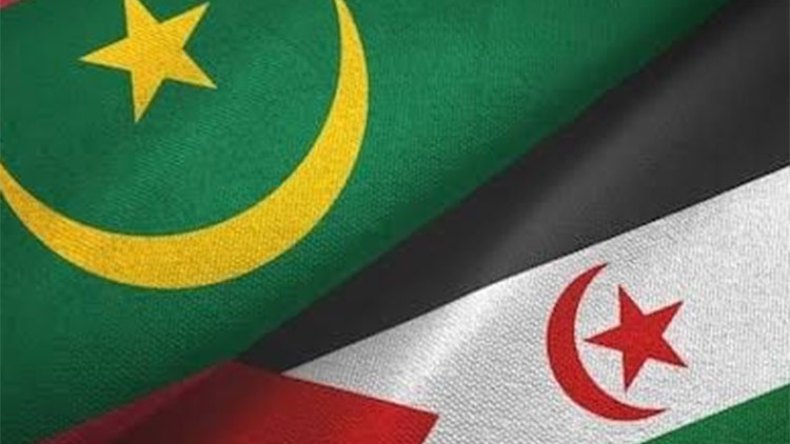
The recent Mauritanian moves in the Western Sahara file put the policy of neutrality adopted by Nouakchott before a real test, after an unannounced visit by Moroccan Foreign Minister Nasser Bourita to the Mauritanian capital revealed intense diplomatic contacts, coinciding with a highly sensitive phase that followed the faltering of American efforts within the Security Council after Russia used its veto against an American project serving the Makhzen in the Western Sahara file.
Between the absence of official clarifications and increasing indications of behind-the-scenes understandings, questions are rising about the role played by Mauritania, and whether it actually maintains an equal distance from the parties to the conflict? Or have its calculations begun to lean towards the Moroccan approach?
The visit, which was reported by Mauritanian and Moroccan media, brought to the fore question marks about the nature of the Mauritanian position, especially since Nouakchott did not reveal the content of the talks that brought Bourita together with President Mohamed Ould Sheikh Ghazouani and other officials.
The independent Mauritanian News Agency reported, citing private sources, that the Moroccan Foreign Minister made an unannounced visit to Nouakchott, while the Moroccan “Code” website confirmed that the visit lasted about four hours, and included a meeting with Al-Ghazouani and Mauritanian officials, without disclosing the content of the discussions.
The ambiguity did not stop with the Moroccan visit, as the same source spoke of a secret visit by a Mauritanian official to Morocco last Tuesday, during which he met with Moroccan officials, in a mutual move for which no official clarification was issued.
This secrecy raises legitimate questions about the nature of the communications taking place between the two capitals, and the goals that each of them seeks to achieve in a regional context characterized by mounting pressures and attempts to rearrange positions regarding Western Sahara.
Meanwhile, Al-Arabi Al-Jadeed newspaper confirmed on Sunday that it was not possible to obtain a comment from the Moroccan Foreign Ministry, despite its repeated attempts throughout Saturday evening, regarding Bourita’s visit to Mauritania, as Rabat and Nouakchott preferred to keep it secret for unknown purposes.
At a time when the Mauritanian government confirms, through its official spokesman, Mohamed Ould Banna, that its position on the Western Sahara issue is based on “complete positive neutrality,” and that it wants to be “part of the solution and not part of the problem,” the unannounced moves with Rabat open the door to questioning this position, especially in light of the lack of transparency regarding the nature of the understandings being discussed.
Neutrality, if it is a real political position, requires clarity in dealing with the parties concerned, and not engaging in arrangements that may affect the rights of the Sahrawi people or perpetuate the facts that Morocco seeks to impose. The continuation of closed communications, at a time when pressures related to the Western Sahara issue are increasing, makes it difficult to dispel doubts about the reality of the Mauritanian role.
In reading these movements, Hamdi Yahdih, a specialist in Maghreb affairs, considered, in a comment to Al-Shorouk, that Mauritania has once again fallen into the “Moroccan trap,” noting that the developments that preceded the Russian position in the Security Council suggest, in his estimation, that Nouakchott bet on the passage of the American project, hoping to benefit from possible arrangements related to the Western Sahara file.
He linked what was raised regarding Mauritanian demands related to the city of Lagouira, and what was stated in the report of the Secretary-General of the United Nations on border demarcation, and what he considered attempts to convince Nouakchott that the issue will be resolved according to the Moroccan vision, and that it must exploit the circumstance to achieve private gains.
The spokesman said that Morocco, the United States, France, the Emirates, and the Zionist entity convinced Mauritania, according to his reading, that the American project will pass in the Security Council, and that the next stage will allow it to obtain a share of the expected arrangements. However, the Russian position, which dropped the project, confused these calculations and returned Nouakchott to the circle of pressure.
Yahzih pointed out that these pressures, in his estimation, were manifested in several movements, including directing the residents of the northern regions towards the south, summoning a high-level Mauritanian military delegation to Rabat, as well as talking about closing the Guerguerat crossing and stopping supplies of Moroccan vegetables to Mauritania, leading to Bourita’s visit, which he considered an episode in an effort to put Nouakchott before new political, security and economic arrangements.
The specialist in the affairs of the Maghreb region warned that Mauritania’s continuation of an approach that might be understood as a rapprochement with the Moroccan proposal will affect its relations with the Sahrawis and Algeria, considering that Nouakchott may lose its true allies if it persists in options that are not consistent with the legitimate rights of the Sahrawi people.
Yahzih stressed that the Russian position should not be reduced to mere contention with the United States, but rather it must be viewed from a broader strategic angle, warning that the Mauritanian policy of neutrality is facing an extremely difficult stage, and that the attempt to hold the stick from the middle may turn into a burden on Nouakchott instead of providing it with room for maneuver.
For his part, former Ambassador Ammar Blani addressed the visit in a blog post he published on his Facebook page under the title “Western Sahara: Bourita on a mission to convince Ghazouani,” considering that the return of the Moroccan Foreign Minister to Nouakchott, six years after the last visit, comes in a very sensitive circumstance, one week after the end of the mandate of the MINURSO mission.
Blani focused on the absence of any official statement regarding the visit, despite Bourita’s reception by the Mauritanian president, considering that this secrecy reinforces the hypothesis that the talks went beyond the usual diplomatic consultations into an effort to convince Nouakchott of a new Moroccan approach to dealing with developments in Western Sahara.
According to the reading of the former Algerian ambassador, Rabat seeks to present the end of the UN mission’s mission as an entry into a new phase, during which it pushes towards dealing with the region on the basis of its claims regarding sovereignty over it, which may be reflected in the nature of borders and regional balances.
Blani suggested that the talks dealt with an attempt to persuade Mauritania to treat the Western Sahara borders as new borders for Morocco, in addition to reviewing a package of economic interests that Rabat may use to enhance rapprochement with Nouakchott, including bilateral trade, land corridors, regional connectivity, and a gas pipeline project.
He also indicated the possibility of raising the issue of Lagouira, given its strategic importance to Mauritania, considering that Rabat may seek to make arrangements regarding it within the framework of understandings aimed at achieving political and economic rapprochement between the two parties.
Blani believed that the broader political goal of these moves is to gradually push Mauritania away from the Polisario Front and the Sahrawi Arab Democratic Republic, which it recognizes, and urged it to show a greater degree of pragmatism in its contacts with Washington and UN envoy Staffan de Mistura.
This assessment raises questions about the nature of the compensation that Rabat can offer to Nouakchott to bring about a shift in its position, especially with regard to the Lagouira file, which represents one of the most prominent files of strategic sensitivity for the Mauritanian side.