Madrid/In the midst of the worst economic crisis that Cuba has experienced since 1959, with the country in darkness, empty shelves and rampant inflation, the Government received two new food donations this Friday: 750 tons of vegetable oil sent by Russia and the first 425 tons of rice paid for by Japan, from a food donation valued at one million dollars. Both shipments arrived through the UN World Food Program (WFP).
Sunflower oil is part of the WFP’s emergency reserves on the Island, according to reports from state media. The cargo was financed by the Russian Ministry of Civil Defense and Emergencies with a contribution of four million dollars for 2025-2026.
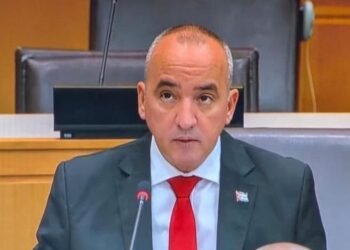
The Russian ambassador, Víktor Koronelli, presided over the delivery along with the Cuban Minister of Foreign Trade, Óscar Pérez-Oliva Fraga; and the Minister of Internal Trade, Betsy Díaz. The WFP representative in Cuba, Etienne Labande, was also present. According to the note from the Russian embassy, the oil will be destined for children, the elderly and pregnant women.
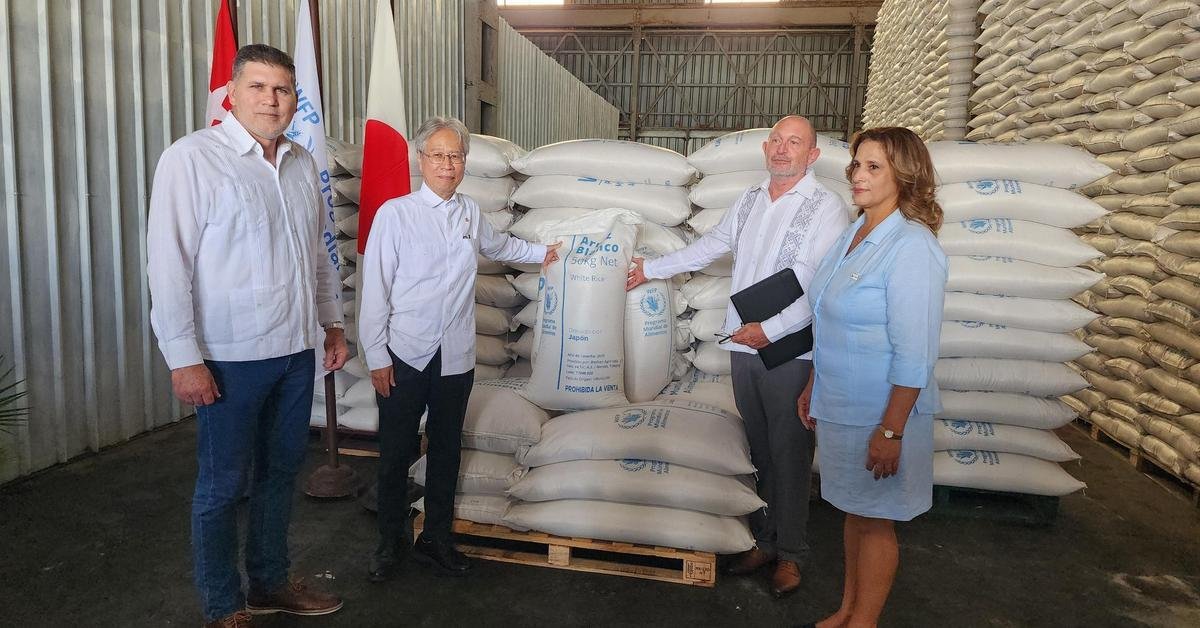
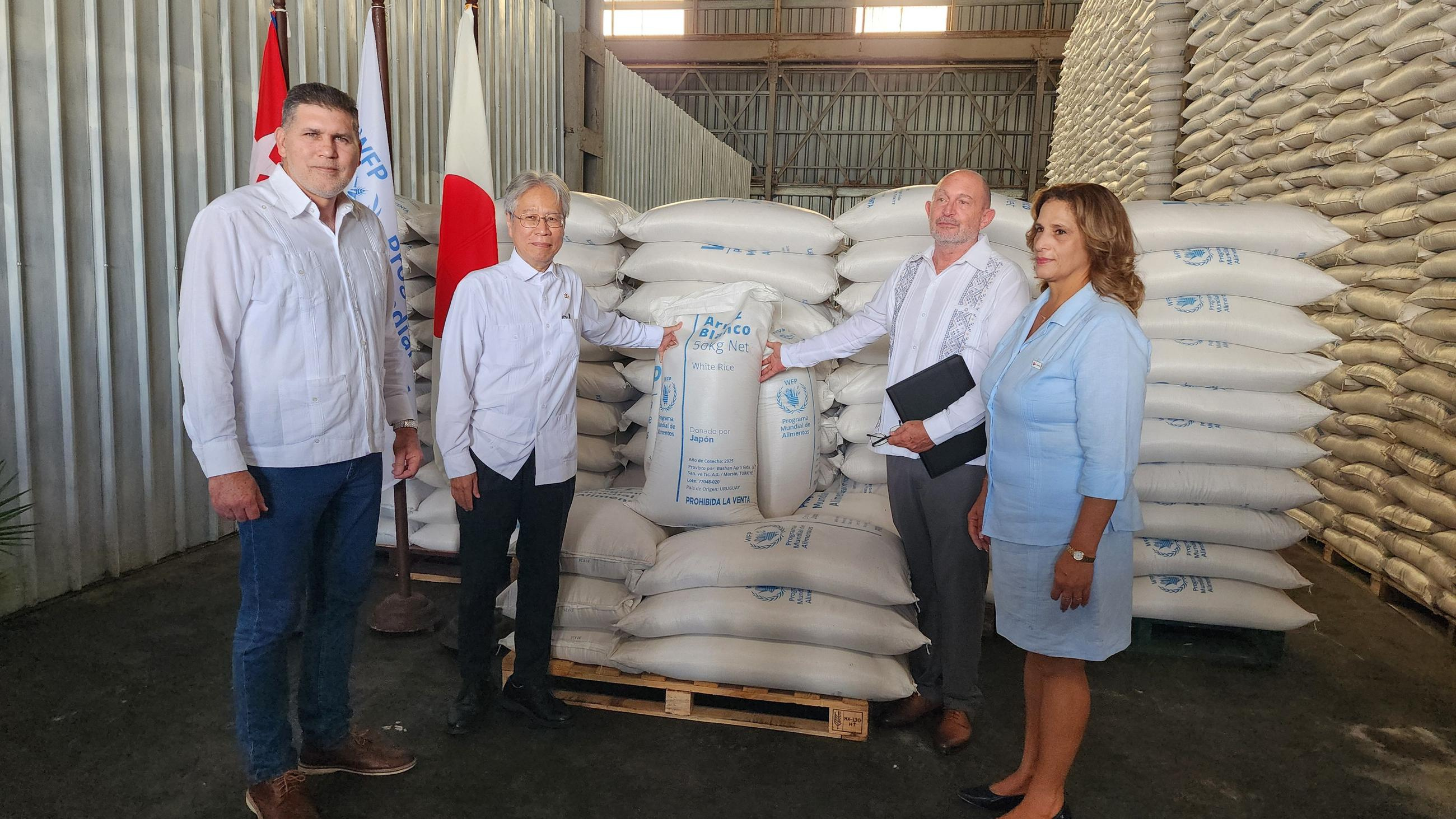
The Japanese aid is a donation of one million dollars with which the WFP purchased grains, oil, rice and other products for those affected by Hurricane Melissa, which were received in the warehouses of the Provincial Food Company of Havana. Ambassador Nakamura Kazuhito explained that The Association of Friends of the WFP in his country also participated in the donation.
The Japanese aid is a donation of one million dollars with which the WFP purchased grains, oil, rice and other products for those affected by Hurricane Melissa
Betsy Díaz pointed out that the rice will go to the victims of the eastern provinces. Each package includes 1.5 kilos of rice, 0.9 kilos of grains and a liter of oil. The rest of the donation is pending delivery.
At the event, Pérez-Oliva, Deputy Prime Minister and Head of Foreign Trade, assured that the containers with Japanese aid were detained in the port of Kingston, Jamaica, due to pressure from the United States on international shipping companies. He presented it as part of the intensification of the “imperialist siege” against the Island. The Minister of Foreign Trade and great-nephew of Fidel Castro, however, recently stated that “the French shipping company CMA CGM resumed services to Cuba only for food, medicines and medical supplies.”
Pérez-Oliva did not give details of how long the cargo was supposedly held or why food for those affected by an October 2025 hurricane arrives a year later. Neither the official media nor the Russian embassy detailed when or how it will reach the families, beyond mentioning the “vulnerable sectors.”
China delivered 80,000 bicycle parts and the Bahamas donated nearly a ton of medicines for the health system
The shipments coincide with other recent donations: China delivered 80,000 bicycle parts and the Bahamas donated nearly a ton of medicines for the health system.
In May, Washington offered $100 million in direct humanitarian assistance, which Foreign Minister Bruno Rodríguez described as a “fable.” Then a first shipment of 18 tons arrived with food and hygiene kits for 700 Havana families. 60 million of these donations are channeled by the Catholic Church and 40 million by other trusted non-governmental organizations.
Unlike the donations from Moscow or Tokyo, the official media barely mentions this package. In the absence of national production, the food supply of millions of Cubans increasingly depends on shipments donated by foreign governments and international organizations.