
Havana/The Ministry of Foreign Affairs of Cuba has sent an official communication to the embassies and representations of international organizations accredited on the Island to warn them that the import or use of Starlink satellite internet equipment is not permitted. The note, dated this Monday, November 9 and to which he had access 14ymedioexpressly extends to the diplomatic sphere a prohibition that the authorities already apply to national citizens and companies.
The document, addressed to the “Honorable Diplomatic Missions and Representations of International Organizations”, recalls the content of a previous communication, Note Verbal number 2372, circulated on January 6, 2025, on the import and use of telecommunications equipment.
The ministry emphasizes that “the import and use in the Cuban national territory of Internet satellite communications terminals of the ‘Starlink’ brand is not authorized.”
The ministry emphasizes that “the import and use in Cuban national territory of Internet satellite communications terminals of the ‘Starlink’ brand is not authorized.” The formulation does not distinguish between equipment intended for private use and those used for communications at a diplomatic headquarters.
The Foreign Ministry justifies its position by invoking national sovereignty over the radio spectrum, which it describes as an inalienable resource protected by the Constitution. At the same time, it assures its willingness to facilitate the performance of diplomatic functions in accordance with international law.
The communication does not specify whether terminals have been detected operating in diplomatic headquarters or whether there are open procedures for possible violations. It also does not establish specific sanctions or explain what connectivity alternatives foreign representations can use when national networks fail.
However, according to the source 14ymedioseveral embassies and numerous MSMEs are equipped with Starlink.
According to the ’14ymedio’ source, several embassies and numerous MSMEs are equipped with Starlink
The warning comes at a time when internet access in Cuba continues to be conditioned by blackouts, breakdowns and deterioration of Etecsa’s infrastructurethe state telecommunications monopoly. For a diplomatic mission, having stable and backup communications is especially important, both for its daily operations and to respond to emergencies.
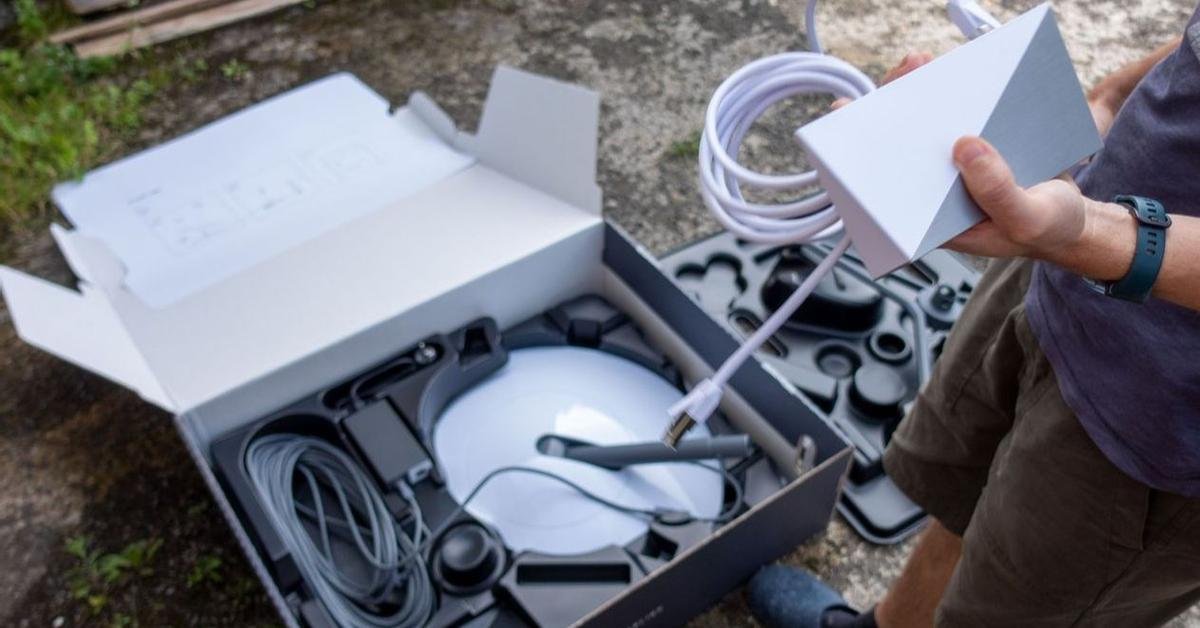
Starlink, developed by SpaceX, billionaire Elon Musk’s company, allows you to connect to the internet through a constellation of low orbit satellites, without depending on Etecsa’s terrestrial networks. Although the service is not officially marketed in Cuba, its terminals technically operate in national territory through certain roaming modalities contracted from abroad.
Last March, Musk publicly acknowledged that possibility: “It works in Cuba, you just can’t sell it there”. Weeks later, 14ymedio documented the clandestine installation of antennas in homes in Havana, Matanzas and Santa Clarawhere some users turn to batteries and solar panels to stay connected during power outages.
The official offensive against these teams is not new. In April 2025, Customs reported of the seizure of 20 Starlink kits and 85 routers at the Havana airport. Subsequently, Resolution 1/2026 of the Ministry of Communications, published on May 21, maintained restrictions on satellite terminals and other devices capable of establishing communications outside authorized networks.
Last week, authorities also called for community surveillance to detect mobile phone repeaters installed without permission, alleging possible radio interference.
The ban has already had consequences for Starlink users in Cuba. On October 24, several sellers of satellite dishes in Santa Clara were sentenced to sentences of between four and five years in prison. The authorities seized 37 pieces of equipment during searches of sellers’ and buyers’ homes. The latter would have received fines of 100,000 pesos, in addition to losing their antennas.