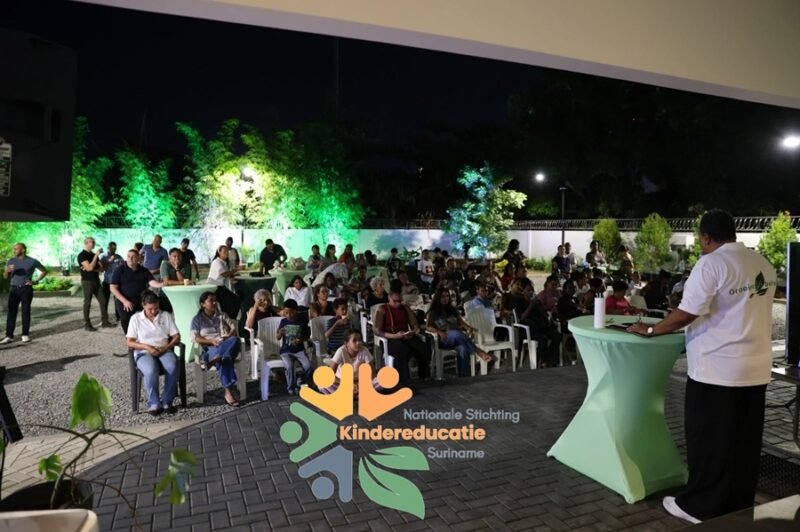
PARAMARIBO — “The development of our children is not the job of just the school, the parents or the government. No one can do this alone. Let’s do it together.” This is what the call sounded at the launch of the National Foundation for Children’s Education Suriname (NSKS). Special educationalist Annelot Themen outlined the organization’s dream on Thursday evening: a place where every child is seen and receives the help and education they need.
A press release explains that the NSKS brings together “prevention, diagnostics and guidance, inclusive education and professionalization of teachers” under one umbrella, with nature as the foundation. The goal is that every child in Suriname is seen and understood.
“Our education is not built around the child”
Orthopedagogue Annelot Themen
Themen paid attention to the state of education. “I have to sit still and listen,” says a four-year-old girl when asked what she should do at school. “While a child wants to move, discover, ask, play and create. That is not a problem for the child. That is the nature of the child. Our education is just not built around the child,” the educationalist noted.
The leaders of the NSKS believe that the foundation is necessary because many Surinamese children get stuck before they have properly started. “Only 47 percent of children aged seven to fourteen have fundamental reading skills; in the Netherlands this is 29 percent. More than seventeen thousand children have a disability, while inclusive education does not yet exist in Suriname,” the NSKS outlines the situation in the country.
One chain
The organization is therefore opting for a different approach. “Where there are separate projects elsewhere, the NSKS connects all links through four components, built on nature, playful learning and well-being.” It becomes one chain around the child: KBF+ prevents problems through reading promotion and language development, building on the Children’s Book Festival. Kompas catches problems where problems do arise, through diagnosis, remediation and guidance of the child and family. Marama sets the example as a small-scale, inclusive nature school, while the NSKS Training Academy will strengthen teachers and other professionals and at the same time provide a revenue model.
The organization believes that the NSKS will succeed. It is pointed out that she is not starting from scratch. The Children’s Book Festival and Kompas together bring years of experience. In addition, two members from the board and management of the NSKS helped develop the national dyslexia protocol. In January, a pilot will also start at Stap Vooruit primary school, with material that other schools can adopt. And perhaps most importantly: “Own income through the Training Academy and the Equality of Opportunity support fund ensures that money is never the reason that a child does not receive help.”
Own stories
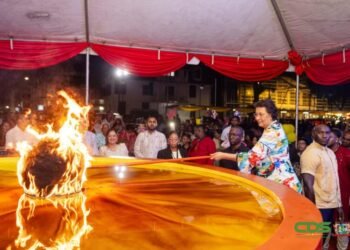
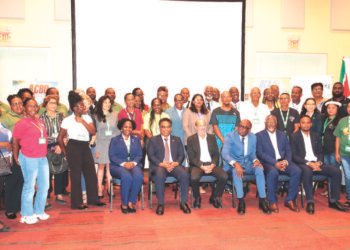
At the Architectenbureau Bouwtechniek (ABT) on Gravenberchstraat, the launch took place under the theme ‘Do you understand me?’ an evening from the child’s perspective. In small groups, guests walked past four interactive stations, where children and their parents told their own stories. Guests discovered the new website, talked to Parai’s AI voice carriers and were taken into the Littie corner by the story ‘The birth of Littie’. The latter continued the tradition of the Children’s Book Festival of publishing new Surinamese children’s books every year.
The Children’s Education Center in the Cultural Garden, built while preserving the existing forest, will open in October 2028. Architect Oliver Smith of ABT presented the design on Thursday. Chairman Amanda Sheombar talked about the history of the Children’s Book Festival and Kompas.