The period of internal vacuum behind the imbalance of supply and demand
father-in-law
Algeria ranks first in Africa and the Arab world in terms of per capita consumption
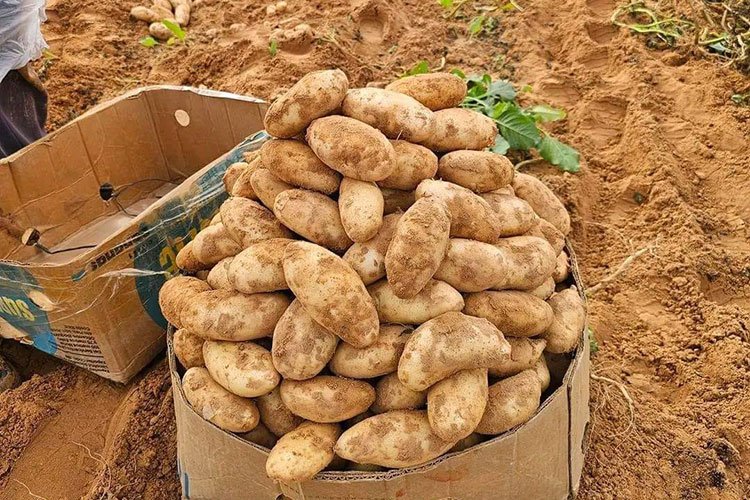
Potatoes constitute an essential pillar of the food system in Algeria, as the per capita consumption achieved locally tops regional and international rates. However, the most prominent feature that characterizes this agricultural division, according to observers of agricultural economic affairs, is reflected in the seasonal fluctuations witnessed by the national market, as the consumer faces annually the phenomenon of a severe shortage in supply during specific months, followed by a broad phase of relief led by desert agriculture to restore stability and abundance to the markets.
The movement of potato consumption in the Algerian market is subject to supply and demand mechanisms linked to the periodic production cycle, with national potato production stable in recent years in the range of 4.3 to 4.6 million tons annually according to Food and Agriculture Organization data for the year 2024, with a peak of 5.02 million tons recorded in 2019, which places Algeria in second place in Africa after Egypt, which leads with a production of 8.08 million tons annually.
This size places Algeria in first place in Africa and the Arab world in terms of per capita consumption, where net direct consumption, according to data from the Food and Agriculture Organization, reaches between 60 and 72 kilograms per capita annually, equivalent to 164 to 197 grams per day, while it ranges between 100 and 111.5 kilograms per capita annually, equivalent to 274 to 305 grams per day, according to official reports of the Ministry of Agriculture and Rural Development, when taken into account. Based on the total raw crop destined for the local market.
Analyzes of agricultural market experts confirm that potatoes remain the most suitable option for the purchasing power of large segments of society compared to meat and other vegetables, which makes any decline in their supply directly reflected in the moderation of prices.
The “interstitial gap period” is the main axis that explains the sharp shortage and temporary rise in prices, especially during the months of October and November. Agricultural engineers believe that this time gap goes back to a transitional stage between the ends and beginnings of the harvesting cycles, where exploitation of the summer crop coming from the high plateau regions and the coastal strip ends and its quantities intended for direct consumption run out, at a time when the readiness of the late crop is not yet complete, as this agricultural vacuum creates continuous pressure on the markets, which pushes the system Farmers must rely on controlled cooling stocks to pump safe quantities that prevent complete paralysis in supply.
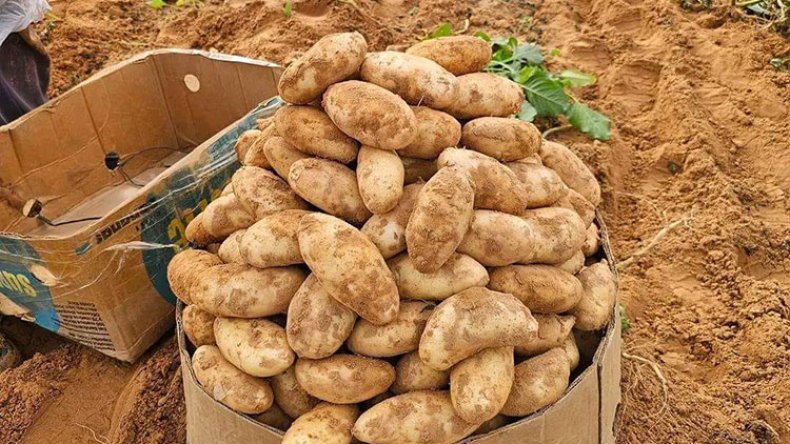
Here, the major strategic shift brought about by desert agriculture, led by the state of Oued, is highlighted, as specialists in rural development point out that agricultural techniques in desert areas and the appropriate climate have enabled the production of post-season potatoes or the non-seasonal crop, as potato seeds begin to appear in Oued Sof and the southern regions and they begin to be harvested starting from the end of November and the beginning of December, to be the locomotive that drives the expected period of relief.
Field readings by actors in the agricultural division and dealers in wholesale markets confirm that this relief reaches its peak with high intensity during the months of January and February, as huge quantities of high-quality “Soviet” and desert potatoes flow to various markets across the country, leading to breaking the shortage once and for all, achieving saturation in supply followed by a tangible decline and complete stability in prices.
The reclaimed agricultural areas in the south, especially pivotal spraying in Oued Souf, according to agricultural engineering experts, contribute to ensuring the flow of food during the weeks of internal vacuum and rebalancing national markets. The pattern of high consumption is linked to the cultural and social structure of the Algerian meal. Potatoes are a major component of broths, casseroles, couscous, and fast food, with widespread reliance on saturated group meals in which the starchy component predominates. Nutritionists and food anthropologists approach this pattern by comparing it. The European model is based on individual rations balanced between protein and fibre.
In addition to the food security and self-sufficiency achieved by local and desert production, nutritionists are keen to point out that intensive consumption raises health risks related to a high glycemic index, the risk of obesity, and insulin resistance when frying or excessive starch.
Dealing with the challenges of this division requires a dual strategy in accordance with the recommendations of researchers in food foresight. At the economic level, it is necessary to expand and develop investment in the Oued Souf pole and the desert areas to reduce the weeks of gap to the minimum possible, in addition to developing logistical networks and the cold chain to ensure smooth distribution. At the nutritional level, the importance of diversifying the Algerian plate is highlighted by introducing leafy and carrot vegetables such as squash, turnips, and carrots, as well as dry legumes such as lentils, chickpeas, and beans, while using healthy cooking methods, to achieve a balance between the stability of the markets. Seasonality and public health protection.