Lead Editor-Politics
A regional political analyst has questioned Prime Minister Kamla Persad-Bissessar’s use of the slogan “Yellow is the Code” following the National Democratic Congress’ (NDC) landslide election victory in Grenada, describing the association as “opportunistic nonsense.”
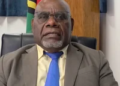
Peter Wickham yesterday argued that while Persad-Bissessar’s United National Congress (UNC) and Grenada’s NDC share yellow as a political colour, their leaders are ideologically worlds apart.
His comments follow Persad-Bissessar’s congratulatory message to Grenadian Prime Minister Dickon Mitchell on Thursday night, in which she included the hashtag #YellowIsTheCode following the NDC’s resounding victory.
“It’s opportunistic nonsense, honestly,” Wickham told Guardian Media.
“I think Persad-Bissessar understands that this is no yellow wave. I mean, if there was a yellow wave, we would have seen it in St Lucia. Clearly, there was not that.”
Wickham said the NDC has historically been a left-leaning political organisation, while Persad-Bissessar has positioned herself firmly on the political right, particularly through her relationship with US President Donald Trump.
“I see nothing in Dickon Mitchell’s leadership to suggest that he is as right-of-centre as she is. Ideologically, he’s not with her.”
He pointed to differences between the two leaders on several foreign policy matters, including Cuba, US military strikes against suspected drug vessels in the Caribbean and the installation of American radar equipment.
“He was not with her on Cuba. He certainly was not with her on the nonsense that the Americans were doing, blowing boats and the extrajudicial killings,” Wickham said.
He argued that Mitchell’s administration had also taken a different position on the radar issue, making any suggestion of shared political philosophy misleading.
“Coincidentally, the colour is yellow,” he said, adding that Persad-Bissessar’s political outlook was increasingly aligned with Trump.
Wickham also pointed to unsuccessful parties associated with yellow in St Lucia and Barbados, arguing that the colour did not represent an emerging regional political movement.
Turning to Thursday’s election, Wickham said he was not surprised by the scale of Mitchell’s victory, having conducted polling approximately one month earlier.
He said his research identified significant swings towards the NDC, including approximately 12% in one constituency.
However, he admitted being surprised that what appeared to be an effective campaign by the opposition New National Party (NNP) failed to translate into electoral gains.
According to preliminary results, Mitchell’s NDC captured 14 of Grenada’s 15 parliamentary seats and secured more than 60% of the vote, earning him a second consecutive term.
The victory strengthened the NDC’s parliamentary majority from the nine seats it secured in 2022.
Wickham believes Grenadians were voting to consolidate a credible alternative to the NNP, which dominated the country’s politics under former Prime Minister Keith Mitchell.
He said concerns about the cost of living and rising prices remained important, but voters were also demonstrating confidence in the NDC as a viable governing alternative.
“The fact that he has been given a second mandate says that Grenadians feel that you should have more than one person or more than one government able to provide guidance,” Wickham said.