The vice president of the United States, JD Vance, directly pointed to social discontent over the war promoted by President Donald Trump against Iran as the central cause of the electoral failure of the Republican Party. The legislative contest concluded with a wide triumph of the Democrats, who regained control of the Senate and the House of Representatives.
Hours after the electoral projections were confirmed, Vance used his account on the social network X to analyze the results of the process, distancing himself from the White House speech.
“The reason we lost is the war. The president himself said it last night. Any honest conversation about the direction we should take from now on has to start there. I still have hope in our country. To those who are furious and want to say ‘we warned you’: you are right, we were warned,” the official said.
The vice president warned his co-religionists about the danger of denying the reasons for the punishment at the polls: “Although some try to defend that it was worth losing the Senate for the next six years, everyone knows the reason for the electoral failure. The main problem was not participation, but rather that voters who supported our formula in 2024 preferred the Democrats this time.”
Regarding the internal debate over the effectiveness of the campaign, Vance added: “There will be a lot of disputes about what happened and why. A respected pollster suggested to me that our economic message was not strong enough in the final stretch, and that is surely true; but the real reason for the defeat is evident to almost everyone. I had a negative feeling for the day, but still, this result shocked me.”
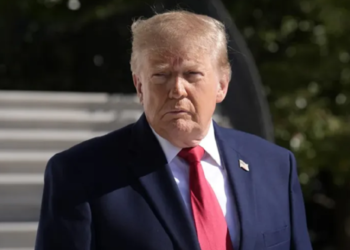
The president donald trump admitted in statements to Fox News that the war – currently stagnant and with no signs of a peace agreement – influenced the electorate, although he defended the military offensive against the Islamic Republic to neutralize its nuclear program.
Economic impact and an unprecedented “blue wave”
Election Day functioned as a plebiscite on Trump’s management. Citizens expressed a marked rejection of the sustained increase in inflation and the rise in fuel prices (gasoline and diesel), consequences derived from the conflict and the paralysis of maritime traffic in the strategic Strait of Hormuz.
The discontent translated into a powerful Democratic victory:
- Overturn in the Senate: The opposition took key seats in traditionally conservative states such as Texas, Kansas, Maine, North Carolina, South Carolina, Iowa and Ohio, areas where the party had not won for decades.
- Historical milestone: The election of Abdul El-Sayed in Michigan stands out, who becomes the first Muslim to join the Upper House.
- Broad control in the House of Representatives: According to projections of NBCthe Democrats secured a majority that could reach 258 seats, far exceeding the threshold of 218 necessary for the governability of the chamber.
With races still open but with opposition advantages in Alaska and Mississippi, the new configuration of Congress poses a scenario of constant oversight and intense political dispute for the final stretch of Trump’s mandate.