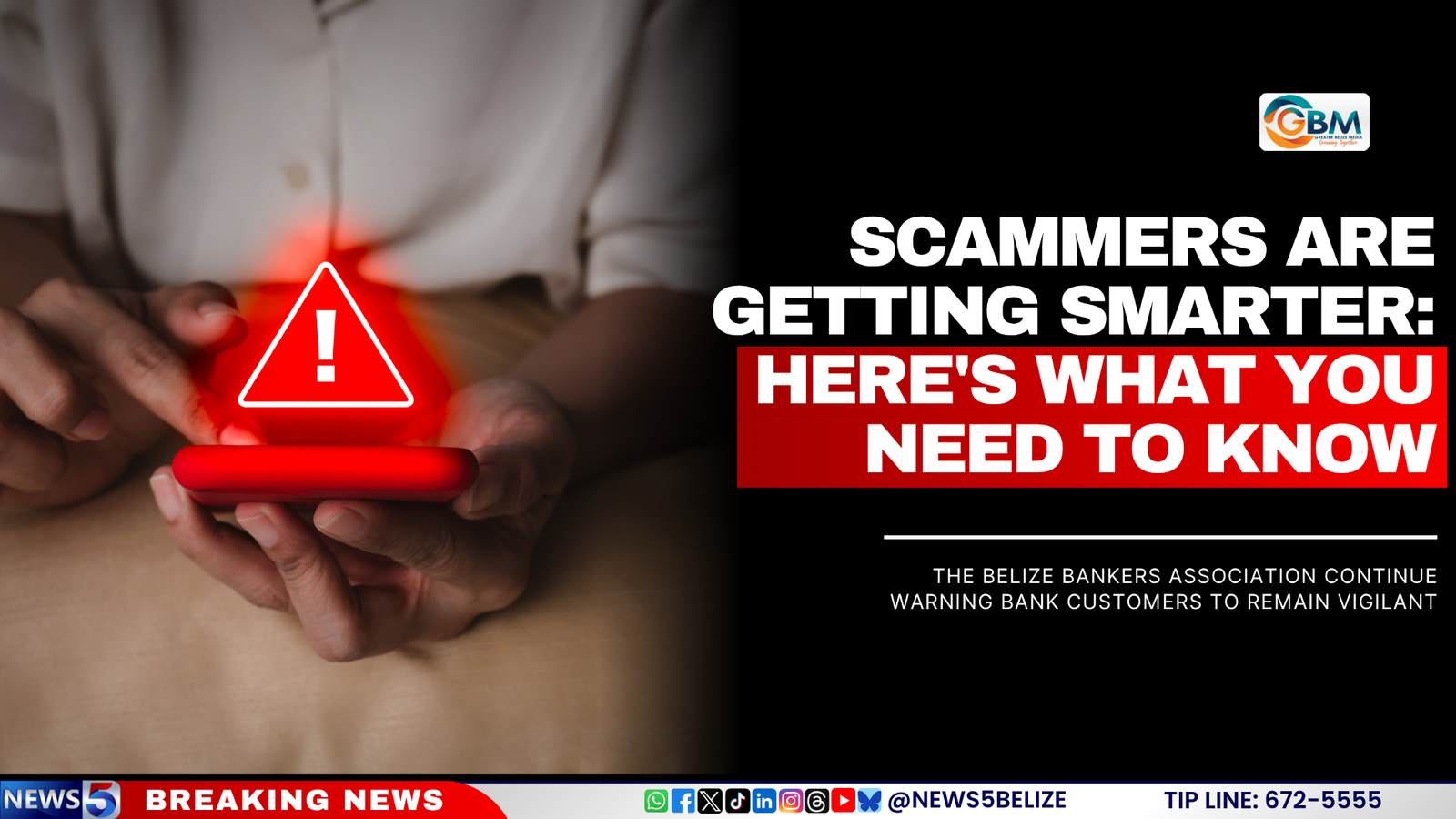
The Belize Bankers Association is warning bank customers to remain vigilant as scammers become increasingly sophisticated in their attempts to obtain private banking information through fraudulent calls, messages and online interactions.
Association President Dyon Elliott says financial institutions are investing in cybersecurity to protect their systems, but scammers are increasingly relying on social engineering to get customers to voluntarily surrender access to their accounts.
He explained that these schemes typically rely on three tactics: establishing trust, creating fear and introducing urgency.
Scammers may impersonate bank representatives, use legitimate banking logos and personal information to appear credible, then pressure potential victims into taking immediate action by claiming their accounts are at risk.
“They inject a crisis or an emergency. If you don’t do this now, you’re gonna lose this, you’re gonna lose that. Your account is gonna be shut down so you need to act quickly,” Elliott explained.
He cautioned that anyone can fall victim to these schemes, particularly as scammers become more convincing in their attempts to exploit people’s trust in financial institutions.
However, Elliott stressed that there is one important rule bank customers should always remember: banks will never ask for your passwords, PINs or verification codes.
“No bank is gonna call you and ask for your one-time password or your PIN, your token. No bank will do that,” he warned.
Elliott is urging anyone who receives suspicious calls or messages claiming to come from a financial institution to end the interaction immediately and contact their bank directly through its official channels to verify the communication.
Bank customers are also encouraged to avoid suspicious links, use only official banking websites, keep their login credentials private and enable multi-factor authentication.
“Be skeptical. Question it. Sometimes an authority figure shows up in front of you, you feel like this is a bank. It’s not the bank that’s calling you, though. They’re using the name of the bank.”