According to a new report from The National Research and Analysis Center for Welfare (VIVE) moves around 1,500 people annually from Greenland to Denmark, while only around 900 travel the other way.
The report Movements between Greenland and Denmark – Mapping living conditions and experiences with migrationcommissioned by the Ministry of Social Affairs at the request of the parties behind the North Atlantic pool, sheds light on what characterizes those who move from Greenland to Denmark and how life in Denmark is connected to life in Greenland. The results are based on register data from Statistics Greenland and Statistics Denmark as well as on qualitative interviews.
Several reasons for eviction
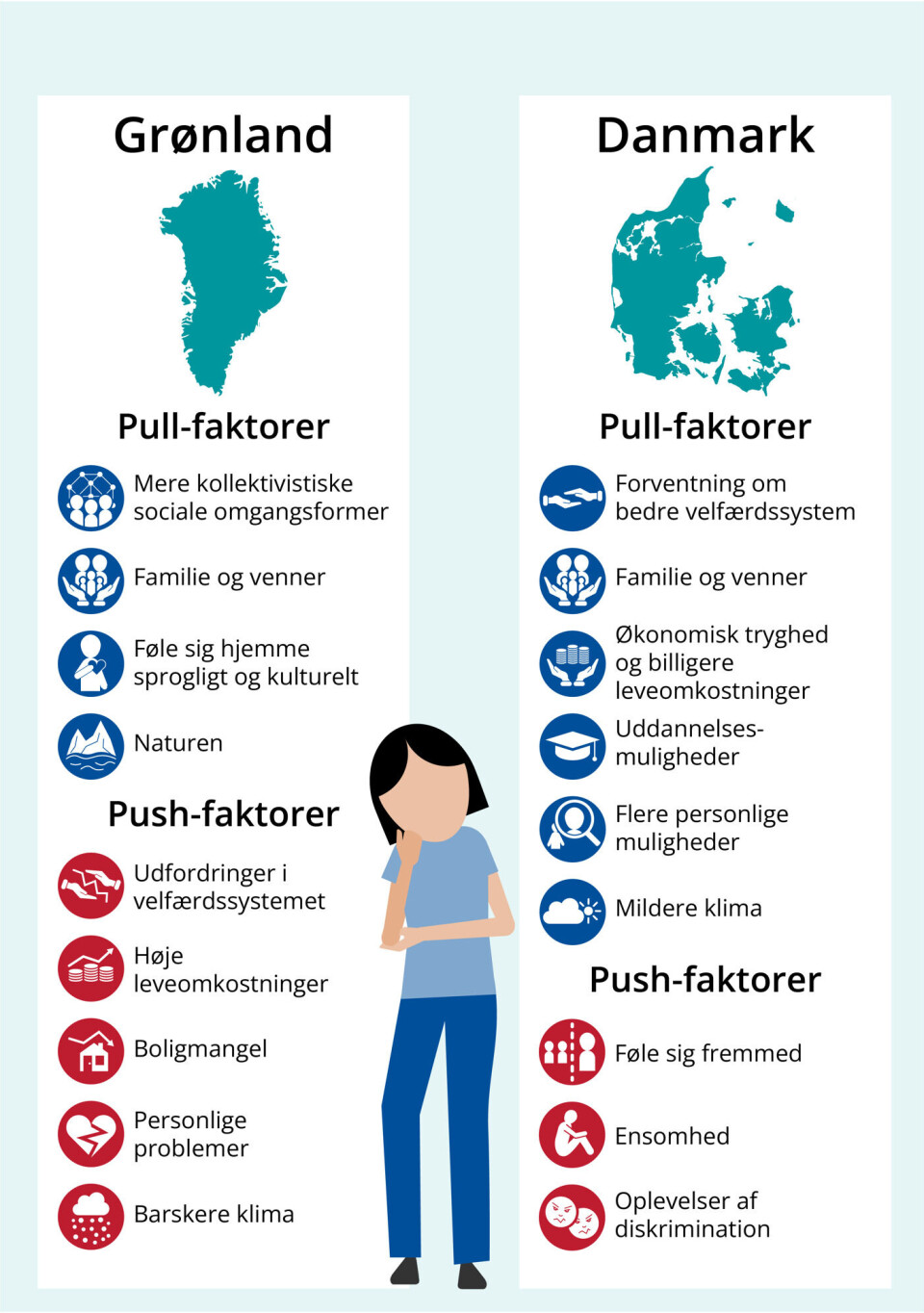
According to the report, there are many reasons for moving from Greenland. For some, it is about educational opportunities and family in Denmark, while others want to get away from problems in Greenlandic society.
– People move boats because they want a few more options and yearn for a different kind of life, just like everyone else who moves around the world. It is important not to portray all displacement as a problem. Education, work, family and the desire for new experiences are also legitimate reasons for moving, says Karen Margrethe Dahl, who is project manager for the report and chief analyst at VIVE.
According to the report, however, it is not always easy to return home. Only approx. half of those who move from Greenland to Denmark are back in Greenland after five years. After ten years, only approx. 60 percent left in Greenland.
Better economy in Denmark
Young people and people with family ties to Greenland are more likely to return. While persons who live in social vulnerability in Denmark, conversely, are less likely to return.
According to the report, a number of Greenlanders express that they would like to return to Greenland, but do not find it realistic due to particularly high living costs, lack of housing and limited help in the health and welfare system.
– They experience that it may be that there are things that you cannot get help for in the Greenlandic health system. (…) It is expensive, and there are some housing problems, says Karen Margrethe Dahl, who sees the limited help in the health system, high living costs and lack of housing as specific reasons why many do not return to Greenland, even though they might want to.
– They think they have better finances on cash assistance in Denmark than with an unskilled job in Greenland, she says.
Challenges in the labor market
In Denmark, many also experience challenges both in the labor market and in the education system. The challenges are related to linguistic and professional challenges, but also to social challenges and an experience of discrimination.
The proportion of Greenlanders who are employed or in the process of an education thus falls from 76 percent, the year before they move from Greenland, to 45 percent, five years after they have settled in Denmark, the report shows.
Karen Margrethe Dahl therefore believes that there is a need to create better transitions and support so that people who move from Greenland to Denmark do not lose their footing.
– Many are in work before the move, but find it more difficult to maintain their attachment to the labor market in Denmark. This emphasizes the need for better transitions and recognition of competences, she says.
Concrete efforts to minimize displacement
In relation to reducing emigration from Greenland, which is due to poor living conditions, Karen Margrethe Dahl points to several concrete initiatives that are about making housing more accessible, which can reduce the pressure on families and make it more realistic to establish and stay in Greenland. In addition, there is a need to strengthen the healthcare system and strengthen support for children with special needs and their families, so that they do not feel that moving to Denmark is the only option.
– Better access to necessary treatment and more health services can reduce the need to move for health reasons. Work can also be done to create better economic conditions in Greenland, so that the difference between the welfare systems in Greenland and Denmark is not so significant, says Karen Margrethe Dahl, who also believes that a relevant political effort is to investigate how low-paid and unskilled workers in particular can get an income that is more in line with the cost of living in Greenland.
The report should be thought provoking
The association Kalaallit Meerartaat/Greenland children has read the report and believes that it should provoke thought among both Danish and Greenlandic politicians:
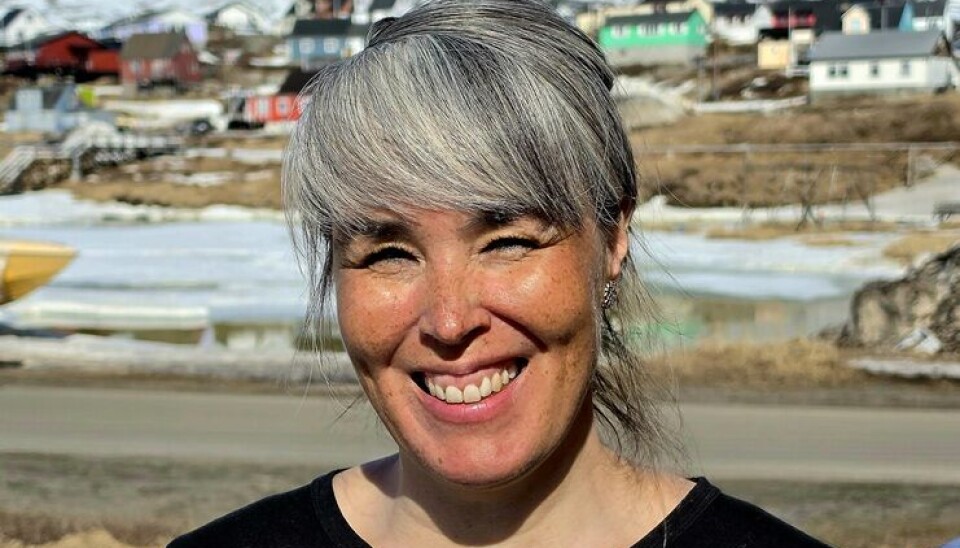
– There are obviously some problems that need to be solved in Denmark, but the report should also make Greenlandic politicians look at whether they are doing enough to prevent the challenges that some Greenlanders have that make them choose to move to Denmark. There is a lack of concrete, coordinated and locally rooted prevention in Greenland, and the politicians should ensure that they create some good frameworks that civil society can help fill in. The report points out that the social challenges you may have can be amplified when you move to Denmark and are without a network, and this is a challenge that Danish and Greenlandic politicians should look at together, says head of the secretariat Evi Kreutzmann.