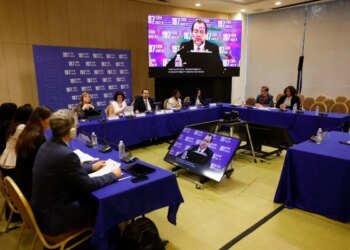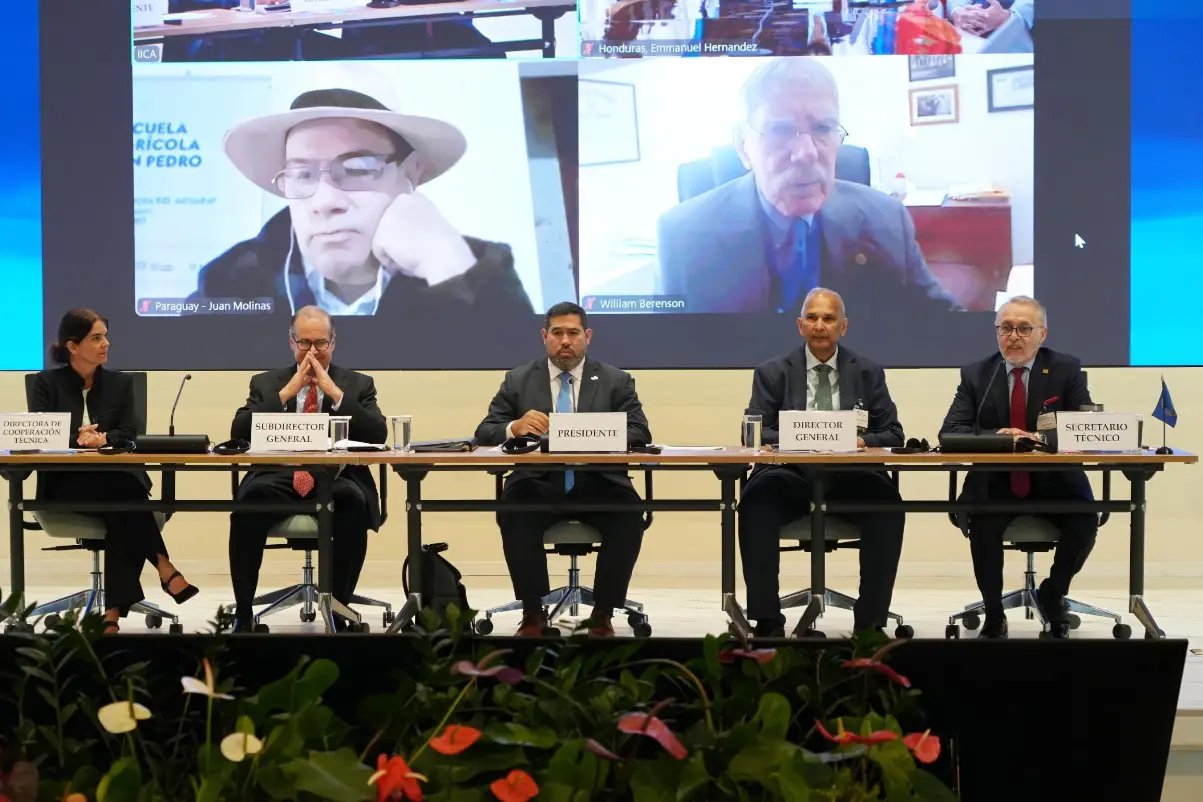
Panama chaired the Second Extraordinary Meeting of the Executive Committee of the Inter-American Institute for Cooperation on Agriculture (IICA)held this Thursday, October 29 in the Costa Rican capital.
During the summit, the country reaffirmed its commitment to regional cooperation, technological innovation and the continent’s agri-food resilience.
On behalf of the minister ofand Agricultural Development, Roberto Linaresthe vice minister José Aníbal Rincón He led the national delegation and launched a strong call to strengthen agricultural science and provide priority support to small coffee and cocoa producers.
At the beginning of his speech, Rincón extended deep gratitude, on behalf of the government of President José Raúl Mulino, for the displays of international solidarity after the recent earthquake that affected the agricultural regions of Herrera, Los Santos, Coclé and Veraguas.
“This solidarity reminds us that the resilience of our agri-food systems is a task that no country can assume alone.”, he emphasized.
Agenda focused on technology and research
The extraordinary call responded to direct requests to deliberate on scientific research and the strengthening of two fundamental productive chains for family and indigenous agriculture: cocoa and coffee.
In this regard, the vice minister pointed out that the reality experienced by the cocoa farmers of Bocas del Toro and the coffee growers of the highlands of Chiriqui demonstrates the urgency of providing farm workers with effective tools to confront climate change and price volatility in the markets.
To address this panorama, Panama formally supported the proposals presented to the Executive Committee, among which stand out: the creation of the hemispheric mechanism PROCACAO (name used in previous initiatives linked to cocoa in Central America and currently corresponds to a program of the Pacific Emprende Foundation in Colombia).
While its availability is verified and some alternatives are examined, the name “Hemispheric Cooperative Mechanism for the Cocoa Chain“, points out the Document supporting the response to the IICA resolution on science, technology and innovation.
“IICA is gathering evidence, reviewing institutional background and preparing consultations that will allow defining options in terms of purpose, scope, membership, governance and sustainability. These elements will serve as a basis for Member States to consider the constitution of the mechanism and its instruments.”says the document.
The agenda also includes the expansion of the Regional Cooperative Program for the Technological Development and Modernization of Coffee Farming (PROMECAFE), an initiative focused on the transfer of coffee technology.
“The challenge is not only to produce more, but to ensure that a greater proportion of the value generated by cocoa and coffee stays in the hands of those who grow them.”, stressed the senior official.
Strategic plans towards 2030
During the day, the participating delegations analyzed cross-cutting issues for the development of the sector in the Americas, including the advancement of innovation capabilities through initiatives such as the Science, Technology and Innovation Hub for Sustainable Agriculture in Guyanaas well as the roadmap drawn up in the IICA Medium Term Plan 2026-2030.
In that sense, Rincón urged to consolidate the international organization as an efficient bridge between national research systems, leaving a blunt phrase about the effectiveness of knowledge: “Science that does not reach the farm does not transform agriculture”.
At the close of the day, the Panamanian vice minister recognized the management of the general director of the IICA, Muhammad Ibrahimand his work team, reiterating the willingness to Panama to continue leading a respectful regional dialogue focused on concrete results that directly benefit small and medium-sized producers in the hemisphere.