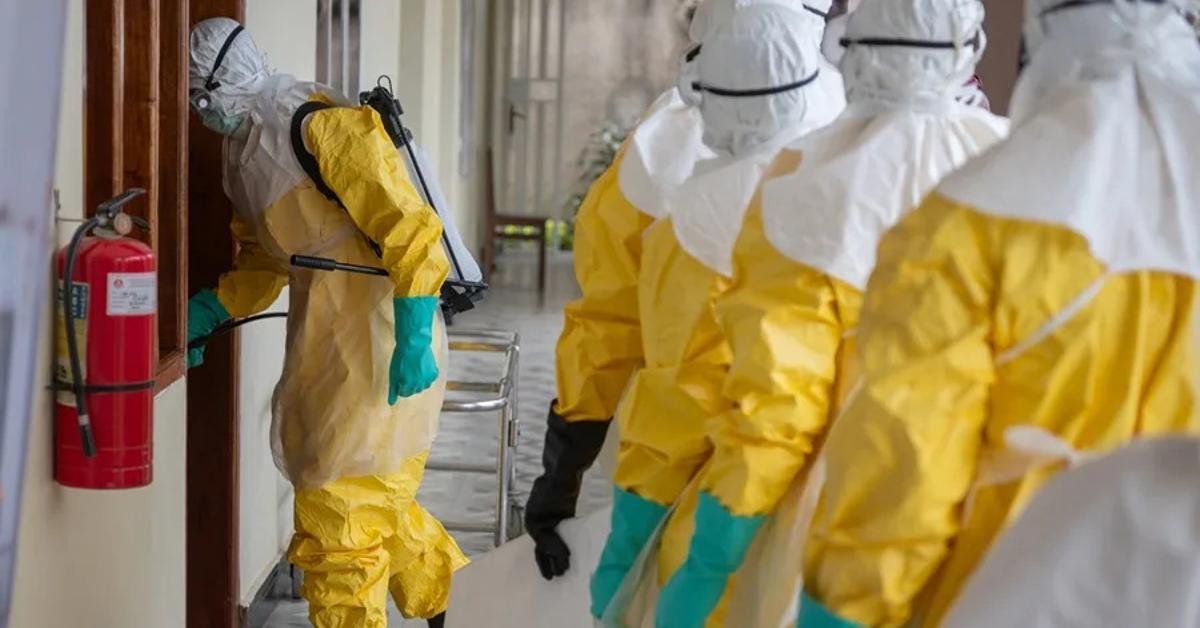
Havana/The Ebola epidemic that hits the Democratic Republic of the Congo (DRC) has surpassed 5,000 deaths and continues to spread throughout Africa, while health authorities try to contain a virus that has already crossed several borders. Since the outbreak was declared on May 15, 10,351 infections and 5,026 deaths have been confirmed, according to data from the Congolese National Institute of Public Health, updated as of October 29.
The figure represents a fatality rate of 48.6%: practically one in every two diagnosed patients has died. Another 2,788 have managed to recover and 1,101 remain hospitalized or in isolation. The disease mainly affects the eastern provinces of Ituri and North Kivu, where armed conflicts, difficulties in accessing medical services and delays in diagnosis complicate the health response.
The outbreak is already the second deadliest recorded in the world, only behind the epidemic that devastated West Africa between 2014 and 2016, when some 11,000 people died. The variant responsible for the current crisis is Bundibugyo, for which there are still no approved vaccines or specific treatments.
The man continued to move while his illness remained unidentified
But statistics alone do not tell how a disease can make its way across thousands of kilometers. To understand it, it is enough to follow the journey of a man who, at the beginning of October, arrived sick in Nairobi after passing through the Democratic Republic of the Congo and Uganda.
Their journey had begun long before. At the end of August he was in Buta, in the north of Congo, and during the first days of September he worked in the Aketi area. Later he moved to Likati accompanied by his brother. There he began to feel unwell and received treatment at home. The symptoms persisted and, between September 17 and 19, he was admitted to a health center in Bondo.
The man continued to move while his illness remained unidentified. He flew to Kisangani, where he again sought medical attention, and later to Beni, in eastern Congo. From there he crossed the border with Uganda by road, passed through Kampala and arrived at Entebbe airport.

/ WHO
On October 3, he boarded a plane to Nairobi. He landed around one in the afternoon and was taken in a private car to Nairobi Hospital, where he was isolated. Two days later he died. Tests confirmed that he was infected with the Bundibugyo virus.
The World Health Organization (WHO) reconstructed his itinerary on a map that includes 14 stages, from the end of August until his funeral, on October 6. The succession of towns, hospitals, roads and airports shows the complexity of tracing the contacts of a person who has traveled through several countries before receiving a diagnosis.
In Kenya, eight additional infections related to the first patient were identified. Among those infected were four family members and four health workers. As of October 26, the country had nine cases and two deaths, although authorities had not detected broader community transmission.
The expansion has set off the alarms of the WHO and the health organizations of the African Union, which this week demanded a coordinated response
The epidemic also reached Uganda, where 20 confirmed cases were recorded, including 15 imported from the Congo, and two deaths. The WHO declared that outbreak over on August 26. Nigeria, for its part, confirmed in October a contagion related to the regional crisis.
The expansion has set off the alarms of the WHO and the health organizations of the African Union, which this week demanded a coordinated response. Border surveillance, contact tracing and early identification of the sick have become priorities to prevent the virus from finding new routes of spread.
In the Congo, however, the problem begins long before arriving at an airport. Many patients die outside treatment centers, without having received specialized care. The difficulties in detecting cases in time encourage the infection to continue circulating among family members, caregivers and entire communities.
While experimental vaccines against the Bundibugyo variant are being developed, health teams are primarily relying on isolation, supportive care and contact tracing. Each late diagnosis can open a new chain of transmission.