BANDAR SERI BEGAWAN: As part of ongoing efforts to strengthen collaboration in community development, Islamic social finance and sustainable economic empowerment, a delegation comprising representatives from Bank Islam Brunei Darussalam (BIBD), Jabatan Urusan Zakat, Waqaf dan Baitulmal (JUZWAB) of the Ministry of Religious Affairs, and Badan Tanmiah Harta Majlis Ugama Islam (BTHMUI), undertook an educational and courtesy visit to Kuala Lumpur and Kedah, Malaysia, in October.
The visit served as a platform for knowledge exchange and engagement with leading Malaysian institutions in the areas of Islamic finance, social development, and community empowerment.
“What made this visit especially meaningful was the opportunity to undertake it alongside our partners, JUZWAB and BTHMUI,” Mohammad Yusri Wahsalfelah, Acting Managing Director and Chief Executive Officer of BIBD, said.
“By working together, sharing knowledge and learning from organisations such as Agrobank, Bank Muamalat Malaysia Berhad and Lembaga Zakat Negeri Kedah, we are able to identify new approaches and build stronger foundations for future collaboration.”
The delegation engaged with three leading Malaysian institutions, namely Agrobank, Bank Muamalat Malaysia Berhad and Lembaga Zakat Negeri Kedah (LZNK), to gain insights into their products, programmes, operational practices and community development initiatives.
At Agrobank in Kuala Lumpur, discussions focused on the bank’s experience in delivering Islamic financial solutions that support agriculture and the wider economy. The delegation learned about Agrobank’s transformation from a conventional banking institution into a full-fledged Islamic bank, as well as its efforts in promoting sustainable agricultural development through innovative financing mechanisms.
Pembiayaan Padi-i Salam, a Shariah-compliant financing facility that links financing directly to agricultural production and food security outcomes, demonstrated how Islamic finance can be utilised to support the real economy through a structured ecosystem involving financial institutions, government agencies, agricultural operators, buyers and protection providers.
The delegation also visited Bank Muamalat Malaysia Berhad, where discussions centred on the institution’s integrated approach to Islamic social finance. The session highlighted how commercial banking services can be complemented by programmes focused on entrepreneurship development, financial inclusion, charitable giving and halal-sector growth.
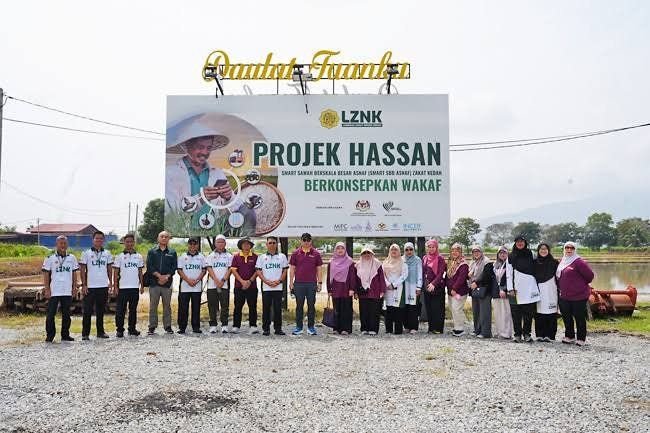
In Kedah, the delegation engaged with LZNK and visited several community, educational and agricultural initiatives supported through zakat funding in Kota Setar, Padang Lumat and Yan.
The field visits provided first-hand exposure to programmes focused on asnaf empowerment through skills development, education, religious infrastructure, modern agriculture and value-chain participation. (Asnaf are people entitled to receive zakat.)
The engagement with LZNK also enabled the delegation to gain a deeper understanding of the organisation’s approach to zakat administration, beneficiary support, programme governance and stakeholder collaboration.
Discussions included the role of digitalisation, innovation and continuous programme enhancement in ensuring zakat delivery remains effective, responsive and sustainable.
Insights and observations from the visit will be reviewed by the participating organisations to assess their suitability and potential application within Brunei. – Borneo Bulletin/ANN