THE Health Department launched its first high-level training programme for senior leaders to integrate gender equity and social inclusion (Gesi) into the country’s health system.
The training, held in Port Moresby, marked a significant milestone in the department’s journey toward an equitable and socially inclusive workplace.
This initiative fulfills a long-standing mandate to embed Gesi principles and values into core business processes and systems.
The Department of Personnel Management’s (DPM) Gesi team was supporting these efforts by delivering a dual-track initiative.
Senior executives participate in policy implementation planning (PIPS) sessions to help institutionalise Gesi principles in decision-making.
Meanwhile, middle management would undergo sensitisation and mainstreaming to bridge the gap between policy and daily health operations.
The Australian government was proud to support the development of the national public service Gesi policy and is funding the delivery of the department’s training.
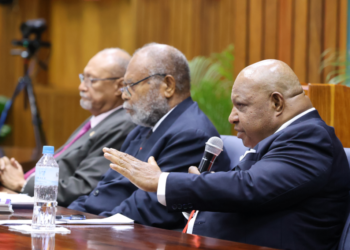
Acting deputy Health Department secretary for national health planning and corporate services, Dr Esorom Daoni emphasised that leadership engagement was the essential first step for reform.
“Engaging the senior and middle management to be sensitised is the first step towards strengthening national coordination and ownership of the policy through health system strengthening and equitable and inclusive service delivery,” Daoni said.
DPM director for the Mamose and social sector Josephine Konjib was among the senior leaders who attended the workshop.
“At the core is the commitment to providing equitable employment opportunities and building an inclusive workplace, thus delivering quality health services in Papua New Guinea,” she said.
The inaugural training underscores the importance of embedding respect, equity, and social inclusion at the highest levels of the health sector.
Australia remains committed to working with PNG to prioritise inclusion at all levels.