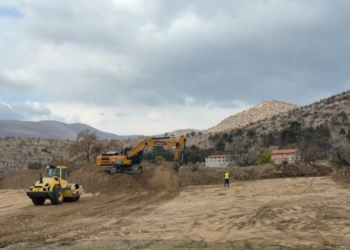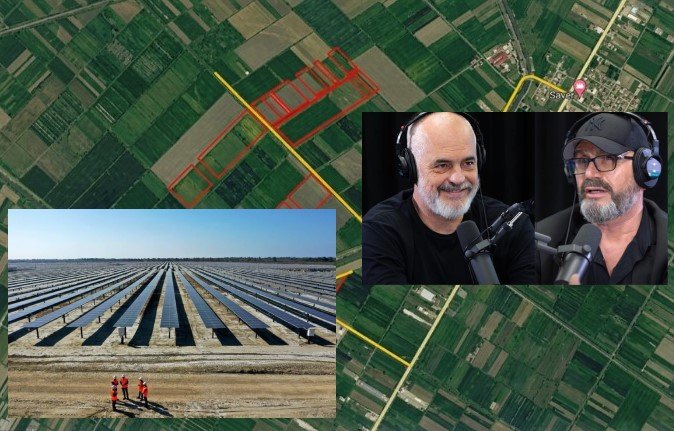
Over 57 hectares of agricultural land in Savër i Lushnje will be covered by solar panels. Through a decision that bypasses the law, the National Territorial Council has granted special permission to the company 3X Energy to embed the panels in the fertile land.
Edi Rama gives special permission to his friend to build a park
The special treatment for the company, which is owned by businessman Agim Xindoli, a friend of Prime Minister Edi Rama, once again brings back the debate of sacrificing productive agricultural land for photovoltaics.
Conflict with the Urban Plan of the Municipality
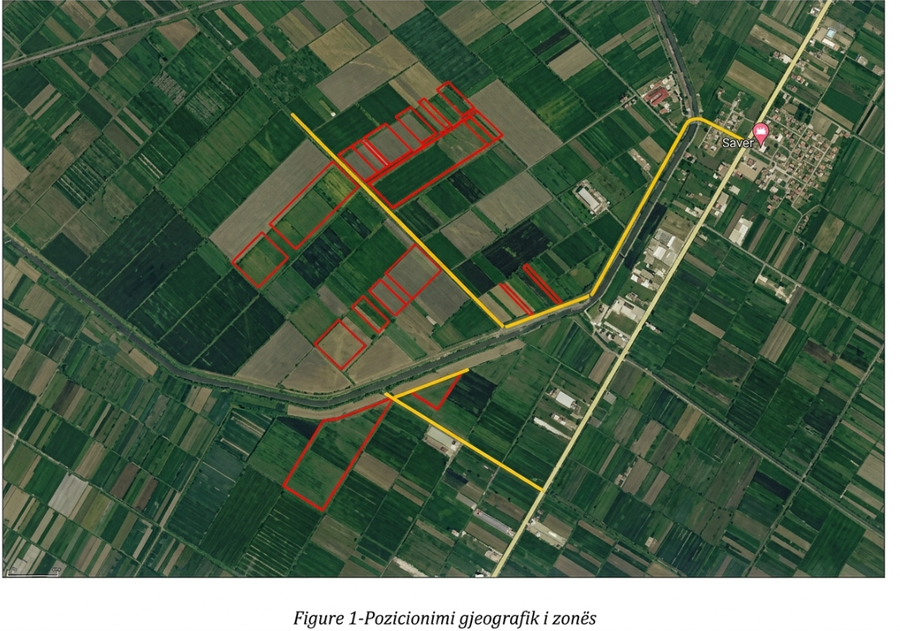
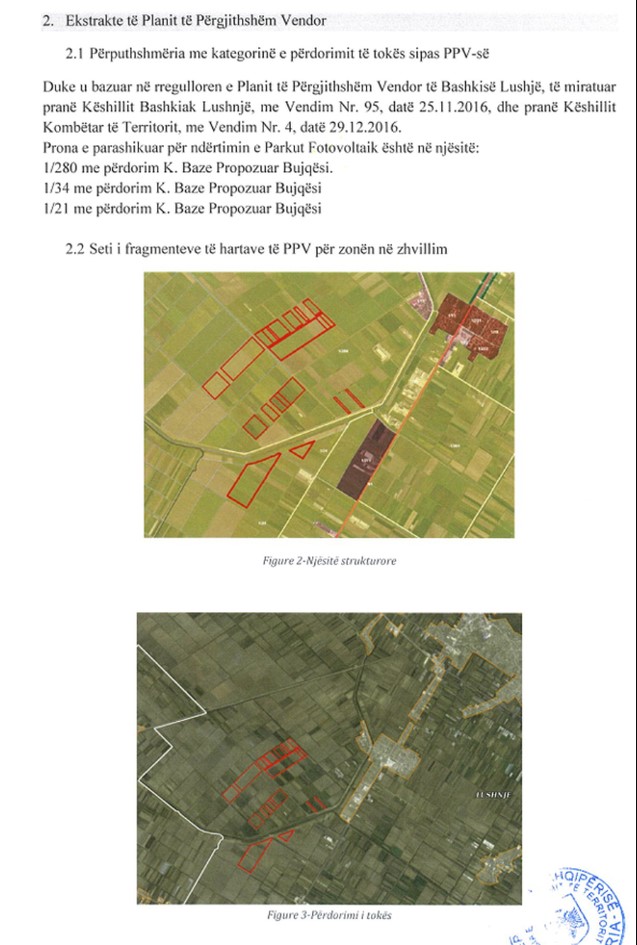
According to the Local General Plan of Lushnjë Municipality, the cadastral areas where this investment is designed (under structural units 1/280, 1/34 and 1/21) bear the cut code “K. Base Proposed Agriculture”.
Edi Rama gives special permission to his friend to build a park
According to the standard urban planning rules in force at the local level, only agricultural activity or auxiliary constructions such as greenhouses, stables or warehouses for the storage of agricultural products are allowed exclusively in these plots.
On the other hand, an energy plant of this size is fully classified as industrial infrastructure, which automatically made its construction prohibited and illegal in this area of Myzeqe.
“Solution” through the Special Regulation for the friend of the Prime Minister
In order to overcome this legal knot and the town planning impasse that was blocking the project of the businessman Djindoli, the government has applied a special legal instrument, the special regulation.
This mechanism entitles the central authority to temporarily suspend the rules and prohibitions set by the municipality itself and to dictate new development conditions customized for the investor, for projects that are considered to be of national importance.
The scenario of protected areas with agricultural land
During the summer of this year, the Assembly of Albania approved changes to the organic law “On the protection of agricultural land”. This draft law, immediately decreed by President Bajram Begaj in August 2026, brought about an inversion of the regulatory hierarchy:
His hottest point was the transfer of powers to the government. Through the law, the assembly delegated the right to regulate and authorize energy storage and photovoltaic/wind farms directly to the Council of Ministers.
The opposition, through MP Oerd Bylykbashi, described this as “the key that opens the door to the irreversible destruction of agricultural land”, because the government can now overcome parliamentary barriers or local plans of municipalities for private investment.
This change caused strong debates even within the socialist majority itself. During the discussions in the Laws Committee, the socialist deputy Damian Gjiknuri expressed strong reservations about damage to the creditworthiness and concrete structures, which led to a clash with the then minister Ulsi Manja and the removal of Gjiknuri from the meeting.
Also, socialist deputy Erion Braçe came out openly against the law, siding with farmers’ concerns about the loss of arable land.