The United States is a Pacific nation. More than 1.9 million American citizens and nationals live in Hawaii, Guam, American Samoa, and the Commonwealth of the Northern Mariana Islands, and approximately 53 million Americans live along the western seaboard, from California to Alaska. Our commitment to the security of the Pacific Islands is steadfast and enduring, and it is a key pillar of our America First Foreign Policy. When the Pacific Islands are secure, the American homeland is safer.
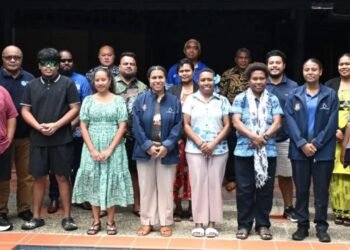
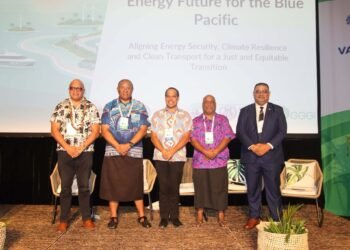
On September 1, at the Pacific Islands Forum in Palau, the U.S. State Department committed the United States to convene Pacific police ministers to address shared challenges. On October 21-22 in Los Angeles, the United States hosted the inaugural U.S.-Pacific Islands Conference of Police Ministers (COPMIN). U.S. Coast Guard Commandant Admiral Kevin Lunday and Palau Minister of Justice Jennifer Olegeriil co-chaired the conference, and Assistant Secretary of State for International Narcotics and Law Enforcement Affairs F. Cartwright Weiland led the Department of State delegation. Ministers and senior officials responsible for police matters from across the Pacific Islands, Australia, New Zealand, and France joined regional organizations, senior U.S. officials, law enforcement leaders from the Western Hemisphere, Southeast Asia, and representatives from American industry.
One Criminal Enterprise, Many Regions
The networks threatening Pacific communities operate as a single criminal enterprise. Precursor chemicals are supplied to clandestine labs in Mexico, Colombia, Ecuador, and Southeast Asia, which produce finished product that cartels then move across the Pacific by courier, international mail, private aircraft, and semi-submersible vessels. All of this is supported by extensive money laundering operations. Since 2024, the narcotics that Western Hemisphere cartels traffic through the Pacific have surpassed the flow from Asia.
Each link in this chain depends on the others. Breaking the enterprise requires action at every link, starting where drugs and precursors first enter legitimate trade. Under President Trump and
Secretary Rubio’s leadership, the United States is protecting the investments it makes in the Pacific by stopping narcotics before they reach our shores, dismantling the criminal enterprises that defraud our citizens, and supporting regional Pacific institutions. At COPMIN, the United States announced more than $44 million in new programming to counter transnational criminal organizations operating in the Pacific and threatening the American people.
Launching a Cross-Regional Response
Regional Interdiction Partnership for Trafficking Intelligence, Disruption, and Enforcement (RIPTIDE): The Department is providing $4 million to launch RIPTIDE, the first coordinated effort against the criminal enterprises spanning the Pacific and the Western Hemisphere. Working with INTERPOL, this effort will complement existing regional information sharing efforts by connecting police services in its network of 196 member countries, linking seizures to investigations and to the money behind them. The World Customs Organization (WCO) will draw on its 187 member customs administrations to train Pacific officers in the channels traffickers exploit most, including general aviation, international mail, and detector-dog operations, and will feed intelligence from border controls to investigators. Together, Interpol and WCO will build an information-sharing mechanism that works for every participating country and complements existing Pacific-led efforts to increase law enforcement information sharing. With RIPTIDE, countries that share the world’s largest ocean will, for the first time, build a common mechanism against a common criminal enemy.
Securing the Maritime Domain
Aumoana Regional Center, Palau: The United States is investing $7 million to build a regional maritime law enforcement training and coordination center in Palau, which will serve as headquarters for the Aumoana Regional Law Enforcement Initiative. The center will train Pacific personnel in vessel boarding, evidence handling, and maritime domain awareness. It will also house U.S. and regional liaison officers who provide intelligence support across the Pacific Islands and U.S. territories, making Palau a hub for regional maritime enforcement.
Shared Waters, Shared Watch: A Regional Maritime Awareness Network: The United States is providing nearly $5.5 million to give Pacific partners a clearer, shared picture of the waters that traffickers and illegal fishing fleets exploit. U.S. Pacific Command’s Joint Interagency Task Force West (JIATF-W) is providing more than $1.4 million in maritime surveillance tools for the Pacific Islands Forum Fisheries Agency and Fiji’s maritime services, along with a secure communications system for the Samoa-hosted Pacific Transnational Crime Coordination Centre. JIATF-W will construct a boat ramp in Fiji to support efforts to improve interdiction of illicit drugs and cargo. The Department of State will equip four new Papua New Guinea National Fisheries Authority patrol boats with advanced electro-optical and infrared cameras, upgraded radar displays, and real-time data transmission. Together, these investments link patrol boats, fisheries monitors, and police intelligence centers across the region.
Project Kanaloa: The United States is providing $4.5 million through the U.S. Coast Guard to strengthen maritime law enforcement in the Pacific Islands. Project Kanaloa will train officers in small-boat operations, boarding, fisheries enforcement, and maritime prosecutions. It will also provide equipment and embed advisors with Pacific maritime police, customs, and fisheries agencies, helping partners patrol vast exclusive economic zones and build their own training capacity.
Expanded Shiprider Operations: The U.S. Coast Guard will expand bilateral Shiprider operations with Pacific partners. Under these arrangements, Pacific law enforcement officers serve aboard U.S. Coast Guard cutters with authority to enforce their own nations’ laws throughout their exclusive economic zones. This extends enforcement across waters that no single nation can patrol alone.
Disrupting Criminal Networks and Their Money
Enhancing Police Investigative Capacity (EPIC): The United States is providing $5 million through the FBI to strengthen Pacific police investigations of drug trafficking, bribery, money laundering, and cybercrime. EPIC will deliver hands-on training, advising on active cases, police liaison support, and exchanges to the FBI National Academy, building professional networks that produce results across borders.
Facilitating Operational Readiness for Territorial Resilience, Enforcement, and Security (FORTRES): The United States is providing $2.5 million through Homeland Security Investigations to strengthen border and port security. FORTRES will deploy liaison officers to advise on active cases, target trade-based money laundering and cartel-linked drug trafficking, upgrade screening equipment at priority ports, and run exercises that sharpen real-time information sharing between Pacific border agencies and U.S. law enforcement.
Frontline Investigators Initiative: Joint Interagency Task Force West is providing more than $1.3 million to train investigators in Fiji, Tonga, the Republic of the Marshall Islands, the Federated States of Micronesia, and Palau in narcotics investigations, financial investigative techniques, and maritime operations planning. In Palau, two U.S. Customs and Border Protection officers will embed with the Bureau of Customs and Border Protection for a 60-day advise-and-assist pilot.
Pacific Islands Narcotics Supply Reduction (PINSR): The United States is providing $450,000 through the Drug Enforcement Administration for three years of training and mentorship in narcotics investigations, financial crimes, forensics, and leadership. PINSR will also support counternarcotics courses at regional police academies.
Fortifying Tonga’s Gateways: The United States is providing funding of approximately $3.5 million to strengthen border detection capabilities in the Kingdom of Tonga. The Department of State will install modern and technologically advanced US cargo screening equipment at Queen Salote International Wharf in Nuku’alofa. This will enable all inbound and outbound cargo to be screened and identify cargo requiring inspection for illicit goods, including narcotics. Joint Inter- Agency Taskforce West (JIATF- West) will also work with Tongan authorities to design, construct and fund an administrative support facility for the newly completed canine detection kennel facilities at Neiafu Police Station on the island of Vava’u.
Pacific Alliance for Combating Illicit Finance and Cybercrime (PACIFIC): The United States is providing $5 million to strengthen financial intelligence units and cybercrime units in the Pacific Islands. U.S. federal agencies will train officers in cryptocurrency tracing, beneficial-ownership investigations, and digital forensics. They will also help update anti-money laundering and cybercrime laws consistent with Financial Action Task Force and Budapest Convention standards. PACIFIC protects the trusted digital economy that U.S. cloud and telecommunications programs are helping build across the region.
Building Enduring Partner Effectiveness
U.S.-Palau Letter of Agreement: The United States and Palau signed a Letter of Agreement at COPMIN to advance law enforcement training and capabilities in Palau. The agreement includes regional programming that may also benefit the Republic of the Marshall Islands and the Federated States of Micronesia.
Integrated Support for Policing Instruction and Regional Engagement (INSPIRE): The United States is providing $5 million through the Federal Law Enforcement Training Centers to strengthen Pacific police academies. INSPIRE supports curriculum development, instructor standards, recruitment, and technical assistance to police commissions, building a pipeline of professional officers prepared to counter transnational crime within their own borders.
International Law Enforcement Academy (ILEA) Bangkok: The United States, through ILEA Bangkok, provides specialized law enforcement training to Pacific Island countries to strengthen investigations, combat transnational crime, and improve cooperation with U.S. law enforcement agencies. Training focuses on shared security threats, including drug trafficking, financial crimes, and cybercrime.
Looking Ahead
COPMIN participants committed to strengthen maritime domain awareness, Shiprider cooperation, and port and border security. They also committed to protect legitimate supply chains from traffickers, cut off supplies of precursor chemicals and equipment, and build the capacity to investigate scam operations, cryptocurrency laundering, and the corrupt officials who enable them. The United States will support Pacific partners to carry this momentum into 2027 and beyond, reinforcing that security and prosperity go hand in hand.