He deterioration of public servicessalary demands and demands for justice marked the social conflict in Venezuela during September. The Venezuelan Observatory of Social Conflict (OVCS) counted 1,101 protests in the country, with an average of 37 daily demonstrations and an increase of 489% compared to the same month in 2025, when it documented 187.
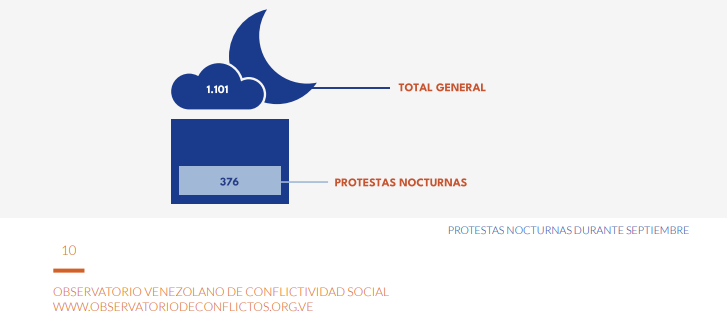
The electrical crisis It was the main trigger of the mobilizations. The observatory report counted 531 protests due to failures in the supply of the service, 376 of them during the night, carried out mainly by communities affected by prolonged blackouts.
The Economic, Social, Cultural and Environmental Rights (Desca) concentrated 911 protests, equivalent to 83% of the total. The demonstrations were related to access to essential services, living conditions and the loss of purchasing power. For its part, Civil and Political Rights (CPR) were required on 190 occasions, which represent 17% of the records.
The OVCS warned that the persistence of these demands demonstrates the difficulties of institutions in responding to the needs of the population. “The reiteration of these demands shows the distance between the needs of the communities and the institutional response capacity,” he noted.
Blackouts led residents to protest at night
Demonstrations due to failures in the electrical service increased 2,024% compared to September 2025, when 25 protests were registered for this cause. Compared to August 2026, the increase was approximately 138%, going from 223 to 531 protests.
The claims They arose from outages of between 6 and more than 48 hoursvoltage fluctuations and transformer breakdowns that, according to the complaints collected, did not receive a timely solution. Neighbors also reported damage to appliances, loss of food and medicine, and interruptions to work and educational activities.
The observatory indicated that the communities went to administrative bodies, local authorities, the VenApp platform and Corpoelec without obtaining satisfactory answers. The electricity crisis also aggravated difficulties in accessing drinking water, especially in areas that depend on pumping systems.
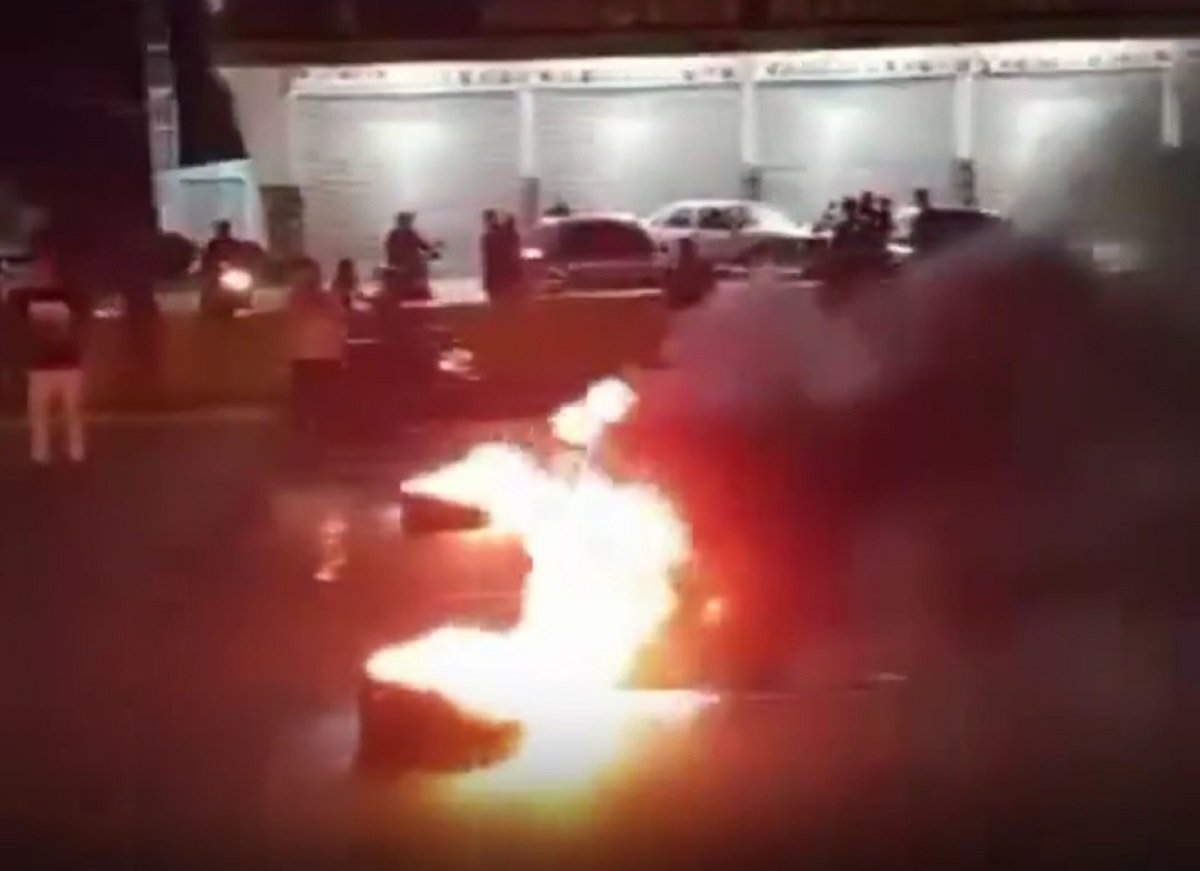
The 376 nighttime protests represented 34% of the demonstrations recorded during the month. To make their demands visible, citizens carried out rallies, street closures, banging pots and, in some cases, burning tires.
The OVCS maintained that “the magnitude of these protests reflects the exhaustion, anguish and growing frustration of the communities due to the persistence of electrical failures and the absence of effective solutions.”
Basic services and salaries led the complaints
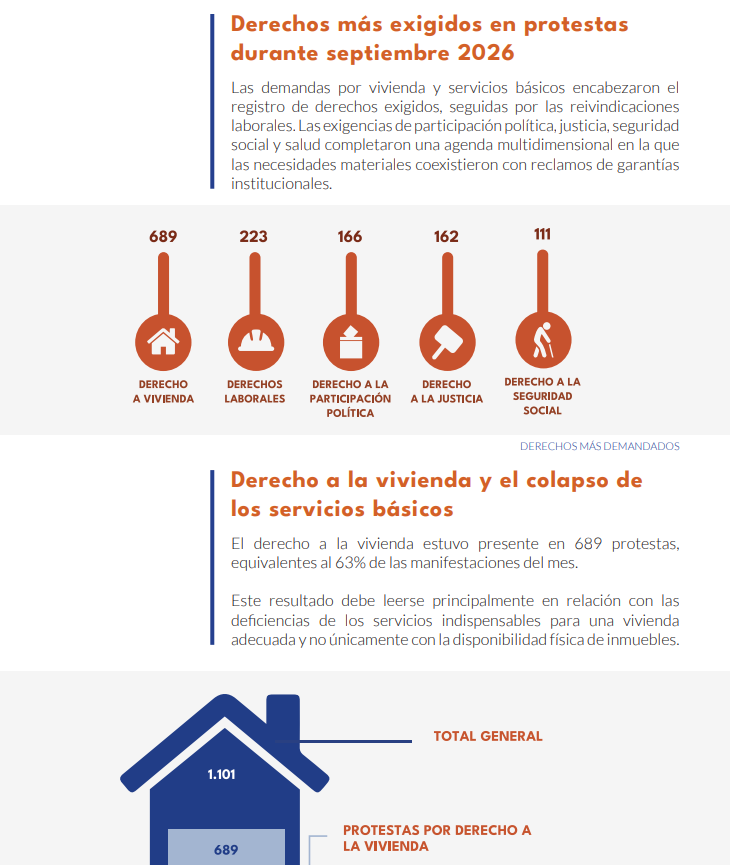
The right to housing was present in 689 protests, equivalent to 63% of the total. The report related these manifestations mainly to the deficiencies of the services essential to guarantee adequate living conditions.
In addition to demanding an end to power cuts, citizens demanded improvements in the drinking water supplyadequate roads, sewage treatment and solid waste collection. The observatory counted 124 protests for drinking water, 36 for roads, 27 for sewage and 12 for waste collection.
Labor demands occupied second place among the main demands, with 223 demonstrations. Workers from different sectors demanded sufficient wages, recovery of purchasing power and compliance with collective contracts.
Health personnel mobilized to demand salary increasesdecent bonuses and work benefits. Education workers, transporters and agricultural producers also protested, the latter in rejection of the pricing policies applied to rural products.
Retirees and pensioners demanded sufficient income, salary equalization, payment of bonuses and restitution of medical benefits. In total, the right to social security was present in 111 protests, while the right to health was demanded in 101 demonstrations.
The consequences of earthquakes of June 24 also remained among citizen concerns. Affected families demanded structural evaluations, repairs to educational facilities and safe housing solutions.
Lara concentrated the largest number of demonstrations
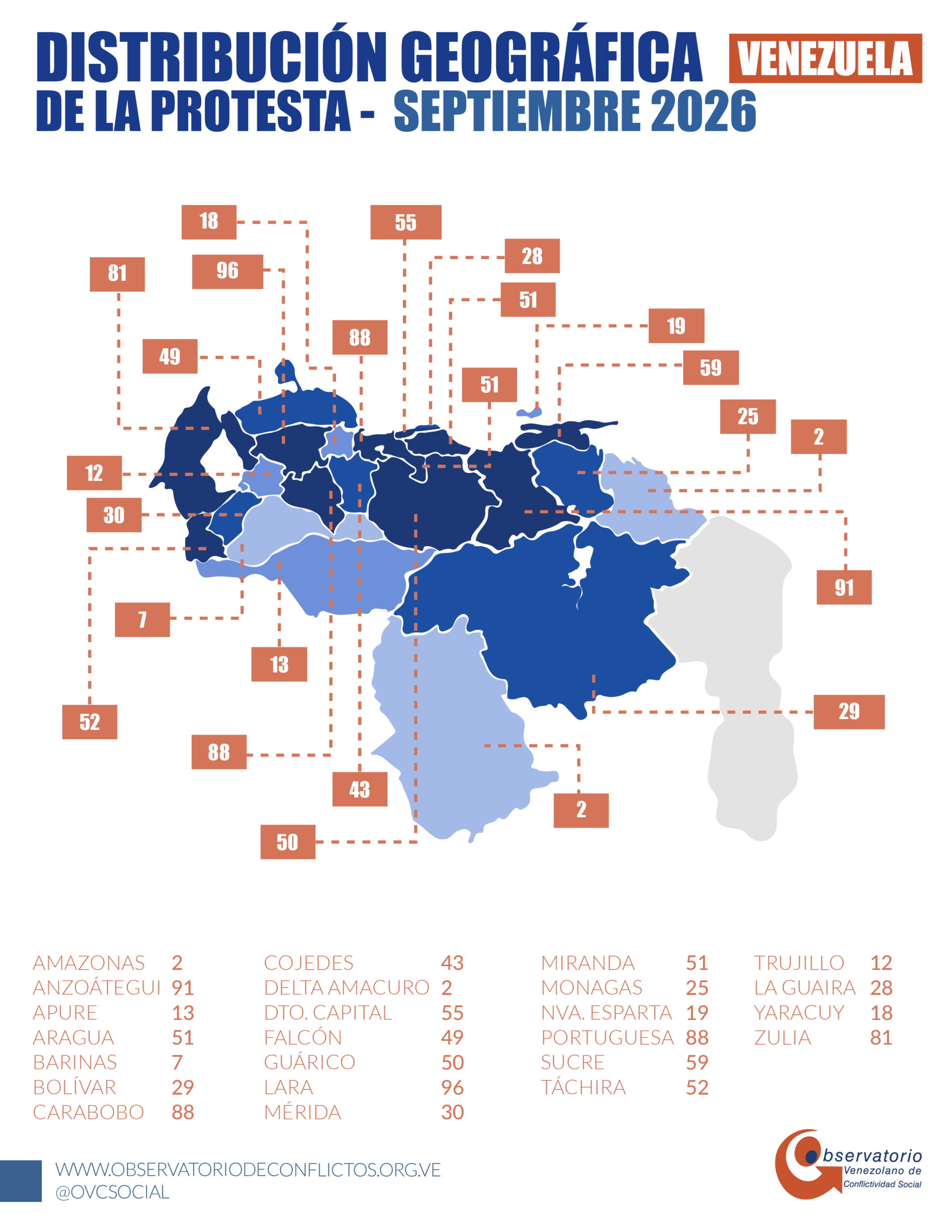
Lara led the territorial distribution of social conflict, with 96 protests. They were followed by Anzoátegui, with 91; Carabobo and Portuguesa, with 88 each, and Zulia, with 81.
At the opposite extreme, Amazonas and Delta Amacuro registered two demonstrations each. Trujillo counted 12 and Yaracuy 18.
Regarding protests due to failures in the electrical service, Carabobo registered 67; Portuguese, 66; Anzoátegui, 65, and Zulia, 62. The distribution showed that service failures generated mobilizations in different regions of the country, although with different intensities.
Concentrations were the most frequent type of protest, with 563 registrations, equivalent to 51% of the total. Also documented were 360 closures of streets or avenues, 37 marches and 35 banging of pots and pans.
In addition, 496 demonstrations combined demands related to more than one right. This figure represented 45% of the total and reflected the convergence of claims for public services, work, health, social security and justice.
Demands for justice and democratic guarantees persist
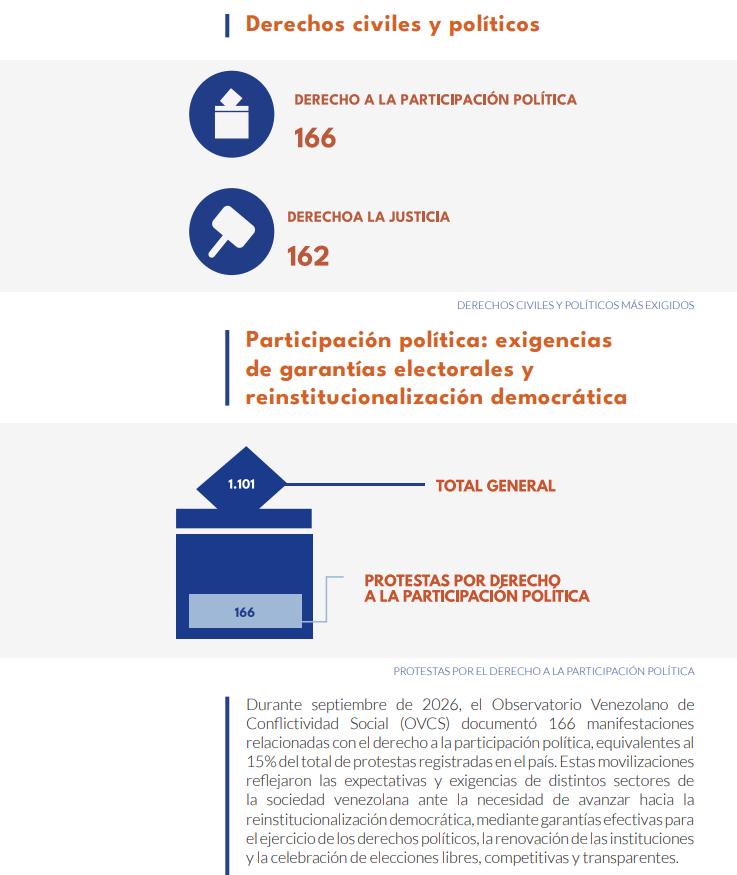
Civil and political rights were present in 190 demonstrations. In this category, the OVCS counted 166 protests for political participation and 162 related to the right to justice, records that may coincide with other categories of rights demanded in the same demonstration.
The demands for political participation included electoral guarantees, renewal of authorities of the National Electoral Council (CNE) and the Supreme Court of Justice (TSJ), as well as the publication of a presidential election schedule. Mobilizations were also recorded against actions of the authorities and in defense of political pluralism.
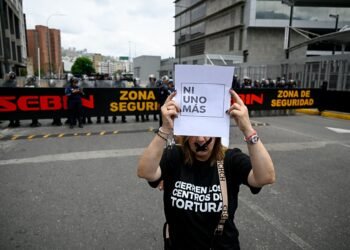
In terms of justice, relatives of political prisoners and human rights organizations demanded full freedom, respect for due process and answers about the conditions of confinement. Among the initiatives, the Pending Responses Route stood out, promoted to keep visible the cases of people who continue to be detained and demand solutions from the authorities.
The report points out that the releases and other measures adopted During 2026 they have not resolved all the family members’ demands. Therefore, it raises the need for transparent procedures, effective judicial remedies and independent investigations into possible arbitrariness and human rights violations.
The observatory registered 28 repressed protests
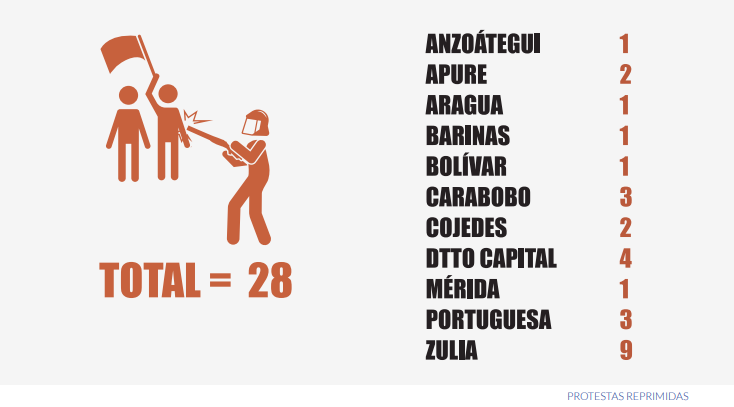
The OVCS documented 28 repressed protests in 11 entities in the country during September. Zulia concentrated 9 cases, followed by the Capital District, with 4. Likewise, it registered 24 demonstrations in 10 states against alleged arbitrary actions and abuses by security agencies.
In these protests, citizens demanded independent investigations, clarification of the facts and determination of responsibilities. The organization warned that a lower frequency of open repression does not mean that the structures and practices that can facilitate the intimidation and criminalization of protest have disappeared.
When referring to the risks faced by protesters, the OVCS stated: “The State has the obligation to facilitate and protect their exercise, without discrimination due to the content of the demands, the identity of the participants or their political positions.”
The observatory also warned about complaints of intimidation and violence attributed to armed civilian groups and pointed out the importance of the actions of the security forces respecting the principles of legality, necessity and proportionality, in addition to being subject to effective accountability mechanisms.
Rising protests pose institutional challenges
The increase of 69% compared to August and 489% compared to September 2025 reflects intensification of social conflict. For the OVCS, the demonstrations respond both to structural problems that affect living conditions and to the expectations of political and institutional change in the country.
The organization warned that the increase in mobilization does not imply, by itself, an effective recovery of civic and democratic space. Demands for basic services and decent wages coexist with demands for justice, freedom for political prisoners, electoral guarantees and independence of institutions.
The OVCS reiterated that peaceful protest is a legitimate form of citizen participation and an indicator of the needs of society. He stated that addressing the causes of the demonstrations, guaranteeing the right to complain without reprisals and offering sustainable institutional responses are necessary conditions to move towards democratic re-institutionalization and respect for human rights.