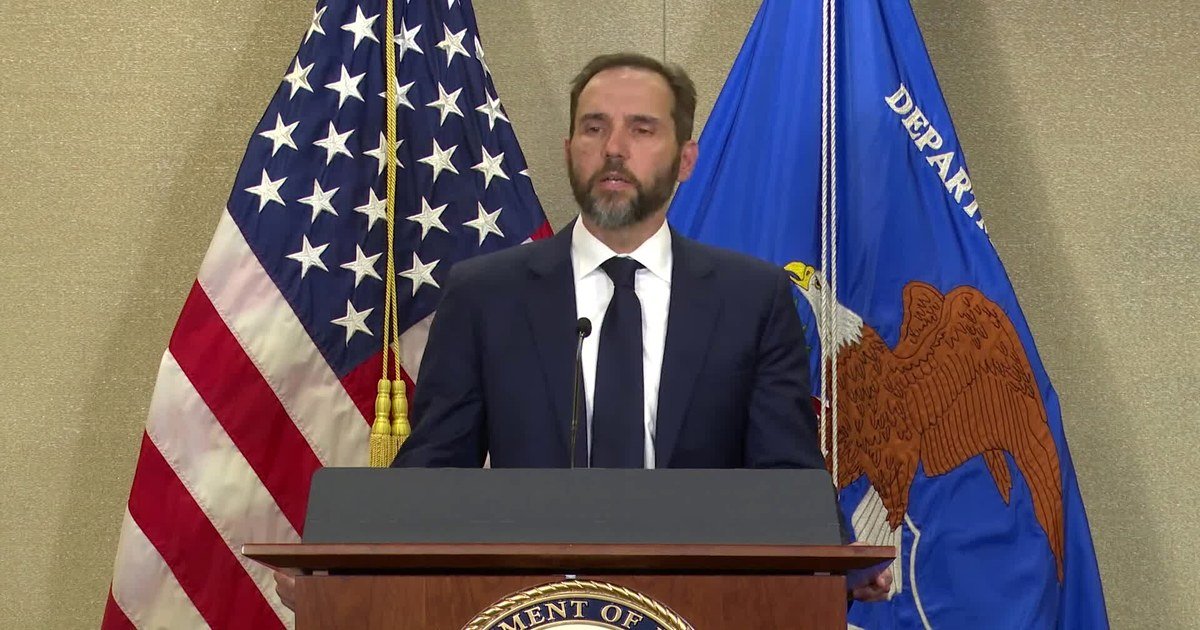
In a filing filed Monday in the Federal District Court for the Southern District of Florida, the BBC’s defense announced that Smith “raised no objection” to the subpoena and agreed to be questioned under oath. The president’s lawyers responded the same day with a motion to cancel the subpoena.
Smith is the man who in August 2023 filed the federal indictment against Trump over the events of January 6, 2021 — a case that was dropped after Trump won the November 2024 election, due to a Justice Department rule barring criminal prosecution of a sitting president.
The montage that started it all
The lawsuit, filed in December 2025, is related to the investigative series documentary Panorama of the BBC, “Trump: A Second Chance?”, aired in the weeks leading up to the 2024 presidential election.
At the heart of the case is a sequence of Trump’s speech on January 6, 2021. In the documentary, fragments were added where he called on supporters to march to the Capitol and “fight with flesh and blood”, while the part where he demanded that the protest take place “peacefully and patriotically” was left out.
The BBC has publicly apologized for the editing but has refused to pay compensation. The lawsuit calls the documentary “false, defamatory, misleading, disparaging, inflammatory and malicious,” and claims that its airing shortly before the election was a deliberate attempt to influence the outcome.
Trump’s opposition
The president’s team’s motion relies on two arguments. First: Smith “has no personal knowledge of the issues in this lawsuit,” as he was not present during the speech and did not participate in its drafting. Second: any material he possesses comes from subsequent investigations, so is second-hand and irrelevant evidence of how the BBC edited the documentary.(2)
Why the BBC loves Smith
The defense’s argument is simple and, in the logic of the American civil process, hard to ignore: by taking the case to court himself and claiming that his speech does not incite violence, Trump has placed at the center of the process the question of what he wanted on January 6, 2021.
According to the BBC’s lawyers, Smith’s report is public, but the evidence on which it is based is not – including, as they write in the submission, “strong evidence that the violence that occurred on January 6 was foreseeable to Mr. Trump, that he caused it and that he and his associates used it to carry out their conspiracies.” Withholding the testimony, the defense argues, would be a “fundamental injustice” that would deny the broadcaster the right to a defense.
The plaintiff’s paradox
Meanwhile, the court’s attention has shifted to Trump himself. His testimony under oath was scheduled for Friday, October 16, but was canceled by lawyers on the grounds of “a matter of national importance.”
The BBC told the judge that those “issues” were a rally in Dalton, Georgia, where the president gave speeches about the candidates in the upcoming election, and a fundraising event at Mar-a-Lago.
On Friday, Judge Enjolique Aytch Lett warned that there will be sanctions if the witness order is not followed. The hearing on this matter is scheduled for Thursday.
For a lawsuit that the president filed to defend his reputation, the balance of the last few weeks is unusual: the plaintiff requested that the opponent’s witness not be heard, while the plaintiff himself did not appear in his own testimony.
The BBC’s three defences
The broadcaster’s defense does not rest solely on the thesis that the editing was permitted. It has three pillars.
The first is territorial: according to the BBC, the documentary has never been broadcast in the United States. Without airing in the US, she argues, there is no defamation under US law – and the case is dismissed before a witness is heard.(2)
The second is crucial: the content of the documentary does not constitute defamation under the American standard, where a public figure must prove not only that the information was false, but also that it was published with knowledge of the falsehood or with gross negligence.
The third is the most dangerous for Trump: the BBC claims that the violence of January 6 was predictable. This is not a defense – it is a factual counterclaim. And to prove it, she needs Smith.
The American law firm representing the BBC, Ballard Spahr, along with two of its lawyers, Charles Tobin and Sasha Dudding, appear as defendants in the case register. A mediator, John W. Thornton, has also been appointed – which keeps open the possibility of an agreement before the trial.(4)
What comes next
The decision on the motion will determine whether the federal inquiry’s January 6 evidence becomes an official part of the civil process — and whether the investigation once aimed at convicting Trump will now turn into evidence for the BBC’s defense.
Three dates will point the way: Thursday’s hearing on Trump’s testimony, the ruling on the subpoena for Smith, and the court’s response to the argument that the documentary was never broadcast in America. If that argument is accepted, this entire stage of gathering evidence becomes unnecessary. / Albania.com