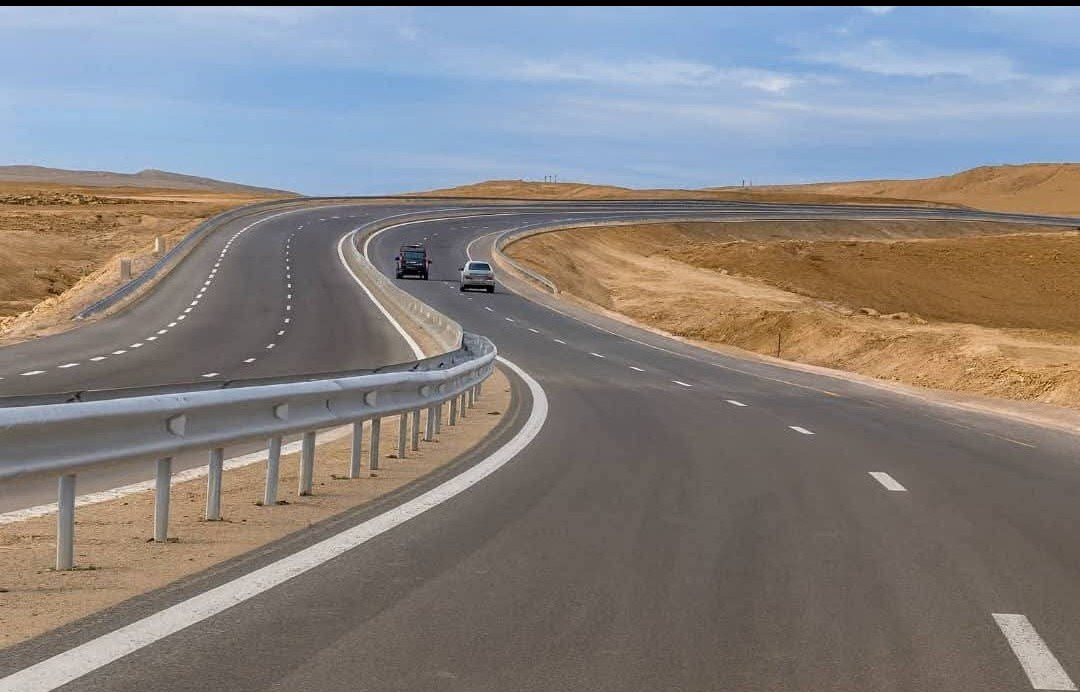
The President of the Republic’s supplementary program is bearing fruit
The road network in the state of Tissemsilt is heading towards a remarkable transformation, in light of the accelerating pace of completion of a number of giant projects registered within various development programs, especially the supplementary development program approved by the President of the Republic, Abdelmadjid Tebboune, for the benefit of the state, at the end of 2022, as the progress rate of operations recorded in the public works sector exceeded 95 percent, amid a bet on these facilities to open new outlets for economic movement and investment.
Connection to the motorway
The public works sector occupies an advanced position within the Supplementary Development Program, having benefited from a financial envelope of approximately 5,000 billion centimes, or approximately half of the total value of the program, which reflects the importance given to modernizing the road network and improving connectivity between the state and various national hubs.
The Director of Public Works, Borji Zinedine, explained that a number of major projects have entered into service, most notably the dualization of National Road No. 127 linking the municipality of Laayoune and the north-south highway towards the state of Medea, a distance of 73 km, in addition to the dualization of National Road No. 14 towards the state of Tiaret, and the dualization of National Road No. 120 linking Laayoune and the borders of the state of Djelfa.
In parallel with the received projects, work is continuing on other reliable projects to complete the dual road network in the state, allowing the length of the dual sections to be increased to 136 km, especially the dualization project of National Road No. 14 in its two parts linking Tissemsilt to the borders of the state of Ain Defla, at a distance of 33 km, in which the work progress rate has reached 60 percent.
Recently, laying the asphalt layer on the first section of the bypass road linking Yusufiyah and the intersection point of national roads 14 and 127, passing through Thanyat al-Hadd, was begun in a step that is expected to enhance the flow of traffic and open a more effective access to the motorway network.
This axis is of particular importance in view of its expected role in improving transportation and connecting the state to the east-west highway, which may shorten travel times and relieve pressure on some current axes.
The Khemisti-Laayoune road is entering its final stages
On the other side of the road network, the dual bypass road project linking the municipalities of Khemisti and Laayoune, at a distance of 12 km, is recording remarkable progress, after the works reached the stage of laying layers of asphalt, following the completion of leveling and elevation operations with gravel, in addition to the completion of water drainage channels.
Burji Zein Al-Din confirmed that the project has entered its final stage, with the recording of the last retouches in anticipation of putting it into service, indicating that this axis will contribute to relieving traffic congestion within the two cities and facilitating the movement of vehicles, especially heavy-weight vehicles.
The road also represents a link with National Road No. 127, which extends towards the north-south motorway through Qasr al-Bukhari in the state of Medea, which has entered into service, which is expected to relieve pressure on National Road No. 14, which experiences heavy traffic estimated at about 20,000 vehicles per day.
The impact of the project is not limited to the traffic aspect, as it is expected to give an impetus to the economic movement in the region, by facilitating the transportation of people and goods and improving the conditions of movement between the various national clusters and axes.
Dualization of National Road 19 towards Chlef
Within the framework of expanding the connectivity network, the Public Works Directorate completed the technical study on the dualization of National Road No. 19 in its two parts linking the state capital, Tissemsilt, to the municipality of Bordj Bounaama.
The head of the directorate’s infrastructure development department, Muhammad Bouras, revealed that the sector has benefited by the year 2027 from several studies related to the duplication of sections of national and state roads, in addition to the modernization of a number of technical facilities.
The operations include preliminary approval to register the project to dual-lane National Road No. 19 linking Tissemsilt and Chlef, as part of an effort to improve the flow of traffic and facilitate the transportation of people and goods through this axis, which is known for its significant traffic density.
The completion of a 10 km section was also recorded, starting from the northern exit of the state to the “Grouj” region, in addition to studying the duality of the second section linking the municipality of Bordj Bounaama to the borders of the state of Chlef, at a distance of 28 km.
This project comes in response to concerns that have been raised for years, given the pressure that the road experiences, especially during the summer, as it is one of the ports leading to the coastal states.
Upgrading state roads to national hubs
The list of operations has expanded to include a study of the project to dual-lane State Road No. 14 over a distance of 5 km, accompanied by the completion of a technical facility, within the framework of upgrading it to National Road No. 131.
A project was also registered to strengthen State Road No. 21 linking the stadium and Sidi Al-Antari, reaching the borders of the state of Relizane, after it was reclassified as National Road No. 130, with programming to address the slides recorded on this axis.
The operations also include strengthening State Road No. 16 linking Sidi Mansour and Bougara in the municipality of Khemisti, at a distance of 10 km, in addition to State Road No. 11, and a project to maintain and prepare State Road No. 5 in the same municipality.
These projects, in their entirety, constitute workshops to re-arrange the transportation network in the state, especially by opening new highway axes, relieving pressure on existing roads, and improving connectivity between various municipalities and regions, in the expectation that these improvements will be reflected in the movement of people and goods and in economic and investment activity in the state.