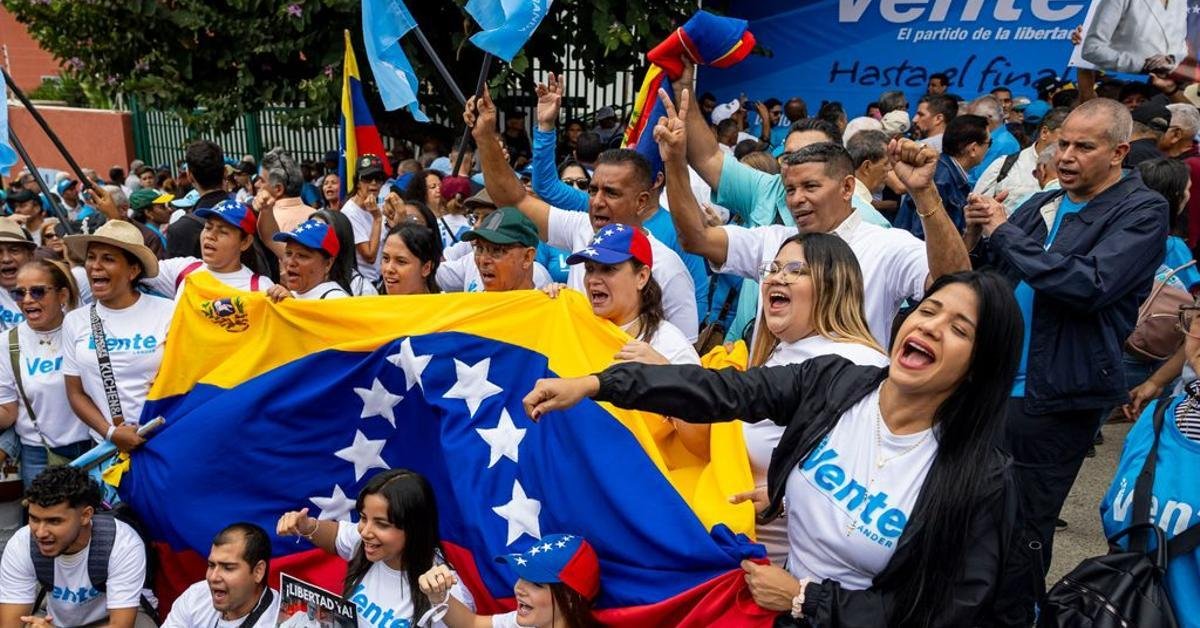
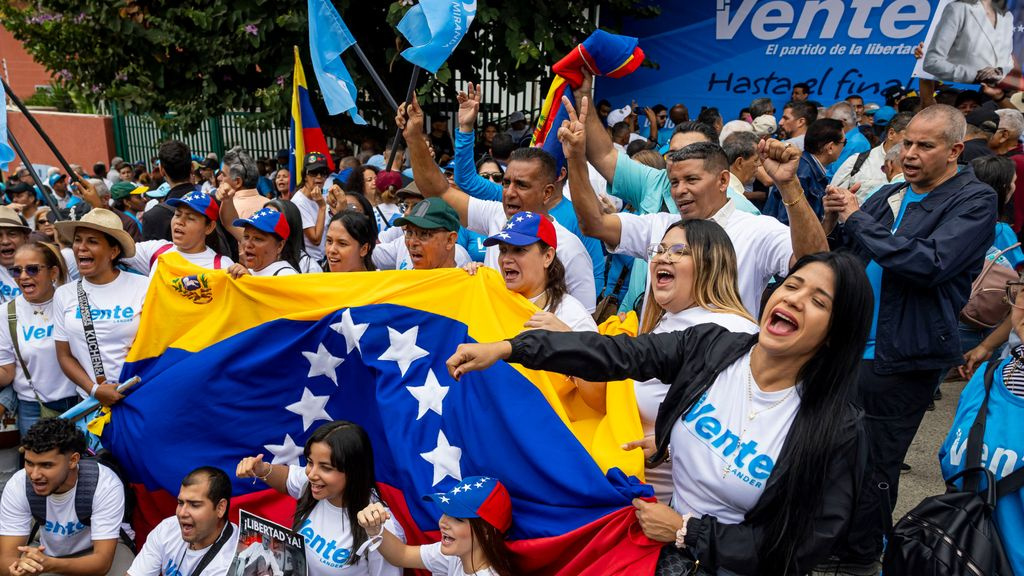
Caracas/The Vente Venezuela (VV) party, led by the opposition and 2025 Nobel Peace Prize winner, María Corina Machado, called for a mobilization next Thursday, October 22, in Caracas and in all the cities of the country to demand an electoral schedule and presidential elections for 2027.
“It is going to be the spearhead to mobilize us peacefully,” VV political activist Carlos Fernández anticipated this Monday during a press conference. “It is going to be a historic mobilization for us.”
Fernández indicated that the protest is also to demand the return of Machado, who has been outside Venezuela since December of last year and has tried to return to the country, but has not been allowed, as reported by his communications team recently.
Specifically, they will demand the safe return of Machado so that he can “accelerate the transition” in Venezuela in the face of an eventual presidential election.
“In 2027 we have to have a presidential election. We are going to elect María Corina Machado as the next president of Venezuela and we are organizing for that,” stressed the VV activist.
“We are going to elect María Corina Machado as the next president of Venezuela and we are organizing for that”
Likewise, he reported that next Thursday the release of all political prisoners will also be demanded, of which there are 322 according to the NGO Foro Penal. The Government denies that these people are detained for political reasons and assures that they committed crimes, something that several opposition organizations and parties such as VV reject.
On Sunday, Venezuela’s largest opposition coalition, grouped in the Democratic Unitary Platform (PUD), proposed a national agreement in which it reiterated the need for a transition based on negotiations and free elections.
In a broadcast on YouTube, the PUD also agreed to recognize and support Machado’s leadership in the fight for “freedom and the recovery of democracy in Venezuela” alongside Edmundo González Urrutia, who has been in exile since 2024 after facing Nicolás Maduro in the presidential elections that year.
The coalition’s proposal became known when Chavismo and a sector of the opposition maintain a cycle of dialogue supported by the United States – in which Machado and González Urrutia do not directly participate – to reach agreements on political and civil guarantees for an eventual electoral process.