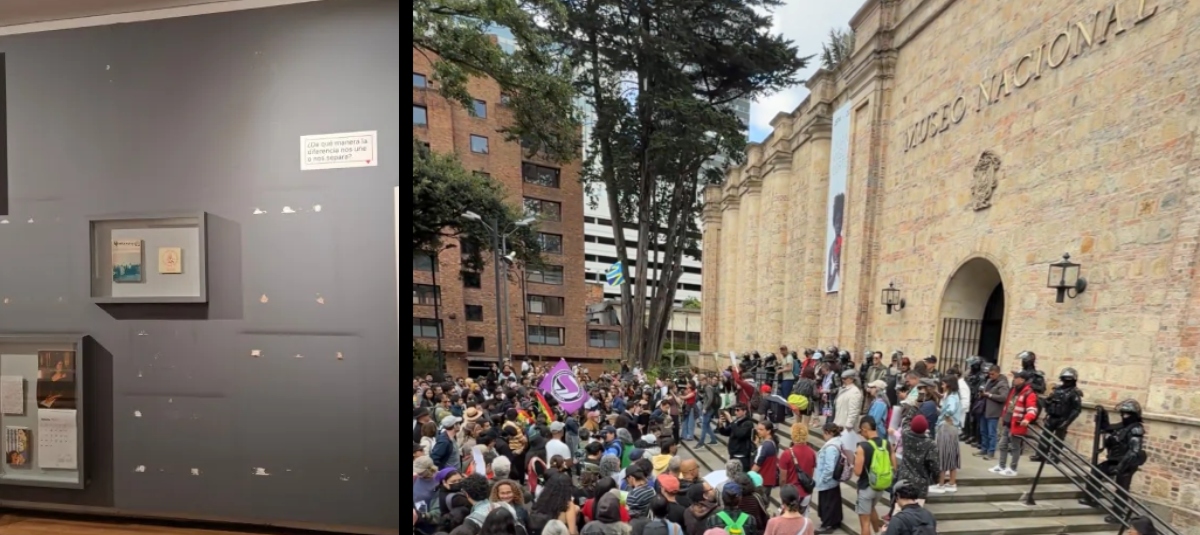
The walls of the second floor of the National Museum, in Bogotá, they preserve the marks of what hung on them: the rectangles left by the paintings and the signs with their descriptions. At least 30 posters, photographs and objects were removed from three rooms.
They were pieces about the history of the LGBTI and feminist movements, the victims of political violence against the Patriotic Union (UP) and the Peace Agreement. The withdrawal occurred on Thursday, when President Abelardo De La Espriella announced the name change of the Ministry of Culture and announced a “cultural counterrevolution” against what he calls “wokism.”
During his speech, the president ordered the removal from public spaces of representations that he considers an exaltation of terrorism and expressly mentioned Carlos Pizarro, former commander of the M-19 murdered in 1990.
This is how the National Museum looked like Photo:X: @marcela_s_g
Paola Holguín, Minister of Culture and Heritage – as the portfolio was renamed – defended the decision by pointing out that the National Museum cannot be an instrument of “political indoctrination” nor a space for apologizing for crime or re-victimization. In addition, he confirmed that the museology and curation of the spaces in charge of the Ministry are being evaluated and redesigned.
The reactions found
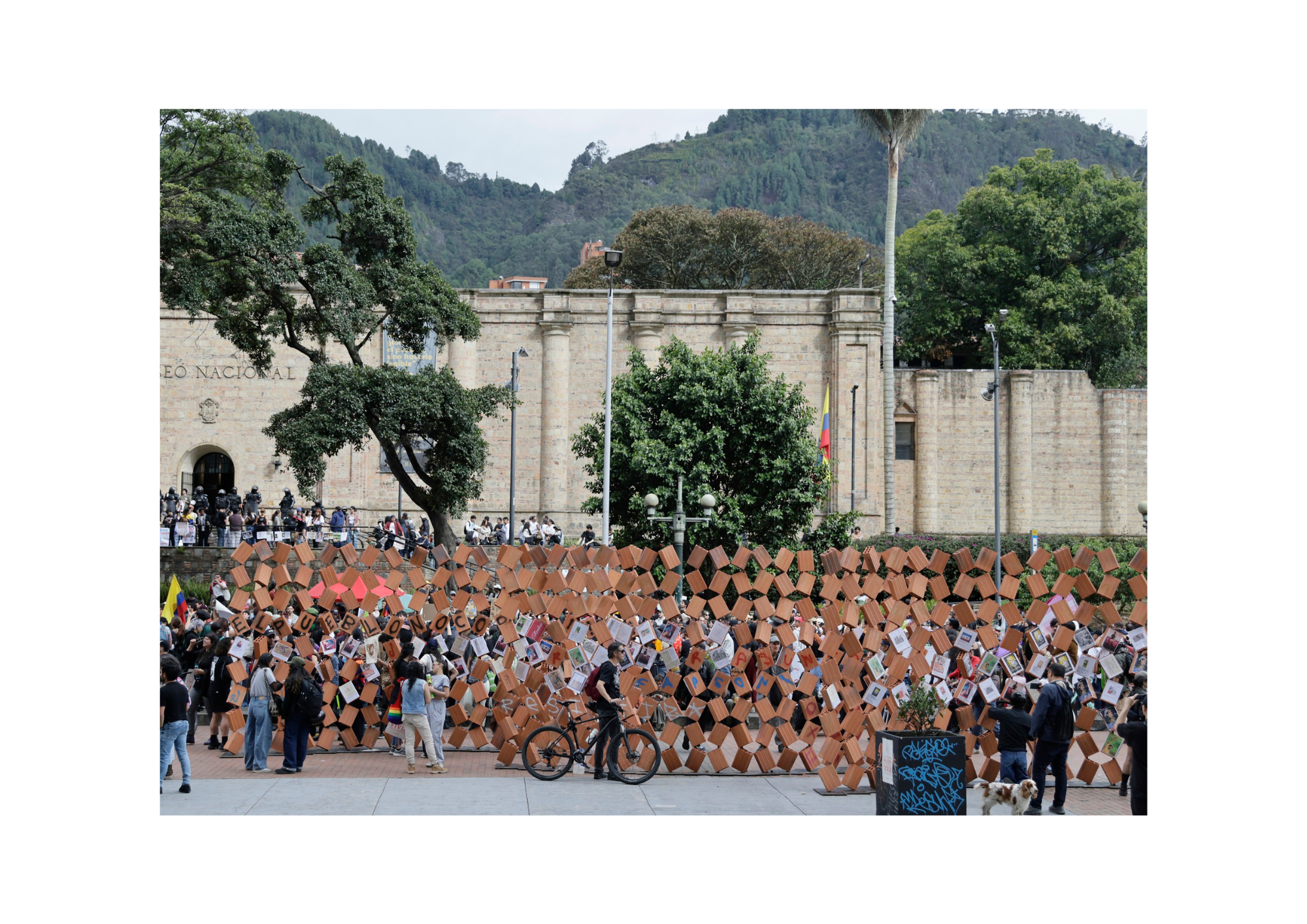
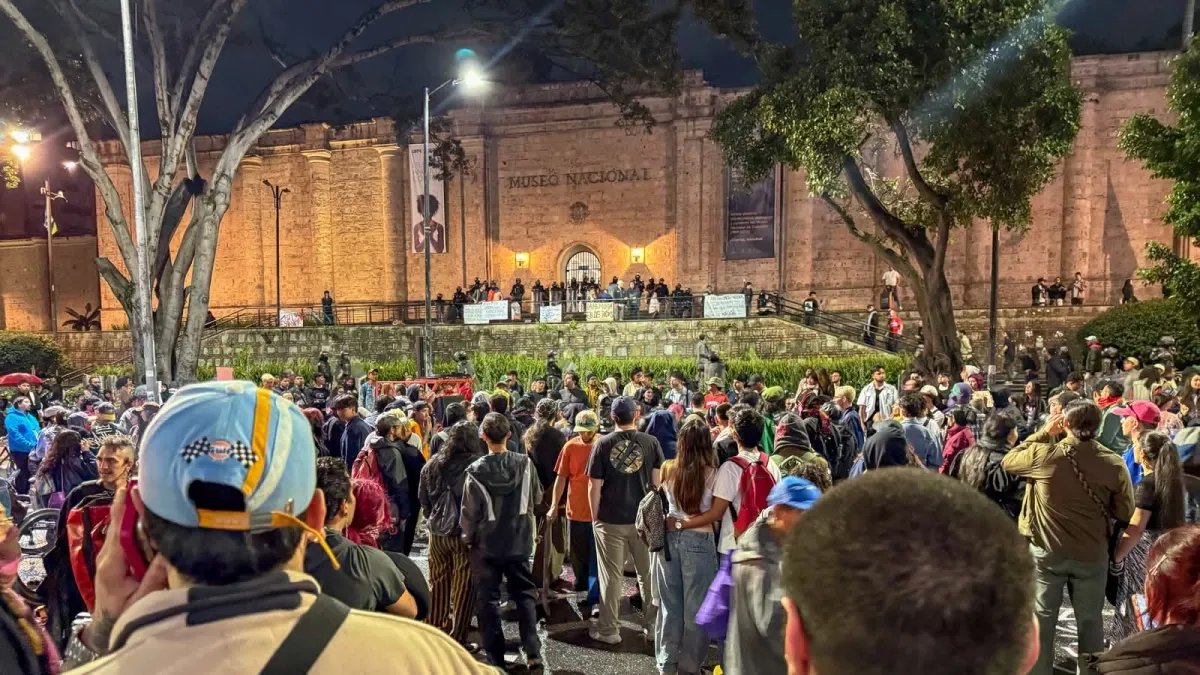
The decision has generated mixed opinions. On Saturday, October 17 and Sunday, October 18, sit-ins were held by those who oppose the measure, in front of the museum in the center of Bogotá, and in which the presence of Esmad generated tension; On Saturday, tanks even dispersed the protest with water jets when, the authorities explained, the protesters tried to block the 7th race.
Given what happened, Bogotá councilor José Cuesta spoke out on his social networks: “The inquisition of ABDELA (Abelardo De La Espriella) unleashes violent repression against a peaceful sit-in, in front of the new censorship museum. The protesters refuse to allow the memories of the social struggles in Colombia to be erased.”
Sit-ins in front of the National Museum, on the night of Saturday, October 17. Photo:MAURICIO MORENO / EL TIEMPO
Hours before, former senator María José Pizarro —daughter of Carlos Pizarro— highlighted the presence of women, older adults, children and young people in the place. After the decision, he asked the Government to respond for the fate of the removed pieces.
Councilor Andrés Barrios, for his part, responded to the former congresswoman: “The pieces that advocate terrorism, romanticize the guerrillas and promote ‘wokism’ are not part of our heritage, madam.” And he added: “The progressive altar that they had built in the National Museum is over. Culture will not continue to serve their political propaganda.”
Elkin Rubiano, director of the Art History program at the Jorge Tadeo Lozano University, said: “The episode is worrying for several reasons. The first is the direct intervention of political power over an institutional curatorship. The second is the speed with which the decision was executed. And the third is that there are rules that regulate the activity of museums, the protection of heritage and the powers of officials. A presidential order cannot annul these provisions.”
READ ALSO
The former director of ArtBo María Paz Gaviria recounted on her social networks the pieces that were dismantled and expressed that “’the cultural battle’, which until now has been based on an alleged attempt to eliminate the ideological tone of cultural spaces, has become an act of symbolic violence.”
Likewise, he pointed out that, “to avoid repetition and expand our possibilities for the future,” it is essential to establish “guarantees for this work and for the autonomy of museums.”
CULTURE AND BOGOTÁ EDITIONS
READ ALSO