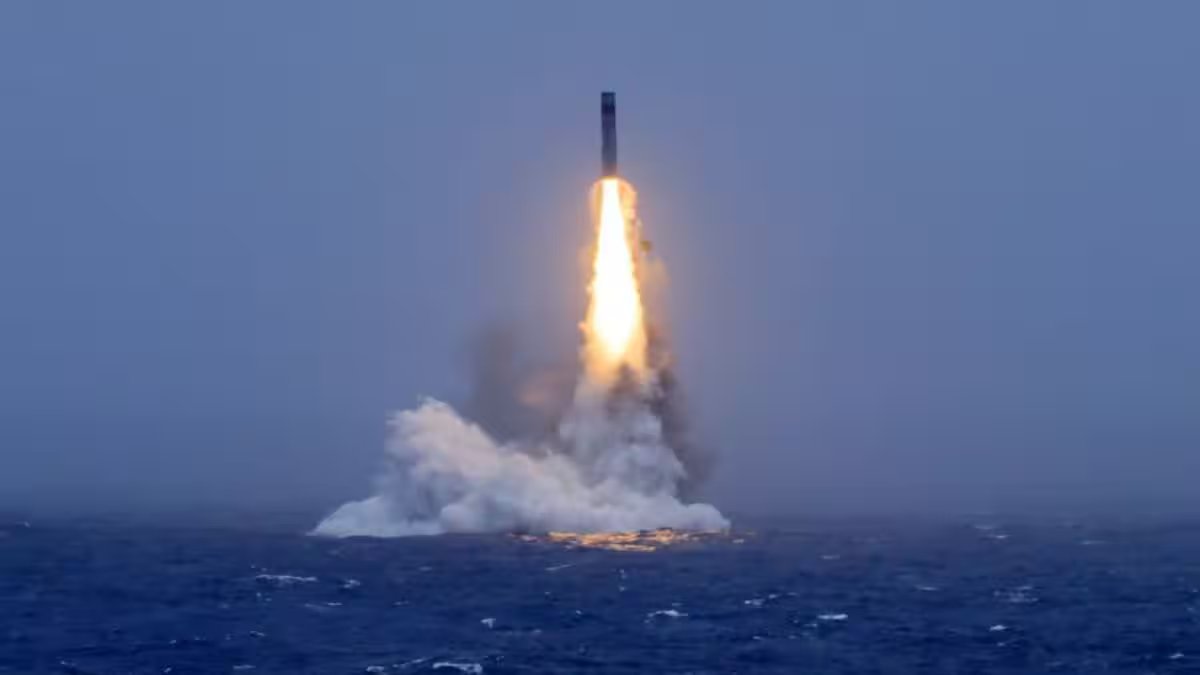
The test has alarmed several Pacific governments, but their response has also revealed how divided the region has become
China’s recent ballistic-missile test in the Pacific has exposed a growing contradiction for the region’s small island nations: they want to keep the Pacific an “Ocean of Peace”, but many also need security partnerships with bigger powers as US-China rivalry intensifies.
The missile was launched into the Pacific in July, marking China’s first known ballistic-missile test in the region since September 2024.
The timing was particularly significant as the launch came only hours after Fiji signed a major defence agreement with Australia, its first military alliance.
The test has alarmed several Pacific governments, but their response has also revealed how divided the region has become. Pacific foreign ministers meeting in Suva were unable to agree on a common statement condemning the Chinese launch, despite concerns about the increasing military presence of outside powers.
Pacific caught between China and the West
The disagreement highlights the difficult position of Pacific island nations as China and the United States compete for influence across the region.
China has increased naval activity and military exercises in the Pacific, while the US maintains major military facilities and strategic positions in places including Hawaii, Guam and the Marshall Islands. US allies have also expanded joint exercises and security arrangements.
For Pacific governments, however, the issue is not simply about choosing between Washington and Beijing. Many countries rely on outside powers for practical assistance, including maritime surveillance, disaster relief, policing, military training and equipment.
At the same time, there is concern that a growing network of defence agreements could gradually turn the Pacific into a theatre for great-power rivalry, reducing the ability of island nations to decide how their waters and infrastructure are used.
China has defended its missile test, saying it was conducted safely and urging countries not to over-interpret the launch.
‘Ocean of Peace’ faces a reality check
The latest tensions come less than a year after Pacific leaders endorsed the Ocean of Peace Declaration, an attempt to put the region’s own priorities at the centre of its security agenda.
The declaration reflected a longstanding desire among Pacific nations to avoid having their security policies dictated by larger powers. But the growing number of military exercises, defence agreements and naval deployments is making that ambition increasingly difficult to maintain.
The Australia-Fiji defence agreement itself reflects this dilemma. Fiji is strengthening its security relationship with Australia while also insisting that Pacific countries should retain control over their own strategic choices. Fiji also joined the US-led RIMPAC military exercises for the first time last month.
Regional unity under strain
The failure to issue a joint response to China’s missile test was perhaps the clearest sign of the region’s divisions.
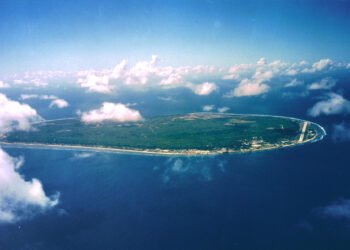
Kiribati and Nauru, which have strengthened diplomatic ties with Beijing after switching recognition from Taiwan, did not back the proposed wording, according to an official familiar with the discussions. New Zealand’s foreign minister also blamed outside influence for the failure to reach agreement.
The split shows why a unified Pacific security policy is difficult. Some countries want closer ties with the US and its allies, while others are wary of deeper militarisation or have strong economic and diplomatic links with China.
The issue is likely to return to the agenda when Pacific leaders meet in Palau for the Pacific Islands Forum in the coming weeks.
The challenge will be to balance the security benefits of outside partnerships without allowing the Pacific to become another battleground in the US-China strategic rivalry.