On September 1, this newspaper asked the institution for an interview with an official spokesperson for the program. More than two weeks later, on Thursday the 17th, the Mininter agreed to respond, but only a written questionnaire. “Due to agenda issues, the spokesperson is full,” they stated.
The next day, on Friday the 18th, a document was sent to the ministry with 11 questions about the gaps in the program evidenced in journalistic complaints, as well as the technical deficiencies identified by a cybersecurity expert consulted by The Commerce.
Initially, the Mininter reported that the official Oscar Llatas Soraluz, technical secretary of the Rewards Evaluation Commissions against Terrorism and Crime, would be in charge of answering the questions.
“They are going to pass it on to us at night”, “In the course of the day, we are behind the document”, “They told us that later”, were some of the responses from the communications area as the days passed.
Although the Ministry of the Interior remained silent, it did begin to modify the Rewards Program platform. Coincidentally, the corrected errors were those that this Journal had previously detected and reported.
‘Niño Guerrero’ was for years the alias of Héctor Rusthenford Guerrero Flores, one of the leaders of the criminal organization Tren de Aragua. On June 13, the president of the United States, Donald Trump, announced that the seasoned criminal was shot down in Venezuela by a military command of his country.
But in Peru, until the first days of September, the Rewards Program continued to offer S/500,000 for information that would allow the ‘Warrior Boy’ to be caught.

The ‘Warrior Boy’ was killed last June, in Peru a reward was still being offered for him until September. (Image: El Comercio)
On the other hand, on Friday, September 11, the weekly “Hildebrandt en sus trece” revealed that Jolín Bazán Valderrama, leader of the criminal organization ‘La Jauría’, remains a fugitive and does not even appear in the Rewards Program, despite the fact that he was sentenced to life imprisonment in February of last year for kidnapping.
Days later, on Wednesday the 16th, the Ministry of the Interior reported that Bazán was included in the programalthough he did not explain why it took them almost a year and a half to include him on the most wanted list.
In March of this year, the National Institute of Statistics and Informatics (INEI) revealed that more than 90% of Internet users in Peru connect through a cell phone.
However, the platform of Rewards Program It was not adapted to mobile device screens until mid-September. The modification was made just days after The Commerce sent the questionnaire requested by the Ministry of the Interior.

This is what the images looked like on cell phones. Days after El Comercio sent a written questionnaire, the authority began to make changes to the platform. (Image: El Comercio)
“If a website is from the Peruvian Government and does not have the gob.pe domain, it means that anyone could register a similar page and it could even be used for scams. Although it is true that a domain does not guarantee absolute security, it does give an index of reliability of whoever issues the information,” comments Antonio Ocampo, cybersecurity specialist and professor at the PUCP.
As of the closing of this report, the Rewards Program page does not have an official domain of the Government of Peru.
Together with Ocampo, this newspaper found more problems on the digital platform: the only way to contact the authorities is a landline number, the WhatsApp button does not lead to any police contact, among others.
At the insistence of The Commercethe Ministry of the Interior indicated on Tuesday the 22nd that the Vice Minister of Internal Order, Juan Carlos Sotil Toledo, had to review the answers to the questionnaire before being sent.
However, two days later, on Thursday the 24th, they indicated that they would only send an aide-mémoire. On Friday the 25th, this newspaper received a one-page document that does not answer any of the 11 questions asked.
“Regarding the current situation of the technical secretariats (of the Rewards Program), it has been, since the beginning of September, in a process of restructuring and modernization aimed at strengthening technical and administrative support (…), with the aim of catching up with the current circumstances of crime that the country is going through,” concludes the official text.
The results reflect a critical situation. Between January and August 2026, only 31 people from the Rewards Program were captured by the PNP, according to information that El Comercio accessed through a public information request to the Ministry of the Interior.
On the other hand, in 2017 – the platform’s most successful year – 725 of the most wanted were caught. But the decline has been evident. 2024 was the period with the worst results: only 94 apprehended individuals were found, while in 2025 the figure increased slightly to 99.
Rubén Vargas, former Minister of the Interior, said in the “Versus” program of this newspaper that a reward system only works if it has advertising in the media, since it must reach the largest number of citizens possible to be effective. Otherwise, he added, “it doesn’t exist.”
“A reward system only works if two things are not neglected: confidentiality between the police and the collaborating citizen and publicity, the necessary relationship between the police and through the media. A reward system that is not in all the media, on all platforms, is simply not valid, it does not exist,” Vargas stated.
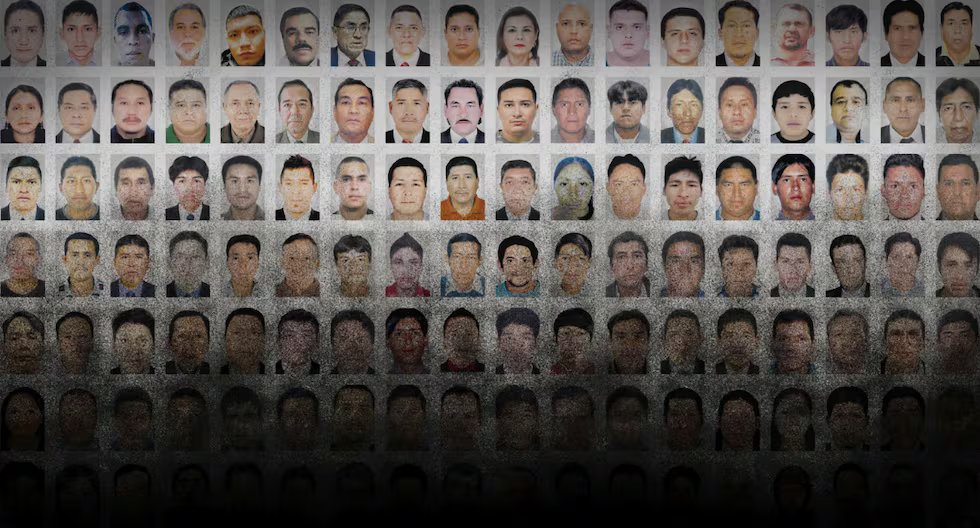
El Comercio investigates the Rewards Program from 2024. In October of that year, during the government of Dina Boluarte, we revealed that the 80% of those most wanted by the authorities are fugitives for more than five years.
That same day, in a press conference from the Government Palace, the Government responded as follows through Fredy Hinojosa, head of the technical cabinet of the Presidency of the Republic:
“The National Police It is committed to capturing all those people who are fugitives from justice. To do this, it implements the plans and mechanisms that the regulations themselves grant them. The information (revealed by El Comercio) It’s real. There is the will for justice to have before them all those people who must be accountable to it. The Government and the National Police will continue their constant action to search, locate and capture these criminals.”