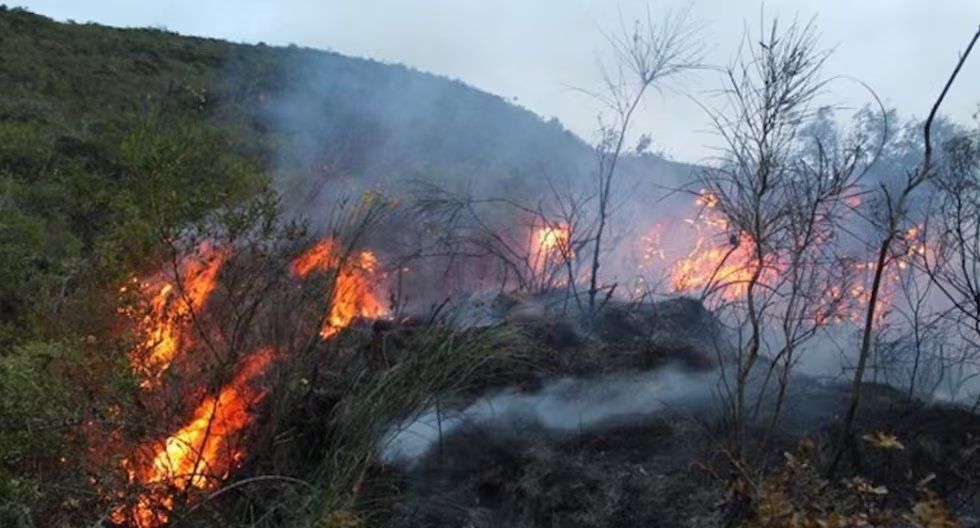
So far in 2026, 385 have been registered forest fires in the country, according to Midagri. The risk would increase in the coming months due to the delay in rains associated with The Global Child of very strong magnitude that would prolong the dry conditions in the southern mountains and the Amazon. The rainfall deficit also puts agricultural activity and water for human consumption at risk. This scenario requires continuing to strengthen prevention and response to reduce losses.
Forest fires are becoming more frequent. According to Indeci, the annual average of forest fire emergencies went from 29 between 2004 and 2008 to 253 between 2019 and 2023, that is, it multiplied almost nine times. The situation worsened in 2024, when emergencies reached a record of 1,962, almost eight times the figure for the previous five years. The south concentrated 69% of emergencies between 2019 and 2023, mainly in Cusco (289 cases), Apurímac (201) and Ayacucho (192). In 2024, Cusco will once again be the most affected region, concentrating 23% of emergencies nationwide.
“According to MapBiomas, between 2019 and 2024 more than 2 million hectares were burned in the country.”
The affected area also increased, especially in the south. According to MapBiomas, between 2019 and 2024 more than 2 million hectares were burned in the country, equivalent to 7.5 times the area of Metropolitan Lima and 59% more than in the previous five years. In the south, the burned area multiplied by 2.3 in the same period (from 263,000 to 614,000 hectares) and its participation in the national total increased from 21% to 31%. Puno registered the largest increase in the country, with 177,000 additional hectares, and became the second region with the largest burned area (281,000 hectares), behind Ucayali (379,000). The outlook is negative given Enfen’s forecast of below-normal rainfall in the southern mountains and the Amazon, until the summer of 2027.
The rainfall deficit also increases the risks for agriculture. According to Cenepred, more than 13% of the country’s agricultural area faces a high or very high risk of drought, and more than two-thirds of that area is located in the south. Cusco and Apurímac are especially vulnerable: about 60% of their agricultural area is cultivated under rainfed conditions, that is, they depend exclusively on rain. Furthermore, in both regions more than half of their agricultural area is exposed to droughts associated with global El Niño.

Peru is among the seven countries most exposed to droughts in Latin America and the Caribbean, according to the European Commission’s Drought Exposure Index, and its infrastructure offers little room to deal with them. According to the IDB, Peru’s water storage capacity is equivalent to one tenth of the regional average. In the south, where rainfall is already below normal for this time, reservoirs intended for agricultural use and human consumption store an average of 10% less water than in the previous decade. In some cases it is higher: as of October 12, El Frayle (Arequipa) and Pañe (Cusco), both among the 10 reservoirs with the greatest capacity, stored 40% and 33% less water than the average recorded on that date during the previous ten years. Management problems affect this ability. Thus, due to silting, Poechos (Piura) and Gallito Ciego (Cajamarca) have lost more than 50% of their capacity, according to the World Bank.
The lower availability of water also affects essential services. For example, Cusco, one of the regions most exposed to droughts according to Cenepred, has already faced a shortage of drinking water during 2022-2023. A longer period of drought would intensify pressures on agricultural production and supplies for human consumption.
These conditions raise the urgency not only for greater prevention, but also for national and subnational authorities to address aspects that transcend emergency response. Among others, strengthen water management, increase capacity and improve the maintenance of reservoirs; modernize irrigation and work with farmers on alternatives to slashing and burning forests for the development of small plots or farms.